
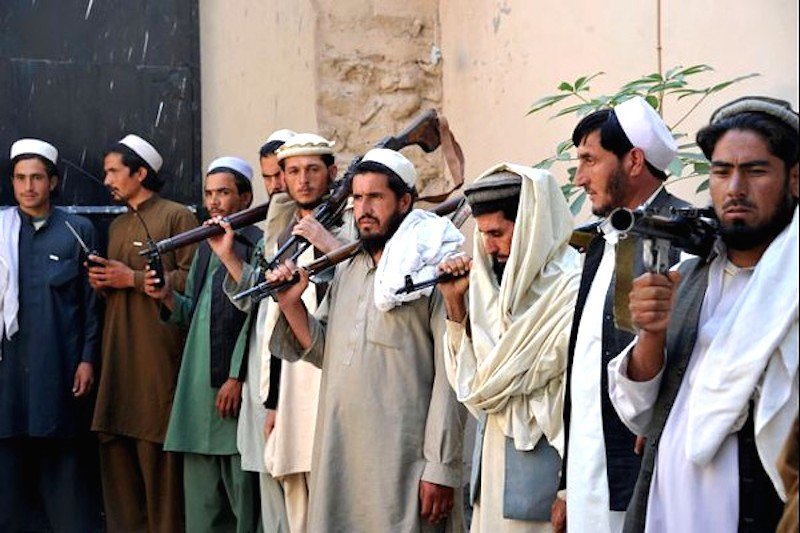
© www.boiseweekly.comFormer Taliban fighters carry their weapons prior to turning them over as they join a government peace and reconciliation process at a ceremony in Jalalabad, 2013.
Taliban has reemerged as a strong militant group over the past months as it has managed to capture some key areas in the north and south of Afghanistan. The militants also carry out attacks in the capital, Kabul. That has prompted renewed efforts in the country and by neighbors to revive stalled negotiations between the militant group and the Afghan government.
Zabihullah Mujahid, a spokesman for the Taliban, said Saturday that representatives of the group had attended the unofficial talks in Doha to express the views of the group on how the situation in the country should be handled. "The meeting is providing us an opportunity to express our views about the future of Afghanistan," said Mujahid, without elaborating on the condition set by other senior members about removal of Taliban from the UN blacklist.
Pakistan mediated the first round of talks in the summer of 2015, but a planned second meeting was cancelled after news broke that Taliban's founder and long-time leader Mullah Omar had died two years ago. Many suspect that Taliban could reappear on the negotiating table as factional infighting and leadership division has deepened in the group since the death of Omar.
Officials from former Afghan administrations who attended the talks said Taliban has yet to make a concrete demand. "So far they have not proposed any concrete ideas about how to move forward. Hopefully by tomorrow we will know if they want peace and if so what their conditions are," said Anwar Ahady, a former minister of finance.




Sure, if they guarantee, the production and sales at a low price of heroin, the U.N. will remove them from their blacklist.