
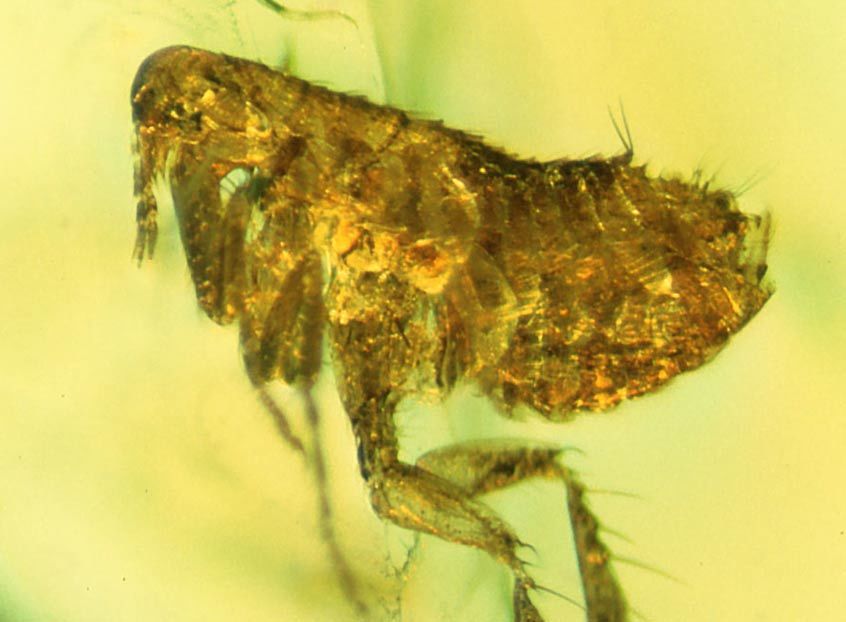
© George Poinar Jr.The flea caught in amber
Comment: Or maybe they were brought in on cosmic bodies such as comets. Learn more: The Apocalypse: Comets, Asteroids and Cyclical Catastrophes by Laura Knight-Jadczyk
Dr. George Poinar Jr., an entomologist at Oregon State University in the United States has possibly identified a previously unknown strain of the plague bacteria. The fossilized bacteria are preserved on a flea encased in amber. If the bacteria do belong to the bubonic plague, then at 20 million years, they are the oldest known evidence for that disease.
Poinar, who specializes in specimens caught in amber, says if the fossilized bacteria are related to the plague's Yersinia pestis bug, the disease predates the human race and traveled around much of the world.
"If this is an ancient strain of Yersinia, it would be extraordinary," Poinar said in a news release from Oregon State University. "It would show that plague is actually an ancient disease that no doubt was infecting and possibly causing some extinction of animals long before any humans existed. Plague may have played a larger role in the past than we imagined."
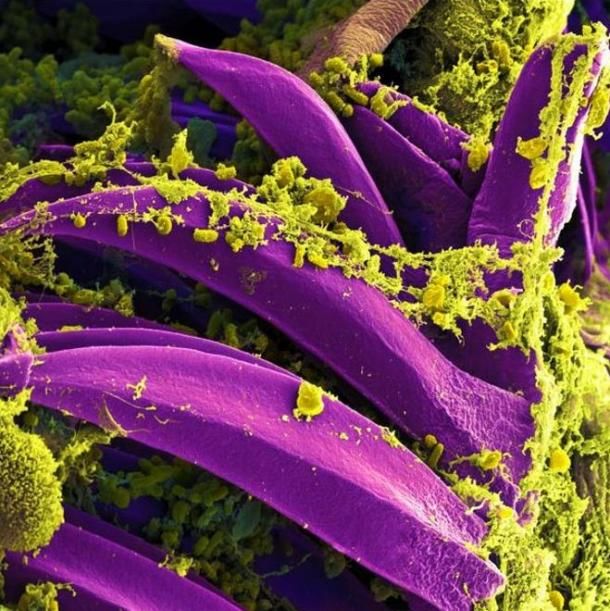
© Wikimedia CommonsScanning electron micrograph of Yersinia pestis, which causes bubonic plague, on a flea (National Institute of Allergy and Infectious Diseases
Poinar has found that flea-like insects in non-amber stone fossils date to the time of the dinosaurs and may have played a role in the dinosaurs' extinction."Aside from physical characteristics of the fossil bacteria that are similar to plague bacteria, their location in the rectum of the flea is known to occur in modern plague bacteria," Poinar said in the news release. "And in this fossil, the presence of similar bacteria in a dried droplet on the proboscis of the flea is consistent with the method of transmission of plague bacteria by modern fleas."
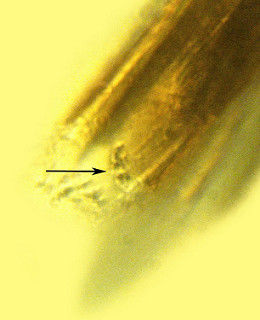
© George PoinarThe bacteria on the flea trapped in amber
Ancient Origins asked Dr. Poinar via e-mail if fleas evolved along with warm-blooded furry animals. "Probably so," he replied. "However, there are bird fleas and some say that there were feathered dinosaurs, so maybe they did attack some dinosaurs.""In 2008, Poinar and his wife, Roberta Poinar, wrote a book What Bugged the Dinosaurs? Insects, Disease and Death in the Cretaceous," the Oregon State press release states. "It explored the evolutionary rise of insects around the same time that dinosaurs went extinct. The thesis developed in the book added insect-borne diseases as a likely component, that, along with other biotic and abiotic factors such as climate change, asteroid impacts and volcanic eruptions, led to the extinction of the dinosaurs. Some modern diseases such as leishmaniasis and malaria clearly date to those times."
Bubonic plague still infects humans and many species of animals today. It is endemic in many countries. Endemic means it is still present but is under control epidemiologically. Four people in the United States have died from the bubonic plague in 2015 as of late September, the press release says.
In the Middle Ages, three phases of the disease transmitted by rats and fleas swept across Eurasia, killing an estimated 75 million to 200 million people. The three phases are bubonic, which causes buboles or pus-filled sores; septicemic, or infected blood; and pneumonic, or an infection of the lungs.
"Scholars say that religious, social and economic changes caused by the plague altered the course of world," the news release says.



How's that lyric go? "A seed replanted, still may grow"...