
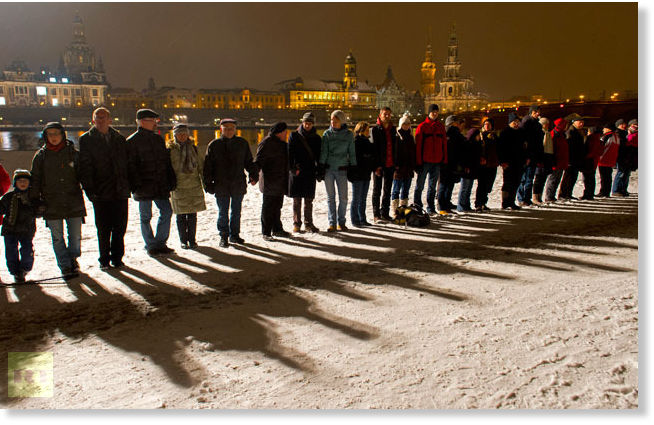
© AFP Photo / Robert MichaelPeople create a human chain along the Elbe river in front of the Dresden historical city center on February 13, 2013
Around three thousand officers are policing the parallel processions. No clashes were reported between the two groups.
Wednesday's demonstration for the ultra-right marks the 68th anniversary of the bombing against the civilian population. The neo-Nazis condemn the allied actions in the final months of World War II and claim the bombings to be war crimes.
Activists that oppose them, say that the neo-nazi march insults the memory of some 25,000 victims that died from the bombs. A number of high-profile politicians including parliamentary deputy president Wolfgang Thierse and Saxony's state premier Stalislaw Tillich took part in the human chain.
Speaking at the city's Heide cemetery in front of some 200 guests, Dresden Mayor Helma Orosz spoke out against the neo-Nazi message.
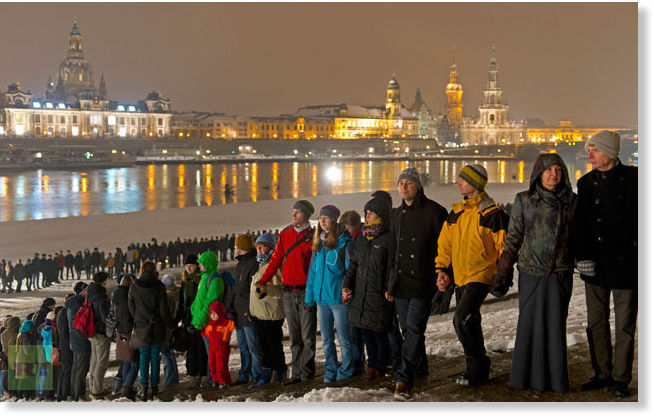
© AFP Photo / Robert MichaelThousands of people create a human chain along the Elbe river in front of the Dresden historical city center on February 13, 2013.
"It is an extremely worrying phenomenon," warns Georgina Siklossy European Network Against Racism, especially when extreme nationalist ideologies are getting a hold in the rest of Europe as "there is an increased popularity in these far-right movements."
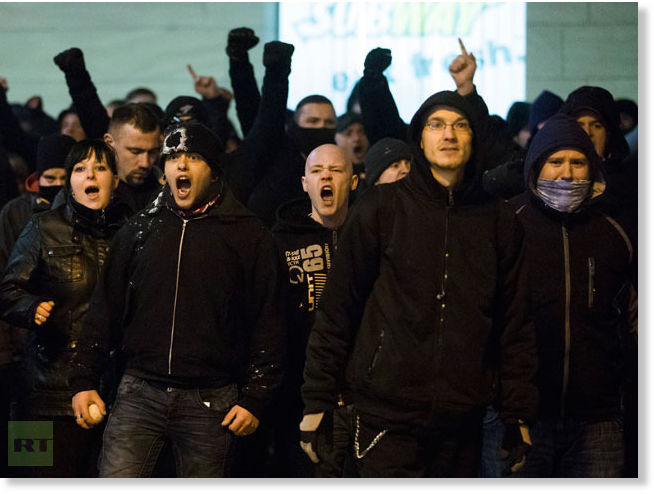
© Reuters / Thomas PeterExtreme right-wing protesters shout slogans at left-wing demonstrators in Dresden as the victims of the 1945 allied bombing of Dresden are remembered on its anniversary, February 13, 2013.
Governments of Europe have to continue to implement the social inclusion policies, Siklossy argues, to combat the political extremism.
Three month before the end of the WWII, British and US planes bombed the city for over 37 hours, ending midday February 15, 1945.


The rise of "neo-nazis" is encouraged by this deliberate blinding, if the truth was not forbidden revealing it would not such a powerfully tool for such groups.