
© n/a
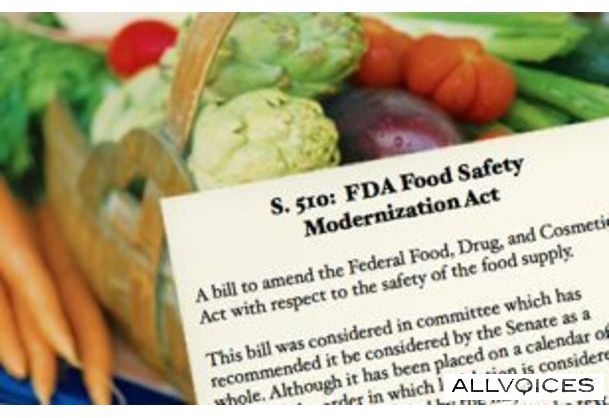
The new food safety bill passed by the senate on Sunday is meant to take control of the industry and hold the large industrial agricultural companies accountable for the food they produce. There has been an alarming amount of product recalls and tainted foods that contain bacteria as dangerous as e.coli 157 H7 in their food. Up until this point, companies have tried whatever they could do in order to not be held responsible for any deaths or illnesses caused by their products. This legislation finally holds their feet to the fire.
The new legislation will finally give the Food and Drug Administration the authority to suspend production of those food facilities that do not meet inspection standards. It also allows for the government to recuperate the costs of a recall on a product.
One of the major benefits is that this bill requires the Secretary of the FDA to set science-based standards for the safe production and harvesting of raw fruits and vegetables. Up until this point, a lot of the industry regulations have been loose language guides that are open to an individual's opinion of what is considered to be safe. Having strict guidelines that all producers must be held accountable for can be a good thing, or it can also be a very bad thing as many small farmers and food activists can tell you.
© Amazon.com
Another section of the bill requires the development of tracking processes for fresh fruits and vegetables. These record keeping tasks can be absolutely crippling to small organic farmers that spend most of their days caring for crops in their fields and selling the produce that they make. Having to keep track of every consumer that they sell their food to is simply excess bureaucratic paperwork that they don't need. It is also something that consumers would highly frown upon. Imagine going to the Dupont Farmer's Market on Sundays and having to fill in your name and address on a manifest for every purchase that you make.
The good news is that currently there seems to be a provision for small farmers who sell directly to restaurants and consumers. They should not be held to the same record keeping as the industrial agriculture realm. This is fair given that small farmers should not have to be subjected to the same regulation as giant companies. Small farmers actually know their customers and if one person would ever become sick, they know the farmer they bought it from. Most of these regulations are set up because the majority of consumers in the US buy from grocery markets and have absolutely no connection to the farmers that grow their food. With food being stockpiled from a variety of farms and they shipped across countries in trucks and freight, it's easy to see how tracking tainted spinach could get out of control very quickly. This will however create a massive barrier to entry that would prevent small farmers from easily expanding their business.
This bill may try to modernize the food safety in this country, but unfortunately consumers often forget that everyone has an agenda and this bill would give the FDA the power to control your food sources. This means that corruption is very easy. The issue of corruption already exists between companies like Monsanto and the USDA and FDA. This would give even more power to the industrial agriculture companies to make rules that would quash the smaller farmers. Anyone that values the relationship that we maintain here in DC with local farmers and Community Supported Agriculture programs should keep a close watch for changes within the FDA. It could mean the life or death of farmers and independent organic food systems in our area.



Reader Comments
to our Newsletter