

© Greek Culture MinistryJewelry found in a woman’s grave at Pella, northern Greece, dates to between 650 and 279 BC. Under Alexander’s conquests, Macedonia stretched as far as India.
The excavations at the vast cemetery uncovered 43 graves dating from 650 to 279 BC, shedding new light on the early development of the Macedonian kingdom, which stretched as far as India under Alexander's conquests.
Among the most interesting discoveries were the graves of 20 warriors dating to between 580 and 460 BC, in the late Archaic period, the ministry said in a statement Thursday.
Some of the warriors had been buried in bronze helmets alongside iron swords and knives. Their eyes, mouths and chests were covered in gold foil richly decorated with drawings of lions and other animals symbolizing royal power.
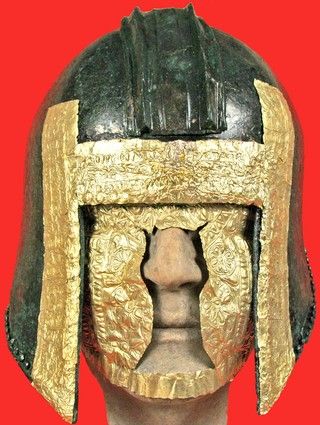
© Greek Culture MinistryWarriors had been buried in bronze helmets, their eyes, mouths and chests covered in gold foil decorated with symbols of royal power.
Among the excavated graves, the team also found those of 11 women from the Archaic period, with gold and bronze necklaces, earrings and broaches.
Nine of the graves date to the Late Classical or early Hellenistic period, around the death of Alexander the Great in 323 BC.
Alexander, whose father, Philip II, unified the city states of mainland Greece, conquered most of the world known to the ancient Greeks before dying at age 32 in Babylon. Educated by the ancient Greek philosopher Aristotle, Alexander was never defeated in battle.



Reader Comments
to our Newsletter