Plagues
S


Smoking

Scientists stumble across the obvious treatment for Ebola: tobacco

Image
A cocktail of antibodies cooked up in tobacco plants may provide an emergency treatment for Ebola virus, one of the deadliest viruses known, researchers reported Wednesday.

The treatment provides 100 percent protection to monkeys when given right after exposure. But it also helps even after symptoms develop, the researchers report in the journal Science Translational Medicine.

Ebola first appeared in 1976 and causes an especially frightening and deadly form of hemorrhagic fever. Patients die of shock but may bleed internally and externally. Depending on the strain, it kills between 25 and 90 percent of patients.

There is no existing treatment and no vaccine. "It is horrifying," says Gene Olinger of the U.S. Army Medical Research Institute of Infectious Diseases (USAMRIID), who worked on the study.

Various strains of the virus pop up unpredictably across Africa, perhaps as people venture into forests to hunt wild animals, especially monkeys and apes, known as bushmeat. The virus infects apes and monkeys and it infects people who are exposed to bodily fluids, such as blood.

Comment: We hate to say we told you so, but...

New Light on the Black Death: The Viral and Cosmic Connection

Comets, plagues, tobacco and the origin of life on earth

Pestilence, the Great Plague and the Tobacco Cure

Black Death found to be Ebola-like virus

Beneficial tobacco: Monoclonal antibodies derived from tobacco thwart West Nile virus

Health Benefits of Smoking Tobacco

Don't wait around for the vaccine, get smoking!

Image
Monkee sez: 'I'll pass on the vaccine, thanks. Gotta light?'


Beaker

Russian virologists join battle with 'deadliest outbreak of Ebola ever'

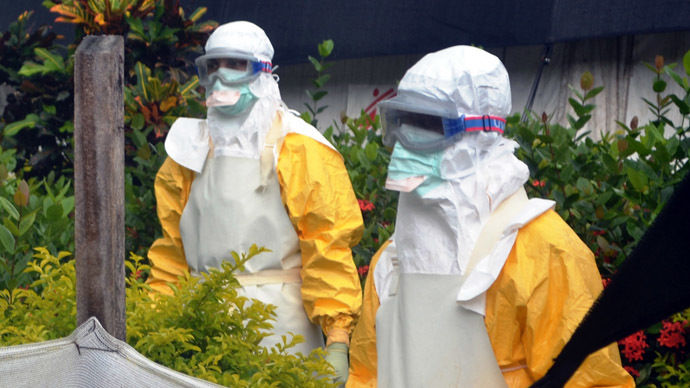
Members of Doctors Without Borders
© AFP Photo / Cellou BinaniMembers of Doctors Without Borders (MSF) wear protective gear at the isolation ward of the Donka Hospital in Conakry

Russian virologists arrived in Guinea to help local doctors in their fight against a massive Ebola outbreak, which infected at least 1,323 people and so far resulted in 729 deaths in Guinea, Liberia and Sierra Leone.

"Our virologists arrived in Guinea and started their work," spokesman for Russia's Ministry of Health Oleg Salagai told Itar-Tass.

Academician virologists Victor Maleev from the Central Research Institute of Epidemiology and Professor Mikhail Shchelkanov from the Research Institute of Virology, arrived in the country immediately after the World Health Organisation warned that the Ebola outbreak is spreading quicker than efforts to contain the disease. Both Russian scientists specialize in investigating the causes of epidemics and outbreaks of viruses.

Meanwhile the International Federation of Red Cross and Red Crescent Societies (IFRC) emphasized the immediate need to tackle the Ebola outbreak in West African countries.

"The Red Cross or Red Crescent is extremely worried that the situation is spiralling out of control," the IFRC's emergency health coordinator Panu Saaristo said in a statement.

"The response capacity and resources of the government and humanitarian aid agencies in the affected countries are already stretched beyond the limit, and the virus continues to spread, making this the deadliest outbreak of Ebola ever," Saaristo said, stressing that the spread of the virus can only be contained with the support of the international community.

Evil Rays

Ebola outbreak becoming uncontrollable; meanwhile Monsanto invests in anti-Ebola drug

ebola virus
A global outbreak of deadly Ebola is underway and has crossed national borders. One infected victim of the horrifying disease flew on international flights, vomiting on board and exposing hundreds of people to the deadly virus which can be transmitted through airborne particles. Ebola has an 8-10 day incubation period, meaning thousands of people could be carrying it right now and spreading it across the cities of the world without even knowing it.

Passengers in Hong Kong and the UK have already shown symptoms of the disease and are being tested, reports USA Today. (2) The Peace Corps has evacuated its volunteers from the region after two were exposed to Ebola. (3)

"Expert claims panic over death of U.S. man in Nigeria is 'justified'" reports the Daily Mail. (1) "He warned the spread of Ebola could become a global pandemic."

Comment: See this article for some natural treatments for Ebola:
Natural treatments for Ebola virus exist, research suggests

For a dietary approach to strengthening the immune system consider the Ketogenic Diet and its many benefits, as well as the relaxation program Éiriú Eolas, which includes simple breathing exercises to ease life's stresses.


Health

American infected with Ebola in West Africa outbreak to be treated in Atlanta hospital

Image
© AFP Photo/Cellou Binani
One of the two infected US humanitarian workers who contracted Ebola while working in West Africa will be treated in an Atlanta hospital. The patient, who is reportedly in a "grave" condition, is expected to arrive within the next several days.

Emory University Hospital in Atlanta, Georgia, is planning to admit the infected patient "within the next several days," the university said in a statement. The institution, however, didn't reveal the name of the patient and the exact time of his/her arrival.

"Emory University Hospital has a specially built isolation unit set up in collaboration with the [Centers for Disease Control and Prevention] to treat patients who are exposed to certain serious infectious diseases,"said the hospital.

The patient will be treated in a high-security ward in a special isolated unit which was set up in collaboration with the US Centers for Disease Control and Prevention.

"[The isolation unit] is physically separate from other patient areas and has unique equipment and infrastructure that provide an extraordinarily high level of clinical isolation. It is one of only four such facilities in the country," the statement said.

Comment: For more updates see:


Health

U.S. flight leaves for Africa to evacuate Americans with Ebola

Image
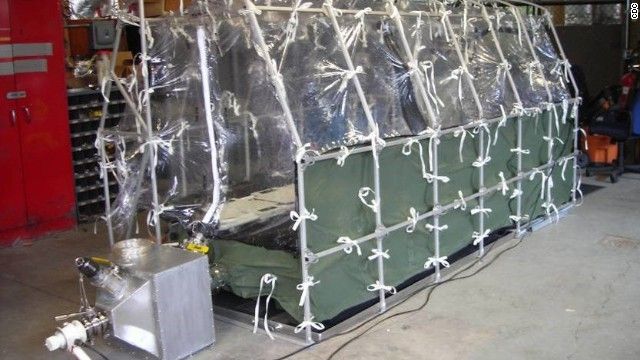
© CNNThe ABCS is a tentlike device that can be installed in a modified Gulfstream III aircraft.
CNN reported Thursday that a U.S.-contracted medical charter flight had left Cartersville, Ga., to evacuate Charlotte missionary Nancy Writebol and Dr. Kent Brantly of Boone-based Samaritan's Purse - two Americans in Liberia who have contracted the deadly Ebola virus.

CNN and other TV networks also reported that at least one of the two patients will be taken to Emory University Hospital in Atlanta, near the headquarters of the U.S. Centers for Disease Control and Prevention.

It was unclear which of the two Americans would be taken to Emory and where the other one would be taken and treated. Writebol and her husband, David, are members of Calvary Church in Charlotte; Brantly and his family live in Texas.

Reached Thursday, Samaritan's Purse President Franklin Graham said he couldn't comment on the CNN report.

"We are going to be issuing a statement (Friday)," he told the Observer. "We're dealing with people's lives here."

Earlier Thursday, Fox News reported that Graham had told the network that he expected a specially equipped aircraft to bring Writebol and Brantly back to the United States in the next few days.


Comment: Hopefully these experimental treatments may provide some help, but with a mutating virus your best bet for protection is prevention by strengthening your own immune system. Populations who ate grain and carb based diets in the past were often hit the hardest with plagues that show similarities to ebola. A ketogenic diet may very likely be one of the best means of staying in the clear:


Syringe

Forced quarantine and isolation: This is what is going to happen if Ebola hits the U.S.

Image
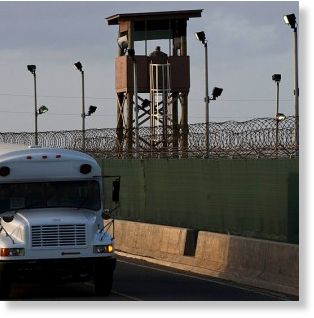
If the worst Ebola outbreak in recorded history reaches the United States, federal law permits "the apprehension and examination of any individual reasonably believed to be infected with a communicable disease". These individuals can be "detained for such time and in such manner as may be reasonably necessary". In other words, the federal government already has the authority to round people up against their will, take them to detention facilities and hold them there for as long as they feel it is "reasonably necessary".

In addition, as you will read about below, the federal government has the authority "to separate and restrict the movement of well persons who may have been exposed to a communicable disease to see if they become ill". If you want to look at these laws in the broadest sense, they pretty much give the federal government the power to do almost anything that they want with us in the event of a major pandemic. Of course such a scenario probably would not be called "martial law", but it would probably feel a lot like it.

If Ebola comes to America and starts spreading, one of the first things that would happen would be for the CDC to issue "a federal isolation or quarantine order". The following is what the CDC website says about what could happen under such an order...

Health

Immigration, border staff in UK say they feel unprepared to deal with arrival of possible Ebola victims

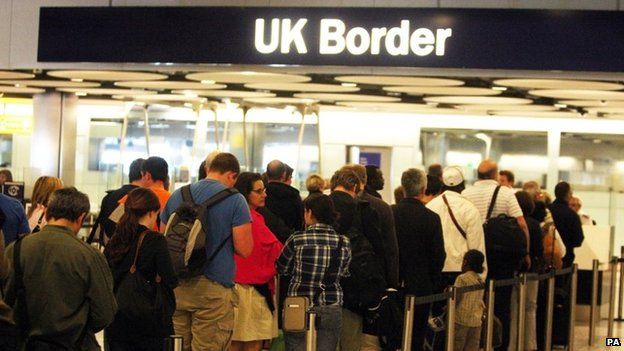
UK border
Border, immigration and customs staff feel unprepared to deal with people coming to the UK with possible cases of the Ebola virus, a union leader says.

Immigration Service Union (ISU) general secretary Lucy Moreton said her members needed more information on the threat.

But the Border Force has insisted staff have been given guidance on how to identify and deal with suspected cases.

Almost 700 people have died in West Africa since the first case of Ebola was detected in February.

Foreign Secretary Philip Hammond said the government was taking the current outbreak - the world's deadliest to date - and the threat to the UK "very seriously".

Ebola is a viral illness - initial symptoms can include a sudden fever, intense weakness, muscle pain and a sore throat - that can cause internal and external bleeding.

It kills up to 90% of those infected but patients have a better chance of survival if they receive early treatment.

Comment: See: Ebola - What you're not being told


Health

World Health Org announces joint emergency response plan to counter Ebola epidemic

samaritains purse medical worker
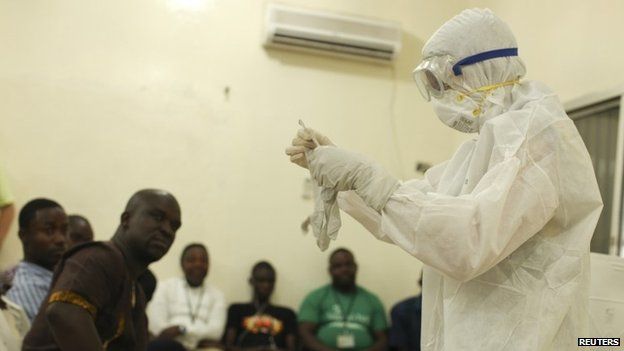
A Samaritan's Purse medical worker demonstrates personal protective equipment to educate team members on the Ebola virus in Liberia
The head of the World Health Organization and leaders of West African nations affected by the Ebola outbreak are to announce a joint $100m (£59m; 75m euro) response plan.

They will meet in Guinea on Friday to launch the initiative aimed at tackling a virus which has claimed 729 lives.

Sierra Leone's president has declared a public health emergency over the outbreak after 233 people died there.

Ebola spreads through human contact with a sufferer's bodily fluids.

Initial flu-like symptoms can lead to external haemorrhaging from areas like eyes and gums, and internal bleeding which can lead to organ failure.

Ebola kills up to 90% of those infected, with patients having a better chance of survival if they receive early treatment.

Comment: The WHO finally decides to take action, now that the epidemic appears to be out of control in Africa and threatens the West.

Ebola - What you're not being told
Fear of the ebola virus: outbreak or epidemic?
Ebola may have spread to Asia now
Ebola outbreak 'most challenging' ever: 90% fatality, no vaccine, cure or treatment


Beaker

Ebola rages in Africa while West ponders the ethics of vaccine and drug testing

unicef workers guinea
© ReutersWorkers from Unicef in Guinea speak with local families on how to best protect themselves against Ebola.
In 2002, scientists writing in a leading American medical journal discussed the possibility that the Ebola virus could be used in a biochemical weapon. It would be technically difficult and unlikely to cause mass destruction because those infected quickly die and the virus is not as transmissible as many assume. But, the scientists warned, if it could be done, there would be no protection. No vaccine or drug treatment exists.

They were writing in the Journal of the American Medical Association in the wake of 9/11 and the subsequent anthrax attacks in New York. Since then, fear of viruses raining out of US skies has diminished - and so has any sense of urgency over the development of vaccines or treatment for a disease that manifests itself in unpredictable outbreaks and kills relatively small numbers of people in remote parts of Africa.

Neglected tropical diseases, of which Ebola is one, become visible in the west only when they appear to threaten it. Ebola has had more attention than many, probably because of the dramatic nature of the disease and the need for full body suits and face masks for those caring for its victims. The names of other such diseases - the parasitic leishmaniasis and lymphatic filariasis, for example - hardly trip off the tongue in London or San Francisco.

Yet Ebola is not a priority for the not-for-profit Drugs for Neglected Diseases Initiative, which works with the World Health Organisation and others to incentivise and encourage pharmaceutical companies to research and develop treatments. It affects far fewer people than parasitic diseases, and the outbreaks, although appalling, are sporadic.

Comment: The truth is that no drugs or vaccines are being developed that will help in the current epidemic. And, considering that independent studies have shown that vaccines often cause the diseases they were designed to prevent, a far safer course of action would be to improve one's overall health by having a strong immune system. Following a ketogenic diet is one of the best ways to prevent disease.

Polish study: No historical benefit in vaccines
Historical Data Shows Vaccines are Not what Saved Us
If you think your kid's vaccines are safe, don't watch this!
Vaccines: Crossing Immunological Boundaries

The Ketogenic Diet - An Overview
Solve Your Health Issues with a Ketogenic Diet
Ketogenic Diet (high-fat, low-carb) Has Neuroprotective and Disease-modifying Effects


Beaker

Scientists admit progress slow on potential drug treatments for Ebola

research ebola
© dpa picture alliance/AlamyResearch into vaccines and treatments for Ebola is ongoing
Ebola is continuing to kill people across West Africa, but there is still no cure.

Available treatments only ease the symptoms of the disease. People with Ebola are given supportive care, such as intravenous fluids to combat the dehydration caused by bleeding, vomiting and diarrhoea.

Several potential drugs and vaccines are working their way through animal studies and clinical trials, but progress has been slow. On-the-ground trials are almost impossible to conduct, largely because outbreaks in Africa are sporadic and unpredictable. "It is difficult to do conventional clinical trials," says Thomas Geisbert of the University of Texas Medical Branch at Galveston, who is developing vaccines and therapies.

Comment: Probably the most effective preventative is to improve the immune system to be able to fight off infections before they take hold. Following a ketogenic diet (high-fat / low-carb) is one of the most effective ways to prevent or ameliorate a host of diseases.

The Ketogenic Diet - An Overview
Solve Your Health Issues with a Ketogenic Diet
Ketogenic Diet (high-fat, low-carb) Has Neuroprotective and Disease-modifying Effects
Diet for cancer cure: Starving cancer ketogenic diet a key to recovery