Plagues
S


Blackbox

Mystery: infected epidemiologist had no contact with patients, as 3rd doctor dies from Ebola in Sierra Leone

Image
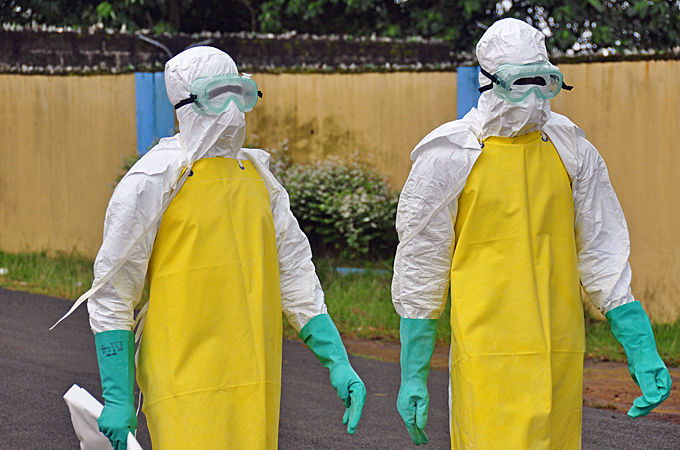
A third top doctor has died from Ebola in Sierra Leone, a government official said Wednesday, as health workers tried to determine how a fourth scientist also contracted the disease before being evacuated to Europe.

The announcements raised worries about Sierra Leone's fight against Ebola, which already has killed more than 1,400 people across West Africa. The World Health Organization said it was sending a team to investigate how the epidemiologist now undergoing treatment in Germany may have contracted the disease that kills more than half its victims.


Comment: Technically that's true. Killing 90% of people who contract it is in fact more than half. Notice how they are still playing that down? Why not contrast that with H1N1, the little epidemic that could-------n't hurt a fly. Remember all the grave scare mongering? Why aren't they scare mongering now? Ladies and gentlemen, meet the dog that didn't bark.

H1N1 Pandemic Virus Does Not Mutate Into 'Superbug' in Lab Study

H1N1 Death Cluster In Greater Manchester Increases To 12 Ahh, the good old days. You remember when 12 was an epidemic? The cases are now up to 3,000+ with 1,500 DEAD.

Scare Tactics: Ten Dead as H1N1 Flu Returns to Britain

H1N1 Vaccines Too Little, Too Late; Most People Already Exposed and Immune

This is the real deal. The boy has cried wolf too many times? No, it's obviously an attempt to conceal the fact that they wasted all that time and money meant for working on real epidemic procedures to scare monger. Now they've been caught with their pants down.


"The international surge of health workers is extremely important and if something happens, if health workers get infected and it scares off other international health workers from coming, we will be in dire straits," said Christy Feig, director of WHO communications.

Dr. Sahr Rogers had been working at a hospital in the eastern town of Kenema when he contracted Ebola, said Sierra Leonean presidential adviser Ibrahim Ben Kargbo on Wednesday. Two other top doctors already have succumbed to Ebola since the outbreak emerged there earlier this year, including Dr. Sheik Humarr Khan, who also treated patients in Kenema.

Comment: For clues, see:


Ambulance

Congo found another hotbed of Ebola as a doctor treated with experimental drug died

Image
© Reuters
Officials from the Democratic Republic of Congo (DRC) say that a second, separate outbreak of the deadly virus has occurred in the country. Meanwhile, a Liberian doctor treated with an experimental serum against the illness has passed away.

DRC Health Minister Felix Numbi said that two of eight people who died from a "hemorrhagic fever" last week have been diagnosed with a strain of the disease in postmortem lab tests. The death toll of the sudden epidemic in the country's Equateur province has reached 13 in total.

"This epidemic has nothing to do with the one in West Africa," said Numbi. "The experience acquired during the six previous epidemics of Ebola will contribute to the containing of this illness."

DRC, then Zaire, was where the virus, which eventually kills patients by literally liquefying their organs, was first discovered in 1976. Numbi said that medical cordons have been erected around the town of Gera, where the patients were identified.

Comment: See also:


Attention

First Briton to contract Ebola virus now in London hospital isolation unit

Image
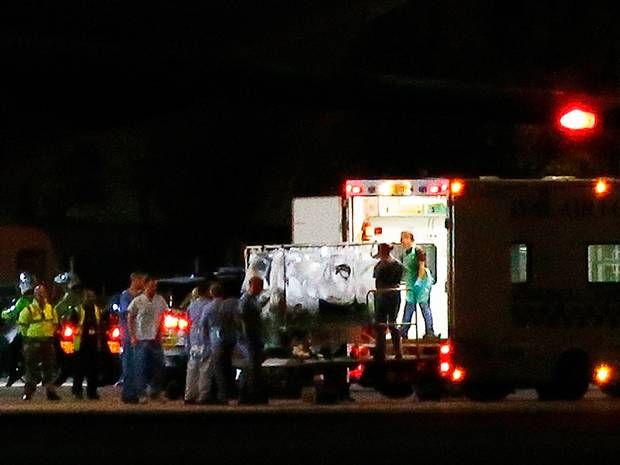
© IndependentWilliam Pooly, who is infected with the Ebola virus, is shown being loaded into an Royal Air Force (RAF) ambulance after being flown home on a C17 plane from Sierra Leone.
The first British person known to have contracted the deadly Ebola virus has been flown to London and is being treated by doctors.

He has been named as William Pooley, 29, a nurse who had travelled to Sierra Leone as a volunteer to help care for the victims of the Ebola outbreak. He was identified by Dr Robert Garry, an American scientist who worked with him at the Kenema Government Hospital in the south-east of Sierra Leone.

A specially equipped military aircraft flew Mr Pooley from Sierra Leone's main airport in Lungi to the UK on Sunday, landing at the RAF base in Northolt, where he was then transferred under police escort to the Royal Free Hospital in Hampstead, London.

The hospital has Britain's only high-security infectious-disease unit, and Mr Pooley, who is described as "not currently seriously unwell," is being treated in a specialist isolation unit containing a tent made of plastic and rubber that separates the patient from medical staff while ensuring he can be observed.

Comment:


Ambulance

Congo declares an Ebola outbreak, exposing WHO cover-up

Image
© AP
Last week, when we reported on the latest breakout of a mysterious Ebola-like disease, which had claimed at least 70 people's live at last check, we were skeptical by the WHO's attempts to mask the fact that an Ebola outbreak is something else entirely, in a desperate attempt to avoid the panic that would inevitably result from the confirmation that the Ebola virus has officially made its way into the fifth country, this time the second largest African nation by surface area, the Democratic Republic of Congo.

As Reuters reported at the time, citing a WHO spokesman who had sent an email to the news agency, "this is not Ebola" to which we mused: "perhaps the WHO is fibbing just a bit to prevent another all out panic. If not Ebola then what? According to WHO, the deaths are the result of an outbreak of hemorrhagic gastroenteritis, a disease prevalent in... dogs?

We concluded: "So is the WHO simply trying to prevent the spread of panic and deny that Ebola has now spread to the second largest country in Africa? We will surely find out soon enough, especially if the WHO, too, advises the population "to keep calm and BTFD"..."

Three days later we have the answer and sure enough, as we suspected the WHO was indeed lying.

Reuters confirms:
Democratic Republic of Congo declared an Ebola outbreak in its northern Equateur province on Sunday after two out of eight cases tested came back positive for the deadly virus, Health Minister Felix Kabange Numbi said. A mysterious disease has killed dozens of people in Equateur in recent weeks but the World Health Organization had said on Thursday it was not Ebola.

Beaker

Bumbling CDC shuts down bioterror and flu labs after misplacing hundreds of vials of deadly pathogens

CDC
© James Gathany, CDCCDC Atlanta
The Center for Disease Control (CDC) is conducting a nationwide search of its cold storage units after discovering vials of smallpox in a Food and Drug Administration (FDA) cold storage room at the National Institutes of Health facility in Bethesda, Maryland. Along with the vials of smallpox were 327 other pathogens including vials labeled for dengue, influenza, and rickettsia. This news comes as the CDC is under multiple investigations for unsafe practices. In response to the news Richard H. Ebright, a professor of chemistry and chemical biology at Rutgers University remarked "It is ironic that the institution that sets U.S. standards for safety and security of work with human pathogens fails to meet its own standards."

Comment: ...And these are the people who claim to be able to protect us from Ebola? Forget the CDC; prep your diet instead.

Are you prepping your diet?


No Entry

Sierra Leone imposes jail time for harboring Ebola patients, flights barred and borders closed due to outbreak


Ebola continues to spread in West Africa as Sierra Leone voted to pass a new amendment imposing jail time for anyone caught hiding an Ebola patient.

With 142 new cases recorded, the total number is now 2,615 with 1,427 deaths, the World Health Organization said Friday. The group added that the magnitude of the Ebola outbreak has been "underestimated."

"Many families hide infected loved ones in their homes," the organization wrote in an assessment. "Others deny that a patient has Ebola and believe that care in an isolation ward - viewed as an incubator of the disease - will lead to infection and certain death. Most fear the stigma and social rejection that come to patients and families when a diagnosis of Ebola is confirmed."

Attention

Current Ebola death toll set to break previous record

liberian security ebola
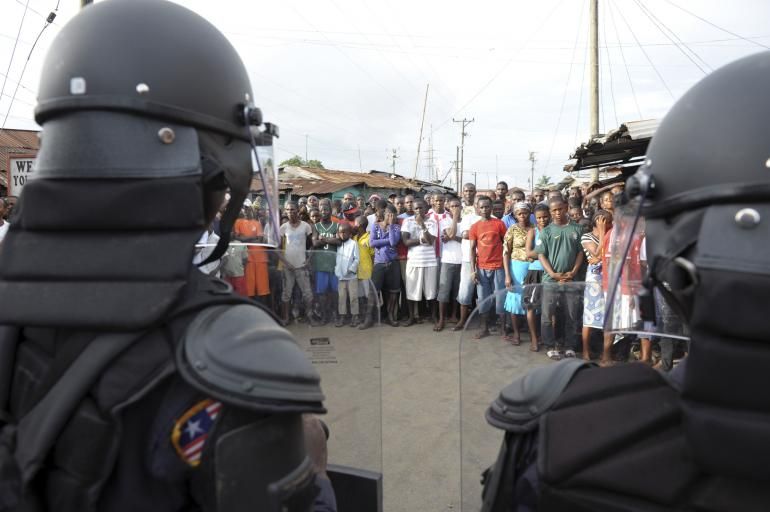
© REUTERS/2TangoLiberian security forces stand in front of protesters after clashes at West Point neighbourhood in Monrovia August 20, 2014. Police in the Liberian capital Monrovia fired live rounds and teargas on Wednesday to disperse a stone-throwing crowd trying to break an Ebola quarantine imposed on their neighbourhood, as the death toll from the epidemic in West Africa hit 1,350.
The number of people dying in West Africa from the ongoing Ebola outbreak is poised to surpass the total number of people to ever have died from the virus in just 10 days, according to World Health Organization figures. Up until sometime in early 2014, the Ebola virus had killed 1,548 people since being discovered in 1976. As of Monday, Ebola had killed more than 1,350 people across West Africa in the five months since the outbreak was first declared there. Another 1,000 people could be dead by the end of October if the death rate continues at its current pace.

Despite an influx of money, materials and personnel, an average of more than 25 people died each day this August in Guinea, Liberia, Sierra Leone and Nigeria, according to the latest WHO figures. That rate has nearly doubled since July, when 13 people on average died each day.

Attention

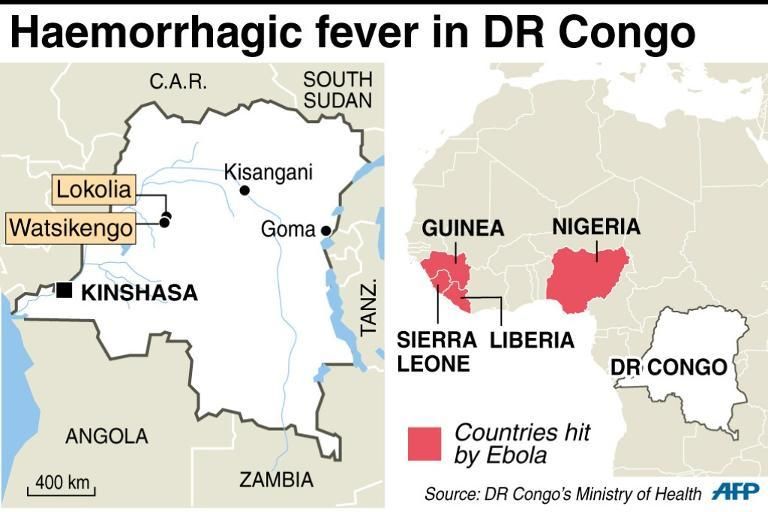
13 die from unidentified fever in DR Congo in 10 days

map DR Congo
© AFP Photo/Map showing two cities in DR Congo hit by an epidemic of Hemorrhagic Fever
A fever of unidentified origin has killed 13 people in the northwestern Democratic Republic of Congo since August 11, the health minister said. "All 13 people who have died suffered from a fever, diarrhea, vomiting and, in a terminal stage, of vomiting a black matter," Dr Felix Kabange Numbi said late Thursday.

So far, about 80 people who came into contact with the deceased are being monitored at their homes, he added.

But a World Health Organization (WHO) official and the medical charity Doctors Without Borders (MSF) said Friday it was too soon to tell whether a hemorrhagic fever caused the deaths, while an epidemic of often fatal and highly contagious Ebola raged in west Africa to the north.

"Many died presenting haemorragic symptoms, but there is also serious malaria that can cause this type of symptom, or typhoid fever," a WHO official based in Kinshasa told AFP, asking not to be named. "We're still waiting for biological confirmation to find out what kind of disease this is," said Amandine Colin of MSF, which has teams in the affected territory of Boende, in Equateur province.

Samples have been taken to be examined at the National Institute of Biomedical Research as well as a specialised laboratory in Gabon, Numbi said, adding that the results should come within days.

Comment: Do not take your eyes off this potential epidemic. Learn all you can and stay alert.


Camera

Photographer in Liberia's Ebola zone encounters the dead

Pulitzer Prize-winning photographer John Moore has covered wars in Libya, Afghanistan, and Iraq, among other places. But when he arrived in Liberia's capital city of Monrovia this month to report on the Ebola outbreak in West Africa, he faced dangers of a different order.
Image
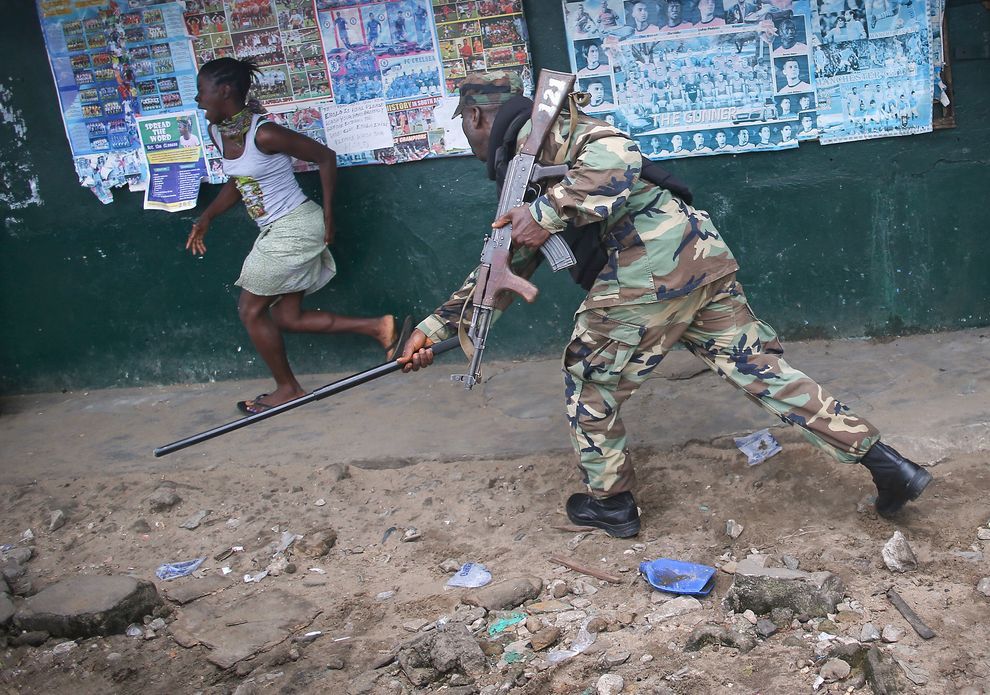
© John MooreA Liberian soldier beats a local resident while enforcing a quarantine in Monrovia's West Point slum on Wednesday.
Liberia has 972 probable, suspected, or confirmed cases of the disease, with 576 dead, more than any other country. Including the countries of Guinea, Nigeria, and Sierra Leone, the death toll from Ebola has reached 1,350, according to the World Health Organization.

Since Moore's arrival in Monrovia, there has been an attack on an isolation center that sent quarantined Ebola patients fleeing. This week, Liberian soldiers quarantined Monrovia's West Point slum in an effort to contain the virus, provoking clashes with neighborhood residents.

Moore spoke to National Geographic about the harrowing scenes he's documented, the personal risks he faces - and the humanity that endures.

Comment: See also Ebola transmission: "Being within 3 feet" or "in same room" can lead to infection.


Attention

Illness with Ebola-like symptoms kills at least 70 in Congo

congolese
© Reuters/Finbarr O`ReillyCongolese travel by canoe on the Congo River in the northern province of Equateur, where a rash of Ebola-like deaths has prompted Health Minister Dr. Félix Kabange Numbi Mukwampa to investigate
At least 70 people have died in northern Democratic Republic of Congo from an outbreak of hemorrhagic gastroenteritis, the World Health Organization said on Thursday, denying that the illness was Ebola.

A WHO report dated Thursday and seen by Reuters said that 592 people had contracted the disease, of whom 70 died. Five health care workers, including one doctor, are among the dead.

"This is not Ebola," a WHO spokesman said in an email to Reuters on Thursday.

A local priest who asked not to be named said that the illness had affected several villages and estimated that the death toll was over 100 people.

Comment: Notice these two facts

1. the symptoms are very much like those of Ebola
2. the fatality rate is lower in the remote jungle province where this illness is currently taking people's lives

We can't know for sure, but the above causes us to wonder whether it is indeed the Ebola virus and whether the conditions of living of the Congolese in the remote jungles is what causes the lower rates of fatality. If this is the case, the WHO should be paying strict attention.

Consider also these items from the not so distant past:

Dec 2008: Two more dead from Ebola outbreak in DR Congo

Sept 2007: Congo Ebola death toll hits 172