Secret HistoryS


Info

3000-year-old hymn to Babylon discovered

The previously unknown hymn of praise comes from the period around 1000 BCE. LMU Professor Enrique Jiménez used AI to find 30 other related manuscripts.
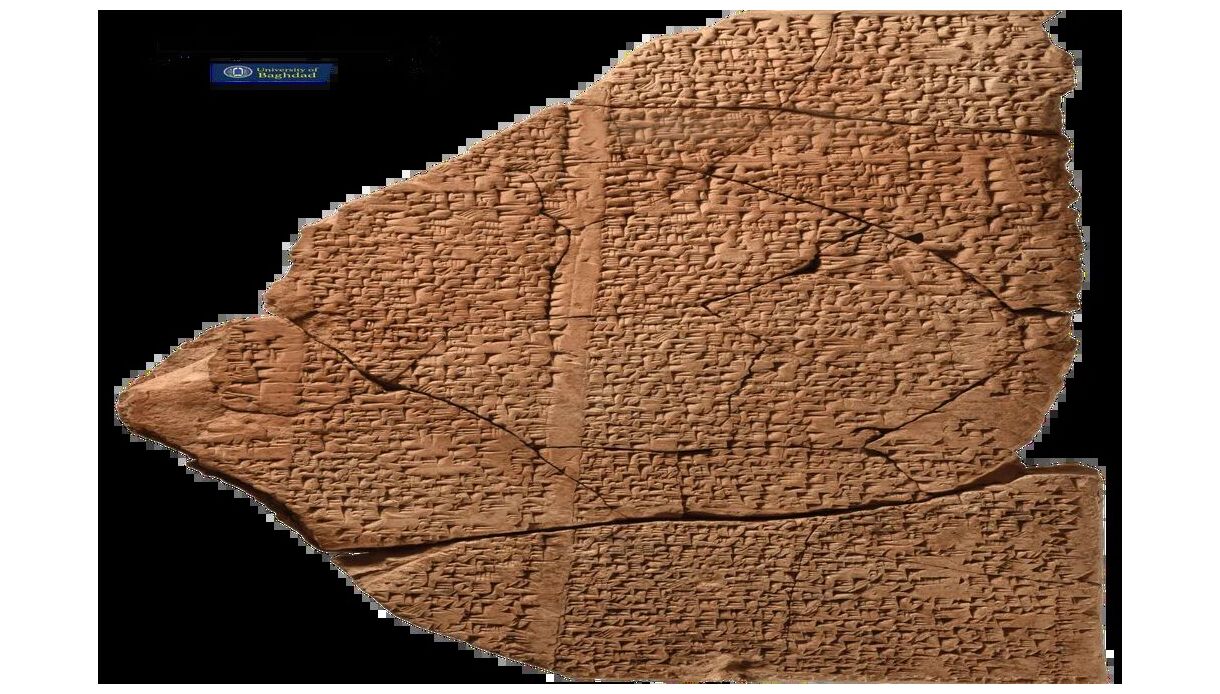
Cuneiform Tablet
© Anmar A. Fadhil, Department of Archaeology, University of Baghdad. With the permission of the Iraqi Museum and the State Board of Antiquities and HeritageThe cuneiform tablet with the newly discovered hymn.
In the course of a collaboration with the University of Baghdad, LMU's Enrique Jiménez has rediscovered a text that had been lost for a thousand years. "It's a fascinating hymn that describes Babylon in all its majesty and gives insights into the lives of its inhabitants, male and female."

Babylon was founded in Mesopotamia around 2000 BCE. Once the largest city in the world, it was a cultural metropolis in which works were written that form part of our global literary heritage today.

Babylonian texts were composed in cuneiform writing on clay tablets, which have survived only in fragments. One of the goals of the collaboration with the University of Baghdad is to decipher hundreds of cuneiform tablets from the famous Sippar Library and preserve them for posterity. Legend has it that Noah hid them here from the floodwaters before boarding the ark.

In the "Electronic Babylonian Library Platform" Enrique Jiménez is digitizing all cuneiform text fragments that have been discovered worldwide to date and using artificial intelligence to decipher fragments that belong together. "Using our AI-supported platform, we managed to identify 30 other manuscripts that belong to the rediscovered hymn - a process that would formerly have taken decades," says Jiménez, Professor of Ancient Near Eastern Literatures at LMU's Institute of Assyriology. Thanks to these additional texts, the scholars were able to completely decipher the hymn of praise on the clay tablet, parts of which were missing.
The hymn was copied by children at school. It's unusual that such a popular text in its day was unknown to us before now.

Enrique Jiménez , Professor of Ancient Near Eastern Literatures at LMU's Institute of Assyriology
Comment: See: Lament for Babylon


Info

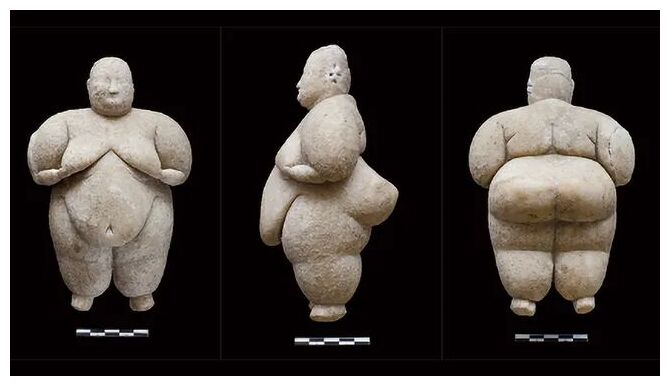
Ancient 'female-centered' society thrived 9,000 years ago in Çatalhöyük

Genetic analysis of skeletons buried in a Neolithic proto-city in Turkey reveals that female lineages were important in early agricultural societies.
female figurine
© Jason QuinlanA female figurine found at Çatalhöyük in Turkey.
Ancient DNA from Stone Age burials in Turkey has finally put to rest a decades-long debate about whether the 9,000-year-old proto-city of Çatalhöyük was a matriarchal society. The research finally confirms what experts have long suspected: Women and girls were key figures in this agricultural society.

"With Çatalhöyük, we now have the oldest genetically-inferred social organisation pattern in food-producing societies," study co-author Mehmet Somel, an evolutionary geneticist at Middle East Technical University in Turkey, told Live Science in an email. "Which turns out to be female-centered."

The new research was published Thursday (June 26) in the journal Science.

Located in south-central Turkey, Çatalhöyük was built around 7100 B.C. and was occupied for nearly 1,000 years. The vast settlement — spread over 32.5 acres (13.2 hectares) — is known for its houses that were entered from the roofs, burials beneath the house floors, and elaborate symbolism that included vivid murals and a diverse array of female figurines.

Info

New light on the stone alignments in the Carnac region

The Carnac stones
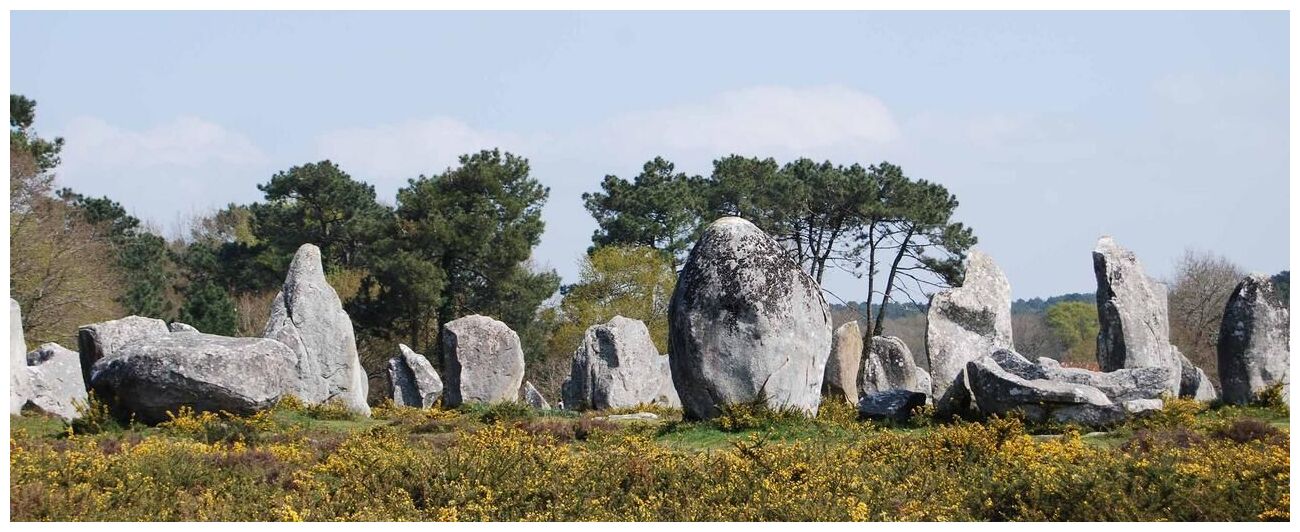
© Bettina Schulz PaulssonThe Carnac stones are an exceptionally dense collection of megalithic sites near the south coast of Brittany in northwestern France.
The enigmatic stone alignments in the Carnac region of Brittany, France, are among the most famous megalithic monuments in Europe - alongside Stonehenge, Menga, and the megalithic temples of Malta.

For the first time, it has now been possible to date parts of these alignments with a higher precision and gain new insights into their function.

This breakthrough results from a French-Swedish collaboration within the framework of the ERC-funded research project NEOSEA, led by the University of Gothenburg in partnership with the French excavation company Archeodunum and the University of Nantes.

"The alignments in the Carnac region now appear to be among the earliest megalithic monuments in Europe, with this section constructed between 4600 and 4300 cal BC. We have also confirmed the Bay of Morbihan as the earliest megalithic region in Europe," says archaeologist Bettina Schulz Paulsson at the University of Gothenburg, who leads the NEOSEA project and is one of the researchers behind the new study published in Antiquity.

More than 3,000 standing stones stretch over 10 km in the region, from Carnac/La Trinité-sur-Mer to Erdeven, forming a unique concentration of megalithic alignments in a coastal landscape.

Info

New discoveries in Iran reveal an ancient civilization that may have predated Mesopotamia's rise by thousands of years

In the dusty valleys of southeastern Iran, archaeologists are uncovering clues to a forgotten civilization. Strange symbols on ancient tablets hint at something older than Mesopotamia.
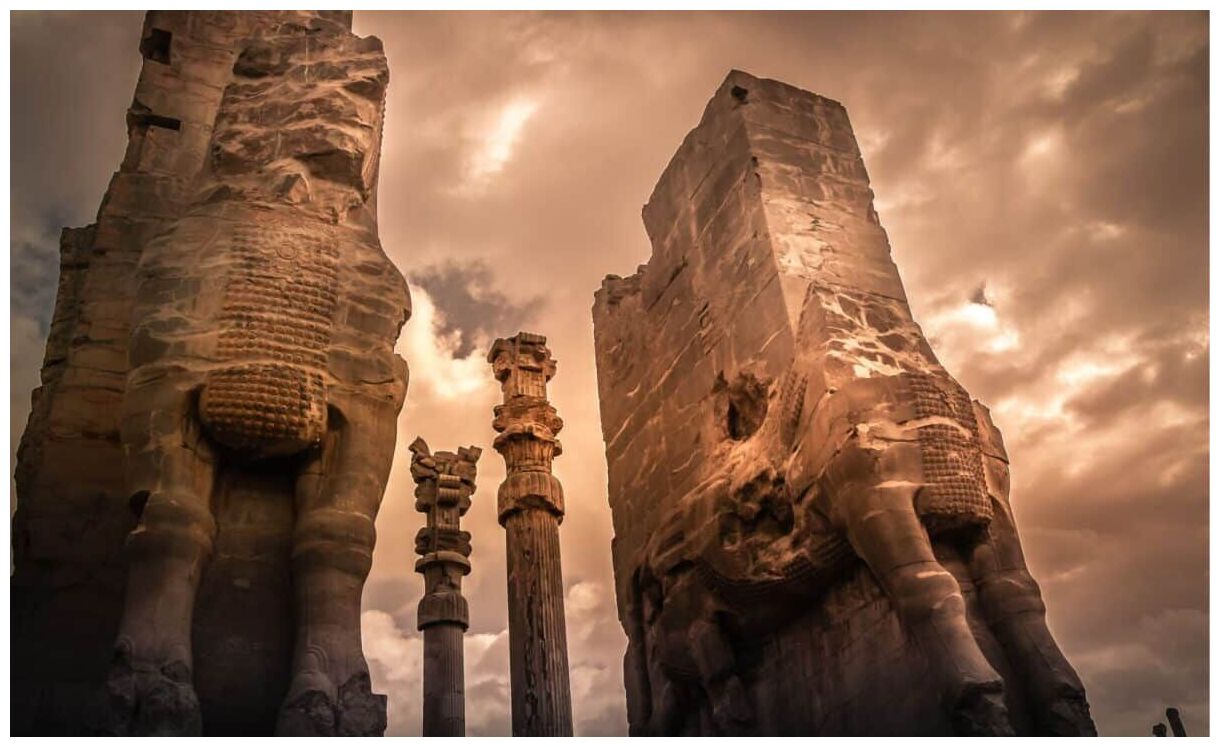
Persepolis entrance in Iran
© Shutterstock | The Daily Galaxy --Great Discoveries ChannelGigantic stone sculptures at the entrance to the ancient city of Persepolis in Iran.
Beneath the rugged mountains of southeastern Iran, archaeologists are carefully unearthing traces of a Bronze Age society that could upend the accepted narrative of where writing and urban life began. The discoveries are emerging from the twin mounds of Konar Sandal, near the Halil River in the Kerman province — a region long dismissed as peripheral in the story of early human civilization.

The ancient settlement, widely referred to as the Jiroft site, sits just outside the modern town of Jiroft, where illegal excavations in the early 2000s led to the unintentional exposure of monumental ruins. Now, two decades of scientific excavations are revealing a complex urban culture with planned architecture, decorated chlorite vessels, and signs of a writing system that may predate Mesopotamia.

Boat

After 250 years, Captain Cook's legendary ship 'Endeavor' finally identified near New England resort

captain cook endeavor ship found newport
© Joseph Sohm/Universal Images Group via Getty Images; Stock Montage via Getty ImagesMaritime experts have identified Captain James Cook's HMS Endeavour off Newport, Rhode Island, where it was intentionally sunk in 1778.
Experts confirm the historic 18th-century vessel rests 40 feet underwater near Newport

Maritime experts believe they've finally pinpointed the exact resting place of Captain James Cook's legendary ship - just off the coast of a beloved New England resort town.

A report about HMS Endeavour was published by the Australian National Maritime Museum (ANMM) on June 3.

In 1778, the British intentionally sank the ship off the coast of Newport, Rhode Island, in a strategic move to block French and American attacks.

While it has long been known that the 18th-century vessel lies off the coast of the Ocean State, its exact location has eluded marine historians.

Info

Ancient temple ruins discovered in Andes shed light on lost society

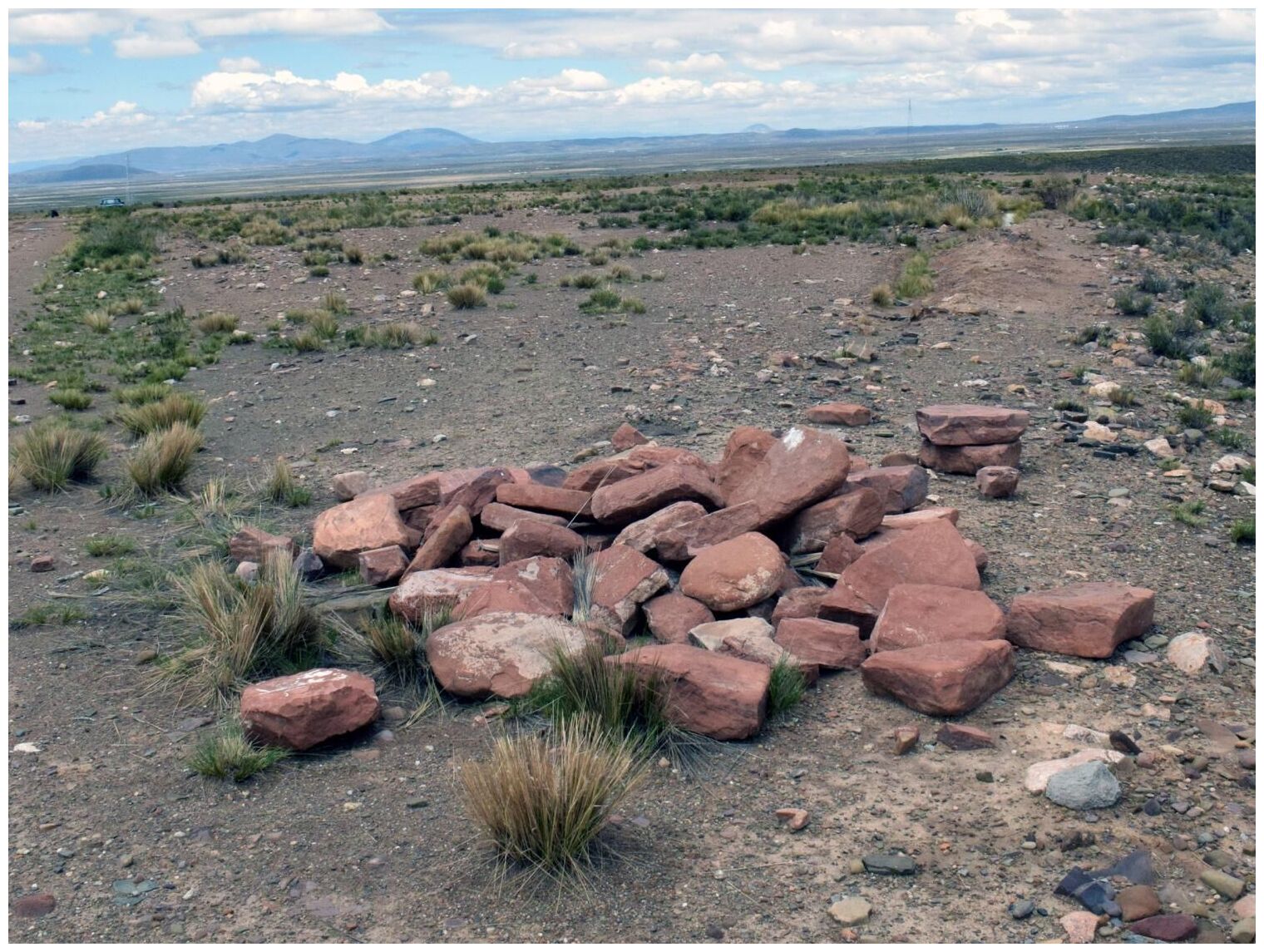
temple complex
© José Capriles / Penn State. Creative CommonsThe newly discovered temple complex is located roughly 130 miles south of Tiwanaku’s established historical site, on top of a hill that was never explored in depth by researchers due to its unassuming location.
UNIVERSITY PARK, Pa. — An ancient society near the southern shores of Lake Titicaca in modern-day Bolivia was once one of the continent's most powerful civilizations. Known as Tiwanaku, the ancient society is widely considered by archaeologists to be one of the earliest examples of civilization in the Andes and a precursor of the Inca empire, but it mysteriously disappeared about a thousand years ago. Now, a team led by scientists at Penn State and in Bolivia have discovered a Tiwanaku temple, shedding new light on what the society looked like in its prime.

Much about the Tiwanaku civilization remains unknown, explained José Capriles, Penn State associate professor of anthropology and lead author on a study about the temple discovery published today (June 24) in the journal Antiquity.

"Their society collapsed sometime around 1000 CE and was a ruin by the time the Incas conquered the Andes in the 15th century," Capriles said. CE refers to the common era of the current calendar. "At its peak, it boasted a highly organized societal structure, leaving behind remnants of architectural monuments like pyramids, terraced temples and monoliths, most of which are distributed in sites around Lake Titicaca and, while we know Tiwanaku's control and influence extended much further, scholars debate how much actual control over distant places it had."

Star of David

Flashback Best of the Web: Christians United for Israel: How the largest pro-Israel organization in the US rose to power

Well before Theodore Herzl founded political Zionism and published The Jewish State, Christian Zionists in the United States and England were already seeking to direct and influence the foreign policy of both nations in service to a religious obsession end times prophecy

Christians United for Israel, John Hagee, Christian zionism
© Sebastian Scheiner | APTexas evangelist John Hagee of Christians United for Israel addresses a crowd of his followers and Israeli supporters at a rally at the Jerusalem convention center, April 6, 2008.
The largest pro-Israel organization in the United States is not composed of Jews, but of Christian evangelicals, with a total membership of 7 million, more than 2 million more members than the entirety of the American Jewish community.

Members of this organization, Christians United for Israel (CUFI), met in Washington on Monday, attracting thousands of attendees and featuring speeches from Israeli Prime Minister Benjamin Netanyahu, Secretary of State and former CIA Director Mike Pompeo, Vice President Mike Pence, and National Security Advisor John Bolton. CUFI's leader, controversial evangelical preacher John Hagee, has met with President Donald Trump several times and was recently part of an exclusive White House meeting in March on the administration's upcoming "peace plan" for Israel and Palestine.

CUFI is but one of many organizations throughout American history that have promoted the state of Israel and Zionism on the grounds that a Jewish ethnostate in Palestine is a requirement for the fulfillment of end-times prophecy and necessary for Jesus Christ to return to Earth — an event Christians often refer to as "the Second Coming."

While organizations like CUFI and its predecessors have long seen the creation of the state of Israel in 1948, and the later Israeli victory and conquest of Jerusalem in 1967, as the fulfillment of Biblical prophecy, there is one prophecy that this sect of evangelical Christians believes is the only thing standing between them and the Second Coming. There are estimated to be more than 20 million of these Christians, often referred to as Christian Zionists, in the United States and they are a key voting bloc and source of political donations for the Republican Party.


Comment: As such, they're not actually Christians. We may as well just distinguish 'Israeli Zionists' from 'American Zionists'.


As was explored in previous installments of this series, these Christian Zionists, much like religious Zionist extremists in Israel, believe that the Al Aqsa mosque and the Dome of the Rock must be replaced with a Third Jewish Temple in order to usher in the end times.

Comment: See also:


Info

Philippine islands had technologically advanced maritime culture 35,000 years ago

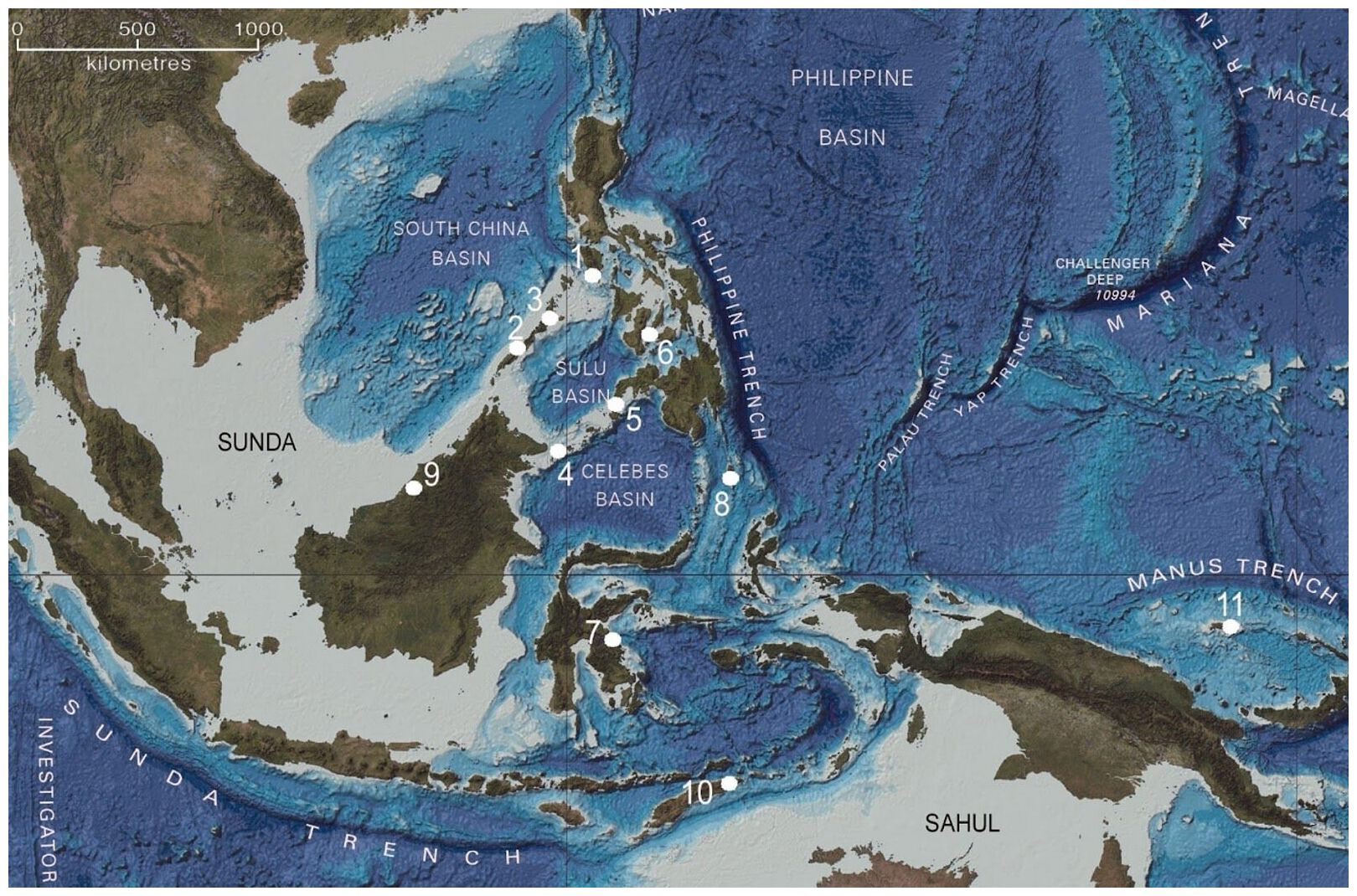
map of Island Southeast Asia
© Base Map: www.gebco.net, 2014A map of Island Southeast Asia (ISEA) and the Sunda region as it appeared roughly 25,000 years ago at the height of the last Ice Age, with locations of archaeological sites surveyed by the Mindoro Archaeology Project. The sites yielded artifacts with remarkably similar characteristics despite separation by thousands of kilometers and deep waters that are almost impossible to cross without sufficiently advanced seafaring knowledge and technology.
The Ateneo researchers' latest publication presents a wealth of data and materials from the Mindoro Archaeology Project, including some of the oldest evidence of the presence of anatomically modern humans (Homo sapiens) in the Philippine archipelago, in Occidental Mindoro — particularly on Ilin Island; San Jose; and Sta Teresa, Magsaysay.

Mindoro, like most of the main Philippine islands except for Palawan, was never connected to mainland Southeast Asia, neither by land bridges nor by ice sheets, and sea-crossings were always necessary to reach it. This likely spurred the development of sophisticated technologies for traversing and surviving this environment.

Skull

Ancient 'Dragon Man' skull from China isn't what we thought

Homo iongi
© John Bavaro Fine Art/Science Photo LibraryA reconstruction of Homo longi from the ancient Harbin skull found in China.
Scientists have determined that a giant skull from an ancient human relative named the "Dragon Man" is actually Denisovan. Using cutting-edge DNA analysis, scientists have uncovered the true identity of an ancient human relative nicknamed the "Dragon Man."

The mystery began with a giant, human-like skull discovered by a Chinese laborer in Harbin City, China, in 1933. In 2018, the man's family recovered the Harbin skull, which the laborer had buried in a well, and donated it to science. The enormous cranium features a long, low braincase and a massive brow ridge, along with a broad nose and big eyes. Based on the skull's unusual shape and size, experts gave it a new species name — Homo longi, or "Dragon Man" — in 2021.

But in the past several years, there has been intense debate about whether Dragon Man, who lived at least 146,000 years ago, is a separate species. Instead, some researchers have claimed that the Dragon Man skull may be from a group of ancient humans called the Denisovans, since no Denisovan skull had ever been found.

Now, in two studies published Wednesday (June 18) in the journals Science and Cell, researchers have proved that Dragon Man is indeed the face of Denisovans.

Light Sabers

Israel - Iran: The Confrontation

IsraliIranian flags
© Unknown
The confrontation between Israel and Iran does not correspond at all to the image presented by the media. Its roots go back to the time before the Islamic Republic and have nothing to do with the production of a nuclear bomb. The current start of the war is intended to cover up the misdeeds of the Argentine Rafael Grossi, director of the International Atomic Energy Agency.

The time has come: the confrontation between Israel and Persia has begun. Its origins lie not in the Islamic Republic, but in everything that preceded it. This war will continue until one of the opponents is exhausted.

To understand what is happening and avoid falling into one of the two official narratives that obscure the reality of the problem, we need to take a few steps back.

Iran's Enemies in the 20th Century

All demonstrations in Iran against external enemies end with the inevitable "Death to the United Kingdom, Death to the United States, Death to Israel!" It is a cry that comes from the depths of Persian suffering since World War I.

Although we in the West are not aware of it, Iran was the victim of the largest genocide of the First World War in 1917-1919 [ 1 ] . 6 to 8 million people died of hunger out of a population of 18 to 20 million, i.e. between a quarter and a third of Iranians. Iran, although neutral, was crushed by the British armies, against a background of rivalry with the Bolsheviks and the Ottomans. This horror left a traumatic memory that is still very much present in Iran [ 2 ] For an Iranian there is no doubt that the United Kingdom is the first enemy of his country.