Secret HistoryS


Info

Rare Byzantine coin may show a 'forbidden' supernova explosion from A.D. 1054

Ancient Coin
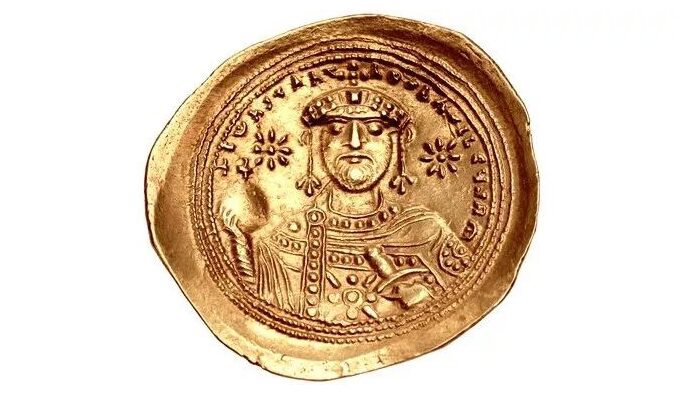
© cngcoins.com/Filipovic et alCould one of the two stars near the Emperor's head show a 'forbidden' supernova that lit up the sky over Byzantium for more than a year?
In A.D. 1054, a nearby star ran out of fuel and blew up in a dazzling supernova explosion. Though located 6,500 light-years away, the blast was clearly visible in the skies over Earth for 23 days and several hundred nights after.

The explosion, now known as SN 1054, was so bright that Chinese astronomers dubbed it a "guest star," while skywatchers in Japan, Iraq and possibly the Americas recorded the explosion's sudden appearance in writing and in stone. But in Europe — which was largely ruled at the time by the Byzantine Emperor Constantine IX and the Christian church — the big, bedazzling explosion in the sky was never mentioned, not even once.

Why not? Did the church simply ignore this spontaneous star, or was a more nefarious plot to cover up the reality of the cosmos at play? According to new research, a clue to the answer may hide in an unexpected place: a limited-edition gold coin.

In a study published in the August 2022 issue of the European Journal of Science and Theology, a team of researchers analyzed a series of four Byzantine gold coins minted during the reign of Constantine IX, from A.D. 1042 to 1055. While three of the coins showed only one star, the authors suggest that the fourth coin — which shows two bright stars framing an image of the emperor's head — may be a subtle, and possibly heretical depiction of the supernova of 1054.
Info

Archaeologists discover monumental evidence of prehistoric hunting across Arabian desert

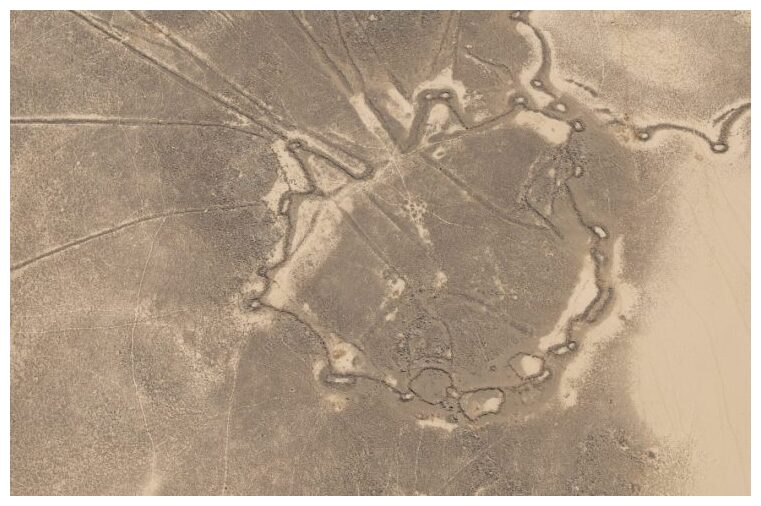
Kites in Saudi Arabia
© University of Oxford
Archaeologists at the University of Oxford's School of Archaeology have used satellite imagery to identify and map over 350 monumental hunting structures known as 'kites' across northern Saudi Arabia and southern Iraq - most of which had never been previously documented.

Led by Dr Michael Fradley, a team of researchers in the Endangered Archaeology in the Middle East and North Africa (EAMENA) project used a range of open-source satellite imagery to carefully study the region around the eastern Nafud desert, an area little studied in the past. The surprising results, published in the journal The Holocene, have the potential to change our understanding of prehistoric connections and climate change across the Middle East.

Termed kites by early aircraft pilots, these structures consist of low stone walls making up a head enclosure and a number of guiding walls, sometimes kilometres long. They are believed to have been used to guide game such as gazelles into an area where they could be captured or killed. There is evidence that these structures may date back as far as 8,000 BCE in the Neolithic period.

Kites cannot be observed easily from the ground, however the advent of commercial satellite imagery and platforms such as Google Earth have enabled recent discoveries of new distributions. While these structures were already well-known from eastern Jordan and adjoining areas in southern Syria, these latest results take the known distribution over 400km further east across northern Saudi Arabia, with some also identified in southern Iraq for the first time.

Dr Fradley said: 'The structures we found displayed evidence of complex, careful design. In terms of size, the 'heads' of the kites can be over 100 metres wide, but the guiding walls (the 'strings' of the kite) which we currently think gazelle and other game would follow to the kite heads can be incredibly long. In some of these new examples, the surviving portion of walls run in almost straight lines for over 4 kilometres, often over very varied topography. This shows an incredible level of ability in how these structures were designed and built.'

Cut

31,000-year-old skeleton in Indonesia shows earliest known evidence of surgery

surgery archeology
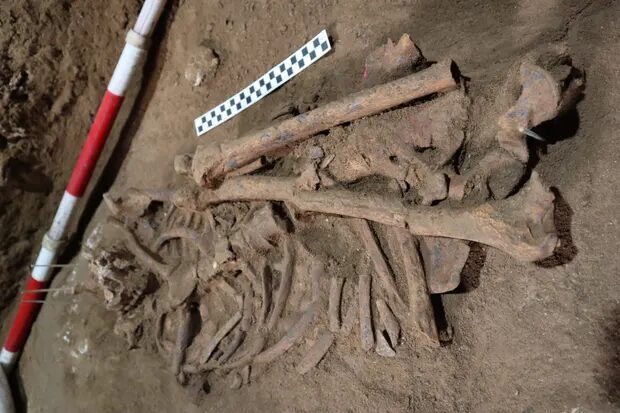
© Tim MaloneyAustralian and Indonesian archaeologists stumbled upon the skeletal remains of a young hunter-gatherer whose lower leg was amputated by a skilled surgeon 31,000 years ago.
A 31,000-year-old skeleton missing its lower left leg and found in a remote Indonesian cave is believed to be the earliest known evidence of surgery, according to a peer-reviewed study that experts say rewrites understanding of human history.

An expedition team led by Australian and Indonesian archaeologists stumbled upon the skeletal remains while excavating a limestone cave in East Kalimantan, Borneo looking for ancient rock art in 2020.

The finding turned out to be evidence of the earliest known surgical amputation, pre-dating other discoveries of complex medical procedures across Eurasia by tens of thousands of years.

Comment: See also:


Red Flag

Patrick Armstrong on Mikhail Gorbachev's legacy

Gorbachev
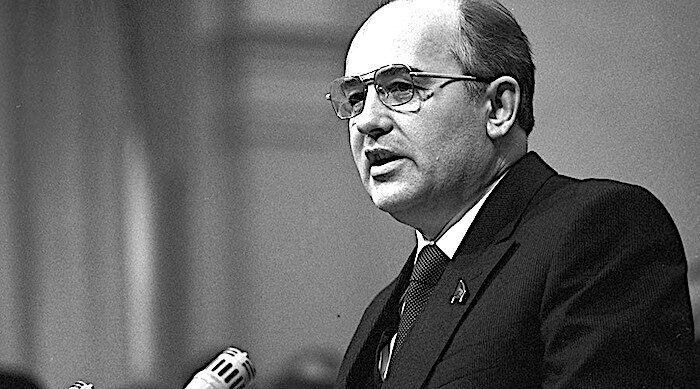
© Vladimir Akimov/SputnikMikhail Gorbachev, then-Candidate to members of Political Bureau of Central Committee of the Communist Party of Soviet Union • 12 January, 1979
He died on Tuesday. I haven't bothered to read many of the obits that have been published but I will make a guess about their general flavour. The Western ones will say he ended the Cold War, removed the Soviet threat and, maybe, introduced fast food to Russia (a reverse on the supposed origin of the bistro). The Russian ones will be rather uncomplimentary and will blame him for the miseries of the 1990s when jobs disappeared, savings evaporated, deaths increased and Russia was pushed around.

I approach this with a somewhat different view that, as it happens, I share with Putin. I believe that, when Gorbachev became GenSek in 1985, the USSR system had exhausted its possibilities. I believe, but cannot find the reference, that Putin told Oliver Stone that the system was inefficient at its core, but more of his thoughts on the viability of the USSR can be found here. Not very complimentary: ideals not accomplished, too much repression ab initio, he pays credit to Stalin's industrialisation for victory in 1945 but concludes "However, in the final count, the inability to embrace change, to embrace technical revolutions and new technology led to a collapse of that economy". Or how about this from September 2005? "In the Soviet Union, for many decades, we lived under the motto, we need to think about the future generation. But we never thought about the existing, current, present generations." (PS he never said "the greatest catastrophe": that's a mistranslation.)

In short, I believe that the USSR was heading for trouble in 1985: the 1990s were bad enough but I'm not sure they would have been much better with other players.

Info

Rare find provides archaeologist new insight into Etruscan life under Rome

Aerial view of Castellaraccio di Monteverdi
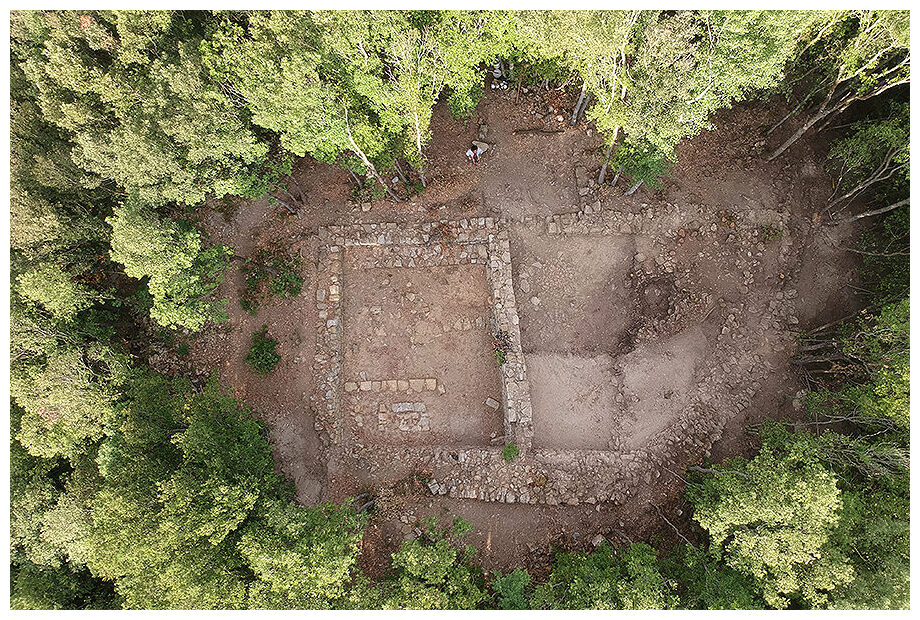
© University at BuffaloAerial view of Castellaraccio di Monteverdi, the medieval site investigated by the IMPERO Project.
The recent rescue excavation of a 2nd century B.C.E. burial site in the southern Tuscany region of Italy is providing a previously unseen glimpse of the Etruscan identity that survived the Roman conquest of Etruria, according to the results of a new paper by a UB expert in Roman archaeology.

Analysis of the grave goods (items buried along with the bodies) and burying rituals from the necropolis, one of the few sites untouched by looters in either antiquity or modernity, suggests how the many entrenched and distinct characteristics of the Etruscan population survived in the presence of the dominant Roman power and its associated law.

These persistent and complex Etruscan traditions continued for more than two centuries after the Roman conquest in ways that shaped the social, cultural and economic habits of the territory until the small rural community's violent destruction during the Social Wars.

Alarm Clock

Why assume there will be another election? The 1934 US Bankers Coup revisited

smedley butler trump banker's coup
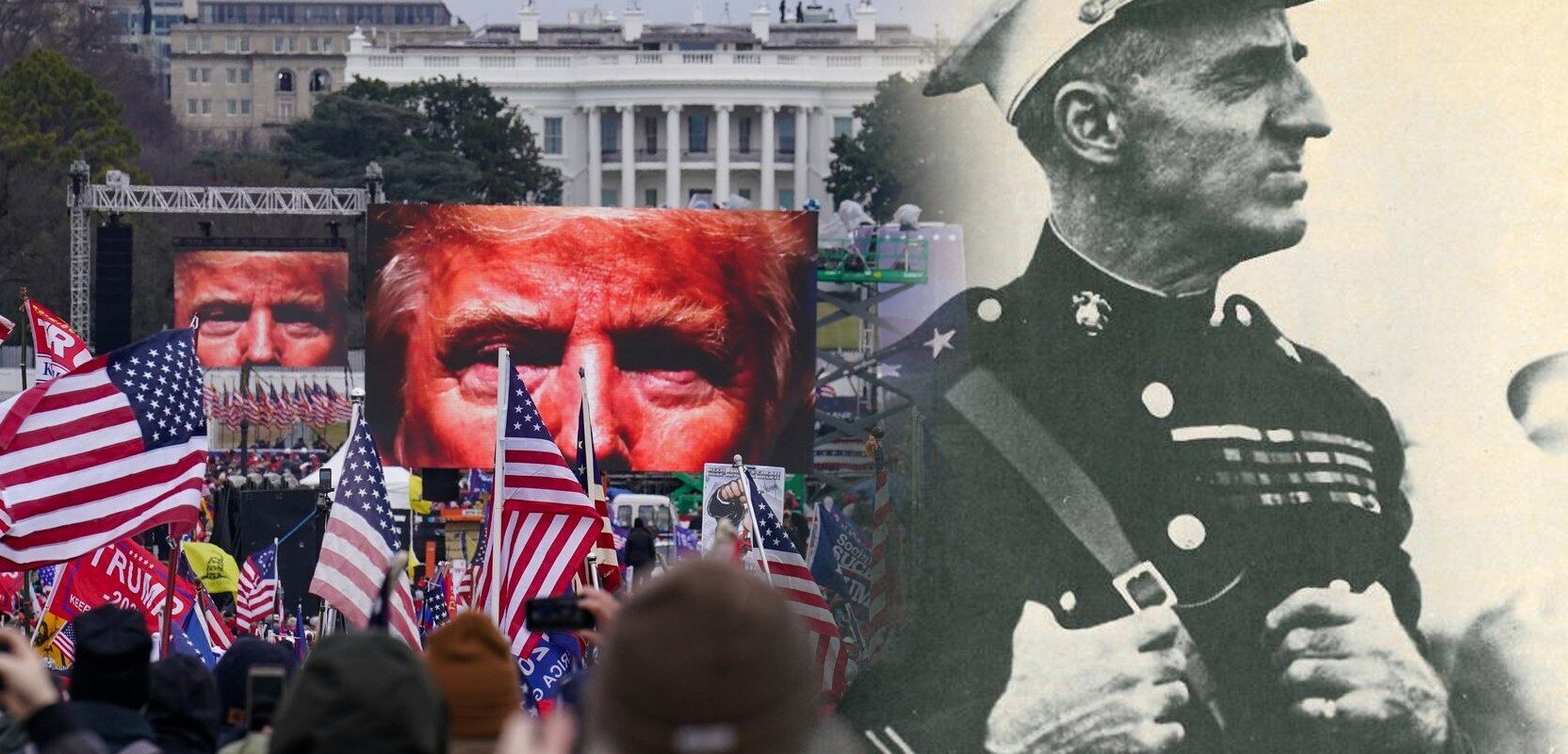
© Canadian PatriotWill history repeat?
With the passage of the 2022 Defense Authorization Act giving the executive branch sweeping powers over the use of the military in all domestic affairs, and with the obvious obsession by a supranational deep state technocracy intent on imposing a final endgame scenario onto the United States, it is important to recognize the historical precedent of the attempted Bankers' Coup of 1934 that sought to impose a fascist puppet dictator into the White House. Unfortunately for the JP Morgan network managing this coup, the puppet they selected for their "American Mussolini" was a patriotic retired General named Smedley Darlington Butler.

Footprints

For 18 months, as ISIS advanced, the US did nothing to stop them

SyriaIraq
In 2017, US and allied Kurdish forces bombarded the city of Raqqa, the bastion of ISIS in Syria and the de-facto capital of the terror group's self-proclaimed caliphate.

Concurrent to this, US forces conducted massive air strikes on the Iraqi city of Mosul, to support Iraqi and Kurdish ground forces against ISIS there too.

But the US-led campaigns in Mosul and Raqqa falsely suggest that the US and ISIS were implacable enemies. These battles created the perception that the US was committed to fighting Al-Qaeda and its various splinter groups, in a continuation of the so-called "War on Terror" begun by the Bush administration in the wake of 9/11.

Supporting ISIS' territorial advances

However, a closer look at events in both Iraq and Syria paints a very different picture:
The US and its allies, both directly and indirectly, colluded with ISIS to attain specific geopolitical objectives. The terror group that captured the world's attention in 2014 was in fact a vital and valuable tool for US policy planners.
Evidence of this is rife. In June 2014, when ISIS fighters swept across the Syrian border to first capture Mosul, the largest city of its caliphate, the US military monitored the ISIS convoys crossing from Syria using drones and satellite systems, but took no action to bomb them.

Pyramid

4,000 years ago Nile River flowed up close to pyramids of Giza

Khufu Nile River
© Alex Boersma/Proceedings of the National Academy of Sciences (2022). DOI: 10.1073/pnas.2202530119Artist's reconstruction of the now defunct Khufu branch of the Nile River.
A team of researchers affiliated with several institutions in France, working with a colleague from China and another two from Egypt, has found evidence that shows the Khufu branch of the Nile River once ran so close to Giza that it could have been used to carry the stones that were used to build the famous pyramids. In their paper published in Proceedings of the National Academy of Sciences, the group describes their study of fossilized pollen grains found in the sediments around Giza and what it showed them about the history of the Khufu branch.

In their work, the researchers obtained core sediment samples that have been collected from several sites in and around Giza over the years and then took a close look at the fossilized pollen grains trapped in them for thousands of years.

Comment: See also:


Sherlock

Jewish remains found in Norwich well were medieval pogrom victims - study

reconstruction
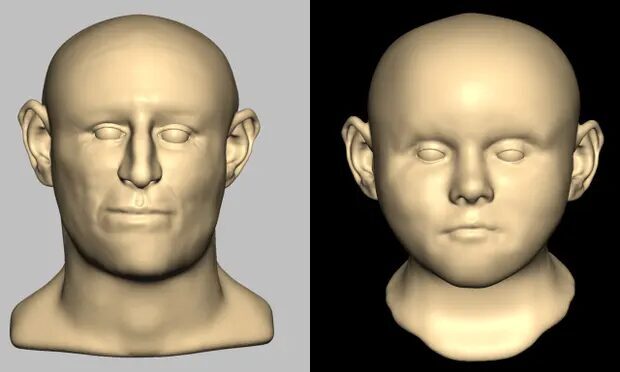
© Composite: Prof Caroline Wilkinson/Liverpool John Moores UniversityBased on skeletal remains, researchers reconstructed the face of a male adult and a child.
The remains of children and adults found in a disused well in Norwich have been identified as victims of a bloody medieval pogrom, researchers have revealed.

The team said the discovery not only underscored the horror of the antisemitic atrocity, but provided new insights into when genetic disorders often found among Ashkenazi Jews first appeared.

"I'm really excited that 12 years on [from our first investigations], we've finally been able to use historical records, archaeology and ancient DNA analyses to shed new light on a historical crime, and in doing so sequenced the oldest genomes from a Jewish population," said Dr Selina Brace, lead author of the research from the Natural History Museum in London.

The remains of at least 17 individuals were discovered in Norwich in 2004 during construction at a site intended for a shopping centre.

Comment: See also: And check out SOTT radio's: The Truth Perspective: Match Made in Heaven: The Surprising Similarities Between Radical Islam and Talmudic Judaism


Info

Cryptic 4,000-year-old writing system may finally be deciphered

More than 95% of Linear Elamite may be deciphered.
Bull-Headed Vessel
© Photo courtesy of the Metropolitan Museum of ArtThis bull-head vessel spout is from Susa and dates back around 4,000 years. Linear Elamite was used in the same time and place.
A mysterious ancient writing system called Linear Elamite, used between about 2300 B.C. and 1800 B.C. in what is now southern Iran, might have finally been deciphered, although some experts are skeptical about the findings. What's more, it's unclear whether all the artifacts used to decipher the writings were legally acquired.

Only about 40 known examples of Linear Elamite survive today, making the script challenging to decode, but researchers say they've largely accomplished just that, they wrote in a paper published in July in the journal Zeitschrift für Assyriologie und Vorderasiatische Archäologie (German for the Journal of Assyriology and Near Eastern Archaeology). Key to their decipherment was the analysis of eight inscriptions on silver beakers.

Other research teams had previously decoded different Linear Elamite inscriptions, and the new study's authors built on this previous work by comparing the writing system in the eight Linear Elamite inscriptions with cuneiform (an already-deciphered script used in what is now the Middle East) texts that date to around the same time period and likely contain the names of the same rulers and their titles and use some of the same phrases to describes the rulers.

The team determined what many other additional signs meant, the team wrote. However, about 3.7% of the Linear Elamite signs remain undecipherable. There are more than 300 Linear Elamite signs representing different sounds, such as a crescent shaped sign that sounds like "pa," the team wrote in the paper.