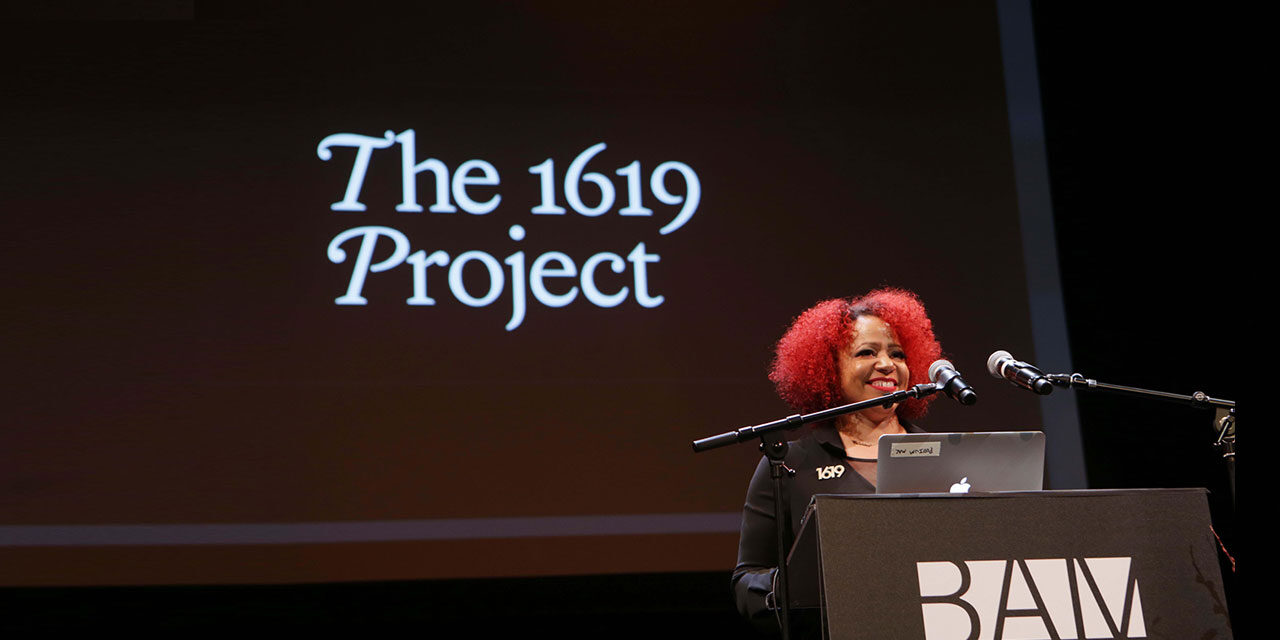
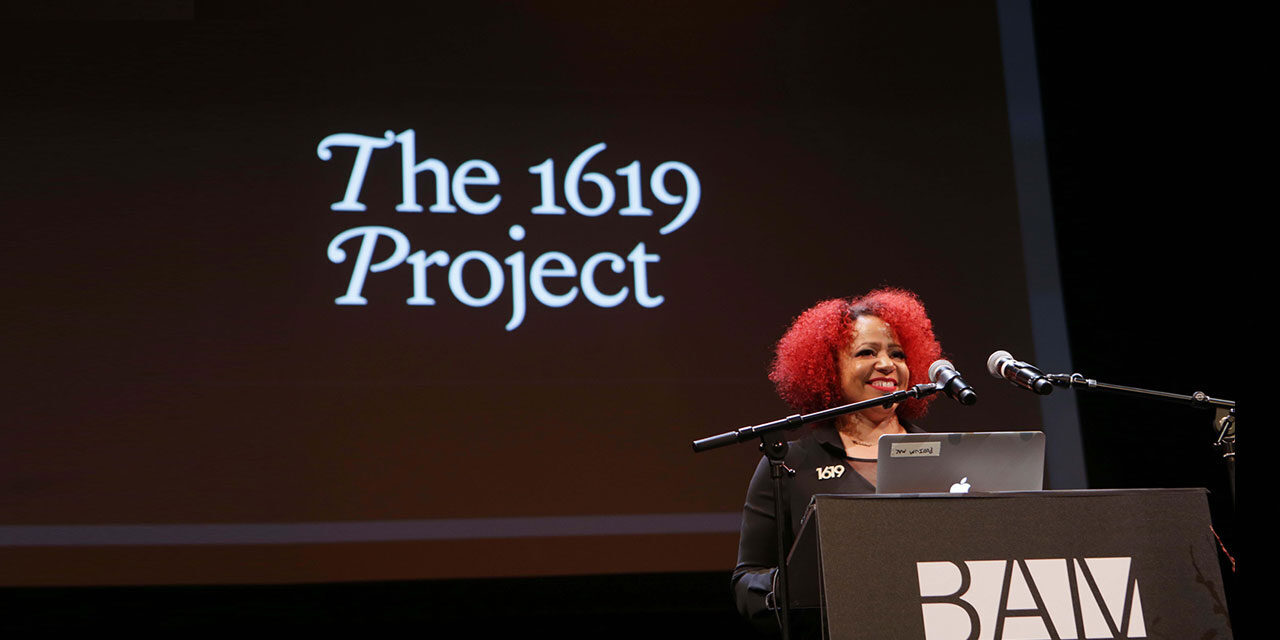
© MPI43/Media Punch/Alamy Live NewsNikole Hannah-Jones, editor of the New York Times's 1619 Project, placed American history in the defendant's docket and found it guilty of unrelieved injustice and oppression.
On August 14, 2019, the
New York Times Magazine dropped something of a historical bombshell on its readers. It was not some new conspiracy theory about the Kennedy assassination or some breathtaking revelation of the secret life of Millard Fillmore. It was much more dramatic. It was called "The 1619 Project," and it consumed an entire special 100-page issue of the magazine. It also aimed at nothing less than a complete overhaul of how we understand American history. It did not, however, meet with entire agreement by American historians: At least two very diverse groups of American historians and political scientists,
one headed by myself (and including eleven others) and another by my Princeton colleague Sean Wilentz,
wrote letters to Jake Silverstein, the editor of the
New York Times Magazine, to question a host of gaffes and misstatements in
The 1619 Project. All of these were summarily waved away, and last week,
The 1619 Project's lead essay sailed merrily to a Pulitzer Prize for commentary — although if "sailed" is the right metaphor, the ship in question resembles the
Bounty more than the
Cutty Sark.
The follies of
The 1619 Project begin with its title. Most of the time, when we think of how the United States began, we think of 1776 — the Declaration of Independence, the American Revolution, George Washington and Thomas Jefferson and James Madison. What
The 1619 Project asked us to do was to dial that beginning date back to 1619 — the year the first African slaves were deposited on the shore of what was then the English colony of Virginia. As
The 1619 Project's lead writer, journalist Nikole Hannah-Jones, insists, this was the real moment of America's beginnings. "No aspect of the country that would be formed here has been untouched by the years of slavery that followed,"
wrote Hannah-Jones. "Out of slavery — and the anti-black racism it required — grew nearly everything that has truly made America exceptional: its economic might, its industrial power, its electoral system, its diet and popular music, the inequities of its public health and education, its astonishing penchant for violence, its income inequality, the example it sets for the world as a land of freedom and equality, its slang, its legal system and the endemic racial fears and hatreds that continue to plague it to this day."















Comment: For more on COINTELPRO see the articles below: