OF THE
TIMES

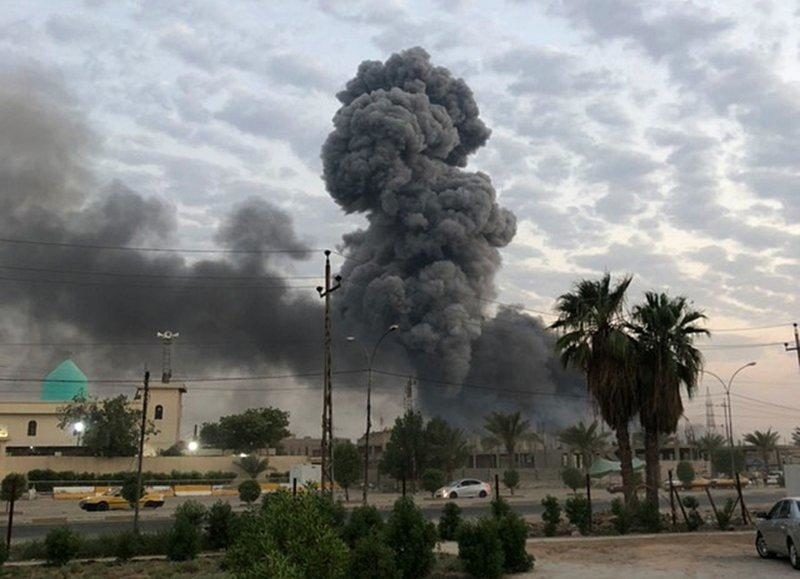
U.S. military officials in Iraq will now seek out Iraqi approval before launching any air operations, a move made a day after that nation's prime minister announced a ban of unauthorized flights, including those involving coalition forces fighting ISIS.
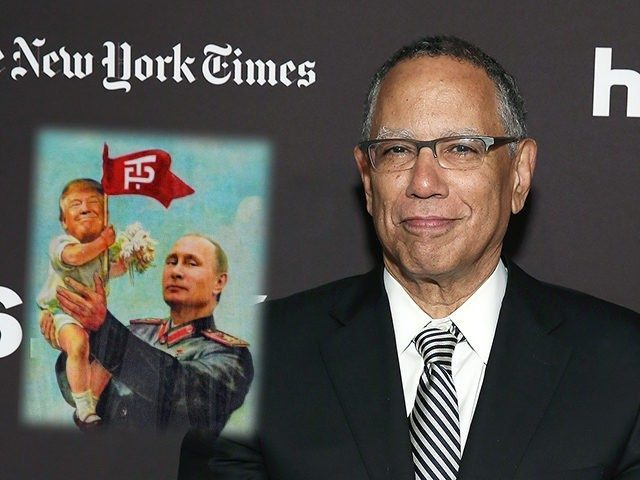
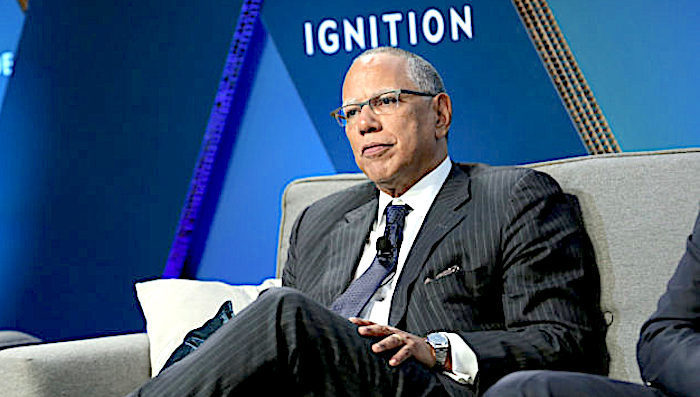
"Chapter 1 of the story of Donald Trump, not only for our newsroom but, frankly, for our readers, was: Did Donald Trump have untoward relationships with the Russians, and was there obstruction of justice? That was a really hard story, by the way, let's not forget that. We set ourselves up to cover that story. I'm going to say it. We won two Pulitzer Prizes covering that story. And I think we covered that story better than anybody else."But then came the Mueller report, with special counsel Robert Mueller failing to establish that the Trump campaign conspired or coordinated with Russia to fix the 2016 election.
Baquet was asked about historical use of the word racist. He cited the demonstrations by segregationists in 1957, which were classified as racist, unlike Trump.The full transcript can be found here.
Baquet's reasoning seems contradictory when reading [the transcript of the meeting], and it seemed to be in the room as well. Spread through the transcript are long, long questions by staffers asking Baquet to explain his reasoning, like this one:
Staffer: "Yeah, I want to follow up and disentangle a couple of things that I've often seen conflated in these meetings. You have questions like 'should we call Donald Trump a racist' and these broader discussions of our coverage getting flattened with the reason that I think we're here today, which is really narrowly the question of how we present the work that we do and the headlines that end up on our work. Because this is sort of the thing that a lot of us who are, in some capacity, public representatives of the Times feel ourselves called to answer for. Because there are these patterns of getting headlines wrong in a very specific way that recur repeatedly and in a way that makes me think that it's a process issue. And to me, the question of whether you put a phrase like "racial fires" in a headline is not actually about whether we think it's OK to call Donald Trump racist. It's whether we think it's OK to use euphemisms instead of direct, clear speech in a headline.
"And the issue with last week's headline was not really about Trump per se. It was really more broadly about what kind of credulousness we want to reflect in terms of an administration — any administration. Or about other cases where we're sort of shying away from the real content of the story to put a milder spin on it in the headline, which is sometimes actively misleading. ... it's not always clear whether we're taking on board the criticism that I think is very valid of a lot of these headlines. It is a real storyline about the Times out there now, that we are kind of repeatedly making mistakes that other people aren't making so much."
Baquet responds to that series of questions with, "I'm going to be really honest. I actually don't think we make a whole lot more mistakes." ...
Philip Corbett: ... "In other words, that the mistakes you're seeing are when we're going, shall we say, too easy on Donald Trump. There certainly have been headlines where I feel like that has been a failing. But I will say, honestly, there have been headlines that many of us have been concerned about or asked to have changed or have had discussion about where I felt the problem was the opposite. Where we were showing what could be read as bias against Trump, and were perhaps going too far in the opposite direction. "

Iranian vessel the Grace 1, which has been caught up in a heated diplomatic dispute between Tehran and the West, was given permission to leave Gibraltar on 15 August, with the local authorities confirming on Saturday that the US Department of Justice is still seeking to detain the tanker on a number of allegations.Fixated, petty and doubling down, the US also did this:
A shipping agent for Iranian supertanker the Grace 1 has claimed that the vessel is prepared to leave Gibraltar in "24 to 48 hours", despite a last-minute effort by the United States to seize it again, reported AP.
On Saturday the managing director of Astralship, Richard de la Rosa, said logistical preparations had been put into motion, with a new crew of Indian and Ukrainian nationals on standby to take command of the ship.
Data from Refinitiv tracking on Saturday briefly showed the Iranian tanker carrying 2.1 million tonnes of Iranian oil had changed its position status off Gibraltar to 'underway,' but by 12:00 GMT, it said the vessel was still anchored, reported Reuters.
On Friday, the US Justice Department issued a warrant for the seizure of Iranian supertanker the Grace 1. According to it, the vessel, all the oil on board, and $995,000 are subject to forfeiture based on violations of the International Emergency Economic Powers Act (IEEPA), bank fraud, money laundering, and terrorism statutes.
In addition, the document stresses that "a seizure warrant and a forfeiture complaint are merely allegations. The burden to prove forfeitability in a civil forfeiture proceeding is upon the government", according to the Justice Department.
Iranian Foreign Minister Javad Zarif slammed the US attempt to seize Grace 1 just hours before Gibraltar was poised to set it free as piracy.
"The EU has a very substantial trade surplus with us. We buy far more from them than they buy from us, and business is business... The business interests in the EU definitely require a negotiated settlement."
Comment: It's clear from Huawei's continuing growth on the world stage that US attempts to smear the company just aren't working: