Science & TechnologyS


Life Preserver

First-Ever Study To Link Increased Mortality Specifically To CO2 Emissions

A Stanford scientist has spelled out for the first time the direct links between increased levels of carbon dioxide in the atmosphere and increases in human mortality, using a state-of-the-art computer model of the atmosphere that incorporates scores of physical and chemical environmental processes.

The new findings, to be published in Geophysical Research Letters, come to light just after the Environmental Protection Agency's recent ruling against states setting specific emission standards for this greenhouse gas based in part on the lack of data showing the link between carbon dioxide emissions and their health effects.
©Unknown
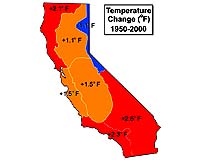
This study finds that the effects of carbon dioxide's warming are most significant where the pollution is already severe. Given that California is home to six of the 10 U.S. cities with the worst air quality, the state is likely to bear an increasingly disproportionate burden of death if no new restrictions are placed on carbon dioxide emissions.

Display

NOAA To Ensure Global Navigation Satellite System Accuracy


©Unknown
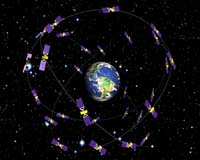
The Global Navigation Satellite Systems, which include the U.S.-based Global Positioning System, the Russian GLONASS system, and the upcoming European Galileo system, are used for accurately determining the geographic position of any point on Earth.

NOAA will lead an international effort to pinpoint the locations of more than 40 global positioning satellites in Earth orbit, which is vital to ensuring the accuracy of GPS data that millions worldwide rely upon every day for safe navigation and commerce.

HAL9000

GM Researching Driverless Cars

Cars that drive themselves - even parking at their destination - could be ready for sale within a decade, General Motors Corp. executives say.

GM, parts suppliers, university engineers and other automakers all are working on vehicles that could revolutionize short- and long-distance travel. And Tuesday at the Consumer Electronics Show in Las Vegas GM Chief Executive Rick Wagoner will devote part of his speech to the driverless vehicles.

"This is not science fiction," Larry Burns, GM's vice president for research and development, said in a recent interview.

Frog

France Used to Be a Jungle

Where the Champs Elysee, the Eiffel Tower and sprawling vineyards now stand, there might once have been an Amazon-like jungle.

A new analysis of amber fossils collected in France suggests that the country was once covered by a dense tropical rainforest.

The 55-milllion-year-old pieces of amber (fossilized tree sap) were found near the Oise River in northern France. The trees that once oozed them are long gone.

Amber from different sites tends to have different chemical compositions.

©2007 American Chemical Society
Oise ambers and insect inclusion (Trichoptera) in Oise amber.

Bell

NOAA: Sunspot is Harbinger of New Solar Cycle, Increasing Risk for Electrical Systems

A new 11-year cycle of heightened solar activity, bringing with it increased risks for power grids, critical military, civilian and airline communications, GPS signals and even cell phones and ATM transactions, showed signs it was on its way late yesterday when the cycle's first sunspot appeared in the sun's Northern Hemisphere, NOAA scientists said.

Binoculars

Ice pioneer eyes farthest glaciers

For 5,000 years, great tongues of ice have spread over the 3-mile-high slopes of Puncak Jaya, in the remotest reaches of this remote tropical island. Now those glaciers are melting, and Lonnie Thompson must get there before they're gone.

To the American glaciologist, the ancient ice is a vanishing "archive" of the story of El Nino, the equatorial phenomenon driving much of the world's climate.

More than that, the little-explored glaciers are a last unknown for a mountaineering scientist who for three decades has circled the planet pioneering the deep-drilling of ice cores, both to chronicle the history of climate and to bear witness to the death of tropical glaciers from global warming.

©AP Photo/Kiichiro Sato
Lonnie Thompson stands in the 'cold room,' where ice cores are stored in the minus-30-degree freezer at Byrd Polar Research Center at Ohio State University Friday, Dec. 21, 2007 in Columbus, Ohio.

Evil Rays

Earthquake 'memory' could spur aftershocks

Using a novel device that simulates earthquakes in a laboratory setting, a Los Alamos researcher and his colleagues have shown that seismic waves - the sounds radiated from earthquakes - can induce earthquake aftershocks, often long after a quake has subsided.

The research provides insight into how earthquakes may be triggered and how they recur.

In a letter appearing today in Nature, Los Alamos researcher Paul Johnson and colleagues Heather Savage, Mike Knuth, Joan Gomberg, and Chris Marone show how wave energy can be stored in certain types of granular materials - like the type found along certain fault lines across the globe - and how this stored energy can suddenly be released as an earthquake when hit by relatively small seismic waves far beyond the traditional "aftershock zone" of a main quake.

Magic Hat

StumbleUpon: The Antithesis of Google?

With over 3.5 million registered users (up from 600,000 two years ago), StumbleUpon has left the techie niche and has become mainstream. But unlike Google which makes its billions from helping you find what you're looking for, StumbleUpon helps you discover content that you may not be looking for but will probably find interesting.

Frog

New species abound in remote forest that scientists call paradise

Eleven previously unknown animal and plant species have been discovered by scientists in a remote forest region that they say is like "paradise".

Three salamanders with ballistic tongues were among the finds that astounded researchers recording wildlife in the forest in Central America.

In addition to the new species, the researchers also found 5,300 previously catalogued species in the cloud forest in La Amistad National Park in Costa Rica. The area is one of the least spoilt in the world, after its human inhabitants deserted it centuries ago.

©Unknown

The remoteness of the park and the lack of human interference there have allowed it to flourish as one of the most ecologically valuable ecosystems in the world.

Bizarro Earth

Plate Tectonics May Take A Break


©Unknown
Plate tectonics is driven by heat flowing from the Earth's interior, and a stoppage would slow the rate of the Earth's cooling, just as clamping a lid on a soup pot would slow the soup's cooling.

Plate tectonics, the geologic process responsible for creating the Earth's continents, mountain ranges, and ocean basins, may be an on-again, off-again affair. Scientists have assumed that the shifting of crustal plates has been slow but continuous over most of the Earth's history, but a new study from researchers at the Carnegie Institution suggests that plate tectonics may have ground to a halt at least once in our planet's history-and may do so again.