
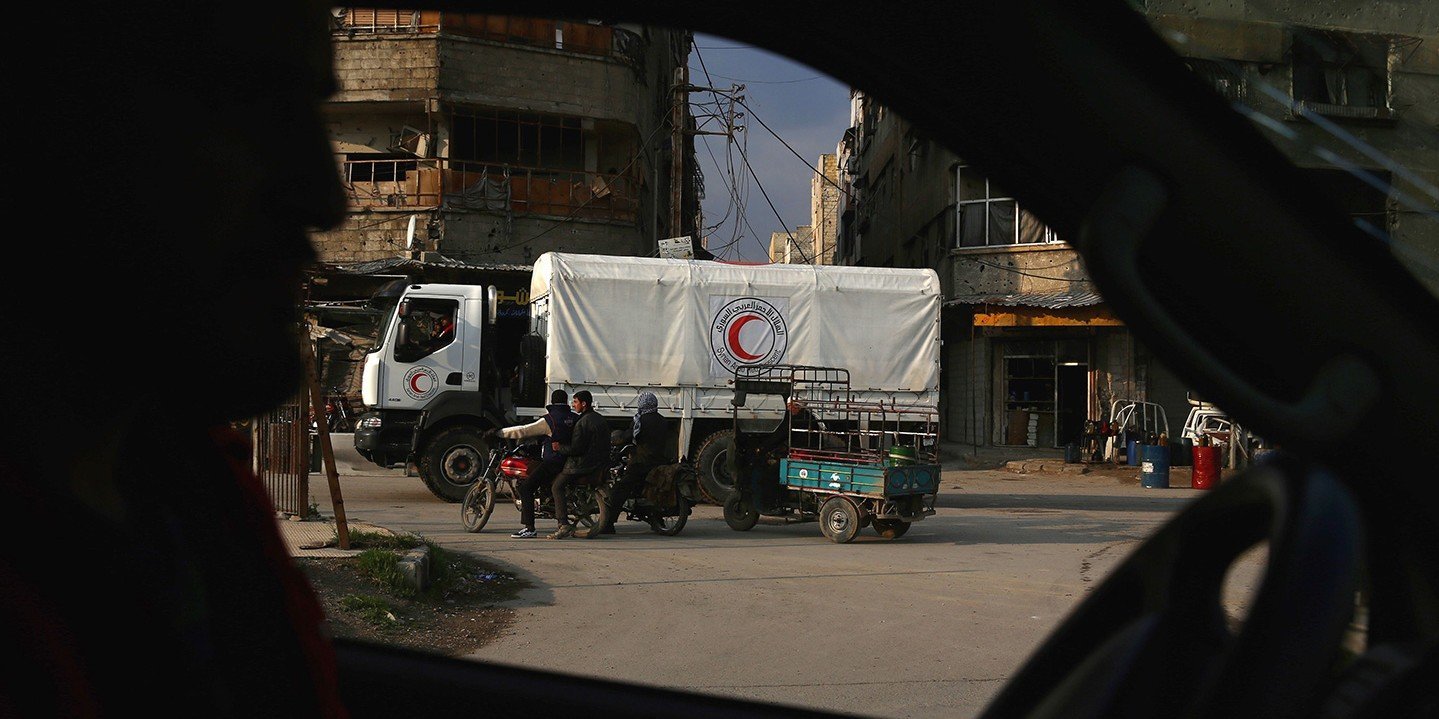
© Abd Doumany/Agence France-PresseA Syrian Red Crescent truck, part of a convoy carrying humanitarian aid, is seen in Kafr Batna on the outskirts of Damascus on Feb. 23, 2016, during an operation in cooperation with the U.N. to deliver aid to thousands of besieged Syrians.
Aid agencies cited in the report say they cannot procure basic medicines or medical equipment for hospitals because sanctions are preventing foreign commercial companies and banks having anything to do with Syria. A European doctor working in Syria says that "the indirect effect of sanctions... makes the import of medical instruments and other medical supplies immensely difficult, nearly impossible."
The revelations in the internal UN assessment of the effect of sanctions on aid delivery, entitled Humanitarian Impact of Syria-Related Unilateral Restrictive Measures and leaked by the investigative publication The Intercept, open up the US and EU to the charge of hypocrisy, after criticising Syria and Russia for impeding the delivery of UN aid supplies to besieged cities in Syria.
The Intercept quotes an internal UN email from a senior official saying that sanctions have been a "principal factor" in degrading the Syrian health system and have contributed to a 300 per cent rise in the price of wheat flour and 650 per cent rise for rice, following a doubling of fuel prices in the last 18 months.















Comment: Further reading:
The storm of lies surrounding Syria's humanitarian crisis: Aleppo Is Burning campaign calls for Syria no-fly zone