
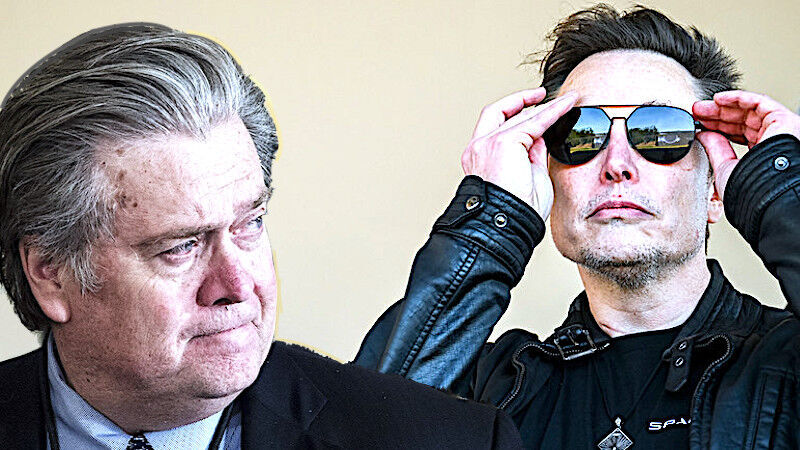
© Pete Marovich/Bloomberg/Brandon Bell/Getty Images/KJNSteve Bannon and Elon Musk
To paraphrase the American film classic, 'The Big Lebowski', say what you will about Trumpism but at least it's neither united nor dull.
US uber-oligarch Elon Musk, recently promoted to President-elect Donald Trump's "first buddy," has used his very own X platform to tell other Trump supporters to "take a big step back and F**K YOURSELF in the face" (fully spelled out in the original). The designated co-leader of a new Department of Government Efficiency, Musk also threatened to "go to war" with a ferocity beyond what we, mere mortals, can comprehend.
Using a rival social media platform, American far-right nationalist guru as well as former Trump first buddy Stephen Bannon reacted by calling Musk a "man-child" and "toddler" in need of "child services." For good measure, he also denounced him as, in effect, a coward who "punches down" instead of fighting guys his own size or bigger.


















Comment: The potential is there. Figure it out.