Severe flooding has ravaged agricultural lands and infrastructure across multiple regions of Greece, inflicting heavy losses on farmers and prompting emergency responses as communities brace for further impacts.
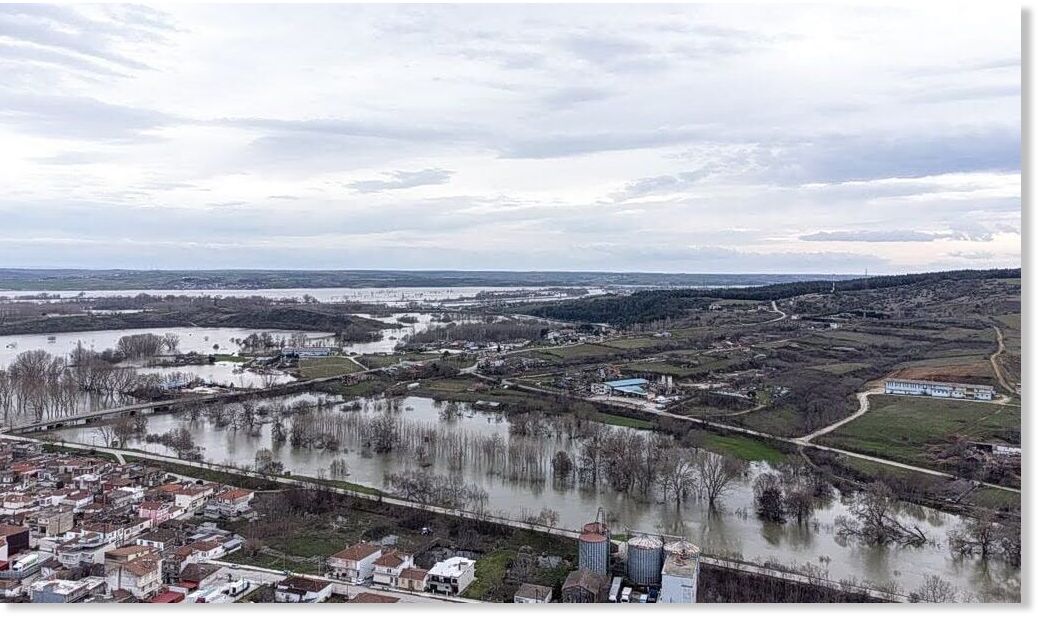
In northeastern Greece, particularly the Evros regional unit, persistent heavy rainfall and inflows from upstream sources in neighboring countries have caused the Evros River to overflow dramatically. Authorities activated a "Red Code" alert, with embankments breaching in several locations and submerging vast expanses of farmland—reports indicate over 150,000 acres (or tens of thousands of hectares) currently underwater.
Local officials have described the crisis as severe, with emergency services conducting ongoing pumping operations and issuing door-to-door alerts to residents in at-risk areas. A local deputy mayor highlighted the catastrophic toll: "The damage is entirely to crops and infrastructure. Our farmers have been devastated, and the municipality has suffered enormous losses."
The flooding has intensified due to saturated soils and additional water volumes, threatening homes near riverbanks and putting this season's agricultural output at serious risk.
The devastation is not confined to the northeast. Western and central Greece have seen prolonged downpours inundate fields, with significant crop losses reported in areas like western Peloponnese and around Larisa, where river overflows have swamped farmlands. On islands such as Lemnos, severe flooding has damaged rural roads, preventing farmers from reaching livestock and fields, while prompting calls for a state of emergency declaration. Coastal zones, including Mytikas, have also experienced flood damage to agricultural and livestock facilities.
Infrastructure has taken a major hit nationwide. A key highway remains closed due to landslides and flood-related destruction, forcing traffic onto secondary routes while repair crews work to restore partial access. Transportation disruptions continue to compound economic pressures on affected communities.
Farmers face an uncertain future, with delayed planting seasons in some areas and submerged crops jeopardizing yields. Authorities warn that receding waters could take weeks or longer in heavily impacted zones, underscoring the urgent need for recovery support amid ongoing weather threats.
Comment: The Evros river is known as the Meric in Türkiye and forms the border between the 2 countries in the region. The Anadolu Agency on February 23 reported on the situation there:
Red warning issued as Meric River swells toward critical flood level in Türkiye
The Meric River in Edirne is being monitored under a "red" warning code as water levels continue to rise, putting nearby farmland and infrastructure at risk. Authorities are closely tracking the river after weeks of increasing flow linked to regional rainfall and controlled water releases from dams in neighboring Bulgaria, where energy production requires periodic discharge.
The upward trend started about a month ago, as sustained rainfall across the basin gradually pushed both the Tunca and Meric rivers higher. Officials explained that regulated dam releases upstream added to the pressure, causing water volumes to build up step by step rather than through a sudden surge.
Two weeks before the latest alert, both rivers briefly overflowed before returning to their channels. However, renewed increases early last week led the Tunca River to spill into nearby agricultural land and Sarayici Island, the historic site where the Kirkpinar Oil Wrestling Festival takes place.
As the Tunca flowed toward its confluence with the Meric in the Kirishane area, flooding expanded downstream. The Meric's already high water volume slowed the Tunca's discharge, causing what officials described as a "backflow" effect that pushed water levels up again closer to the city center.
With water levels rising to near eye level along the riverbanks, the historic Tunca Bridge was closed as a precaution. Local authorities moved to reduce risks as surrounding tourism facilities and nearby fields gradually went under water.
Measurements showed the Meric River flowing at 1,431 cubic meters per second. Officials noted that protective levees, raised embankments built to hold back floodwaters, face heightened risk if discharge approaches the critical level of 2,200 cubic meters per second.
So far, summer and winter levee systems have managed to keep floodwaters from spreading into residential districts. Still, villages located south of the river and close to the natural channel remain under close observation as water levels run near the banks.
A crisis coordination desk led by Edirne Governor Yunus Sezer has been activated to prepare for possible flooding scenarios. Emergency planning has focused on readiness rather than evacuation, reflecting the precautionary stage authorities say they are currently in.
Fire brigades and search-and-rescue teams have been called in from multiple provinces, including Yalova, Bursa, Tekirdag and Sakarya. These teams have taken up positions across the city, waiting on standby in case conditions worsen.
Floodwaters have mainly spread across low-lying farmland, where fields near riverbeds are traditionally the first areas to go under water during seasonal rises. Images from the region show submerged crops, flooded access roads and machinery working to clear debris carried downstream.
Authorities continue to follow water levels hour by hour as weather patterns and upstream releases shape the river's behavior. While defenses are holding for now, officials stress that monitoring will remain at red-alert intensity until flow rates begin to fall back to safer levels.




Comment: The Evros river is known as the Meric in Türkiye and forms the border between the 2 countries in the region. The Anadolu Agency on February 23 reported on the situation there: