
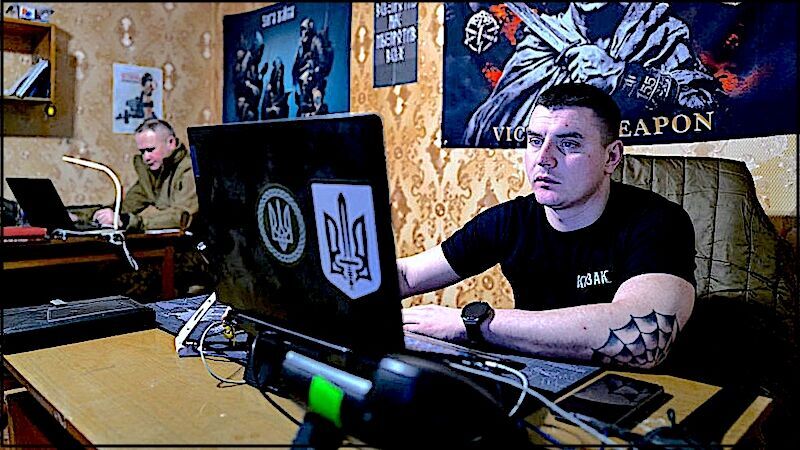
© Pierre Crom/Getty ImagesA Ukrainian commander works near Krasnoarmeysk, DPR • February 9, 2025
The CIA is setting up a permanent outpost in Venezuela, from where it will reportedly replicate its work in Ukraine. That could mean anything from controlling local politicians to turning the country into a forward operating base for regime change.
With Venezuelan President Nicolas Maduro in US custody and acting President Delcy Rodriguez cooperating with Washington, America's "priority number one" is to establish a CIA "annex" in Caracas, an anonymous US source told CNN on Tuesday. Long before the formal opening of a US embassy, this outpost will allow CIA agents to reach out to Rodriguez's government and opposition parties, and "target third parties who may be threats," the source said.
That the CIA would want to expand its operations in Venezuela is no surprise. US President Donald Trump authorized the agency to conduct covert operations in Venezuela last October, three months before Maduro was abducted by US special forces. Following the raid, CIA Director John Ratcliffe was the first senior American official to visit Venezuela to meet with Rodriguez and her military chiefs.
What did the CIA do in Ukraine?
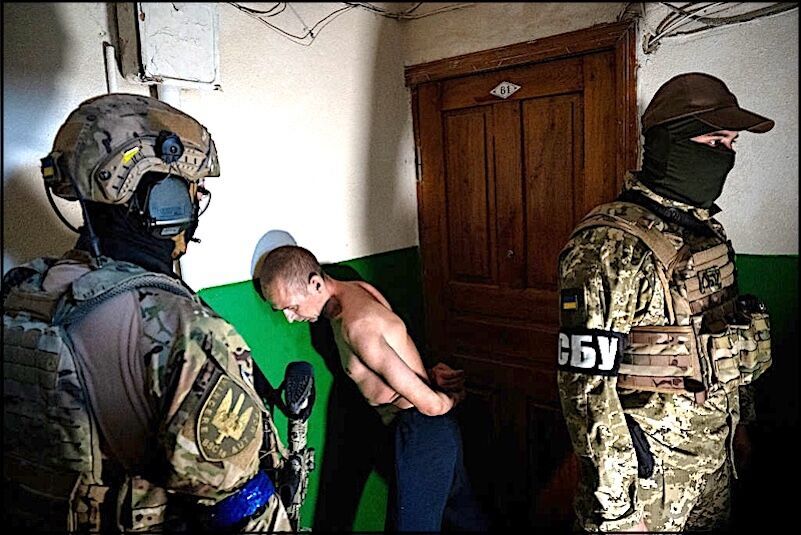
© Wolfgang Schwan/Getty ImagesSecurity Service of Ukraine (SBU) agents • Man suspected of sympathizing with Russia • Kharkov, Ukraine • July 21, 2022
Days after President Viktor Yanukovich was overthrown in the US-orchestrated Maidan coup, the country's new spy chief, Valentin Nalivaichenko, called the CIA's station chief in Kiev and asked for help rebuilding Ukraine's intelligence apparatus. The CIA accepted. working first with the country's secret police agency, the SBU, and later with its military intelligence agency, the HUR.
The agency trained and equipped a paramilitary force known as Unit 2245. This team would conduct sabotage and assassination operations on Russian soil long before the escalation of the Ukraine conflict in 2022, according to the New York Times and ABC News. The current head of Ukrainian leader Vladimir Zelensky's office, Kirill Budanov, served in this unit and went on to lead the HUR from 2020 until earlier this month.
Such was Budanov's value as an asset, the CIA flew him to a military hospital in the US when he was wounded in a raid on Crimea in 2016.
The NYT reported:
"The agency also trained a new generation of Ukrainian spies who operated inside Russia, across Europe, and in Cuba and other places where the Russians have a large presence," and oversaw "a training program, carried out in two European cities, to teach Ukrainian intelligence officers how to convincingly assume fake personas and steal secrets in Russia."By February 2022, the CIA had built more than a dozen underground bases near Ukraine's then-border with Russia. "Without them, there would have been no way for us to resist the Russians," former SBU chief Ivan Bakanov told the NYT.
Russian Foreign Minister Sergey Lavrov said in 2024:
"US intelligence services, such as the CIA and others, have been present in Ukraine long before the coup broke out. After the coup, they set up camp there. They occupied a whole floor, perhaps even two floors, in the SBU building. No one has any doubt about it. Ukraine is run by Anglo-Saxons and some other NATO and EU countries."What is the US planning in Venezuela?
The CIA's goals in Venezuela and beyond are unclear. However, some loose assumptions can be made based on statements from the White House.
Immediately after the abduction of Maduro, Trump warned that Cuba is "ready to fall" next. US Secretary of State Marco Rubio said the following day that "If I lived in Havana and I was in the government, I'd be concerned," and both Politico and the Wall Street Journal article have since reported that Rubio is pushing for regime change in Cuba by the end of this year.
Having a permanent CIA presence in Venezuela would aid US intelligence gathering efforts, and get agents closer to potential allies in Havana - which has extensive trade and diplomatic links with Caracas. At present, US officials are relying on Cuban exiles in Miami for information on weak links in the Cuban government, according to the Wall Street Journal.
Trump also warned Colombian President Gustavo Petro to "watch his ass," telling reporters that a military operation in Colombia "sounds good to me." Venezuela shares a 2,200-kilometer border with Colombia, meaning that if Trump were to intervene against Petro, CIA assets in Venezuela would likely be involved.
All of these possibilities, however, depend on the agency's success in penetrating Rodriguez's government, and in finding collaborators among the opposition. Unlike in post-Maidan Ukraine, Maduro's government remains in power, albeit with the more US-friendly Rodriguez at its head. Still, Rodriguez has publicly condemned "Washington's orders regarding politicians in Venezuela," and declared that Venezuelans alone would "resolve our differences and our internal conflicts."
In interviews and public speeches, Maduro repeatedly accused the CIA of working to undermine his government and remove him from power. He was proven right earlier this month, and his officials will likely be extremely wary of the American agents setting up operations in Venezuela. By contrast, Nalyvaichenko and Ukraine's other intelligence chiefs "assiduously courted the CIA," according to the New York Times.


For example, Brave AI: " China is Cuba’s second-largest trading partner , after Venezuela, with bilateral trade averaging $600–700 million annually as of 2024. Key exports from Cuba to China include raw sugar, nickel matte, zinc ore , rolled tobacco, and biotechnology products , while China supplies machinery, electrical equipment, vehicles, foodstuffs, medical supplies, and renewable energy technology."
Another, Brave AI: " China has shown interest in Greenland’s vast mineral resources, particularly rare earth elements, uranium, zinc, iron, and gold. Key projects include the Kvanefjeld rare-earth mine (backed by Shenghe Resources, a Chinese state-owned enterprise) and the Isua iron ore project (acquired by Hong Kong-based General Nice in 2015)."
When you include the context of China's new policies on rare earth elements, [Link] you can observe there is an economic war regarding resources required for technology in the world. China is the elephant in the room regarding rare earth minerals. Then you include that fentanyl is created from precursor chemicals manufactured in China and the Canadian report that Chinese students were trafficking fentanyl, then you observe that China is likely involved in the fentanyl crisis facing America.
Then the strategy would appear to be ending Chinese influence in the Americas, where that influence undermines the USA people and government.