
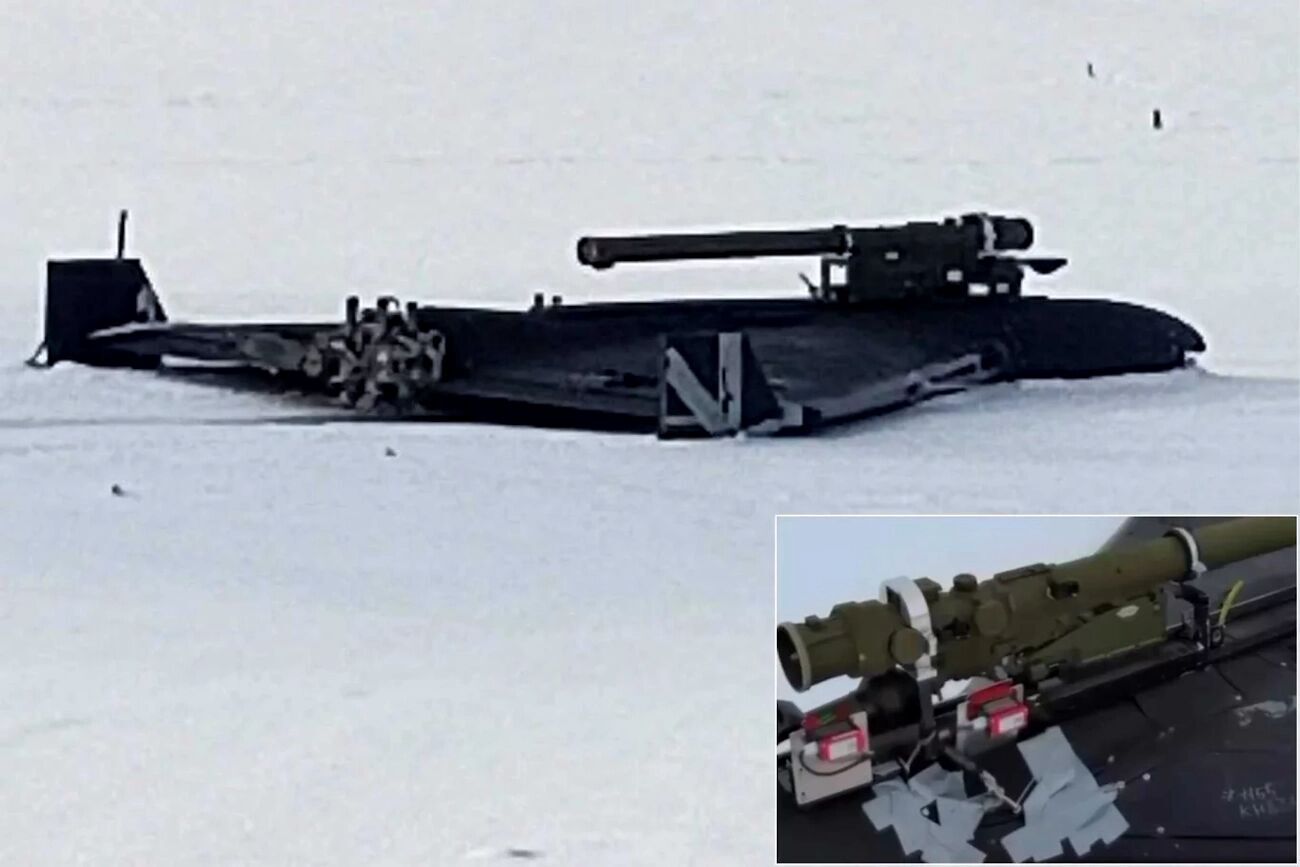
© Ukrainian MoDUkraine may now have to allocate more air defense assets and counter-UAS resources to deal with such a threat, as MANPADS-armed drones could potentially serve as a decentralized air defense layer for Russia's advancing forces.
On January 4, 2026, the Ukrainian Unmanned Systems Forces stated that fighters from the Darknode Battalion of the 412th Nemesis Brigade intercepted a Russian Shahed-type kamikaze drone fitted with an Igla-S man-portable air defense system. This variant, observed for the first time during the war, carried a camera and a radio modem, allowing the missile to be launched remotely by an operator located on Russian territory to threaten Ukrainian helicopters and low-flying aircraft involved in counter-drone interception.
According to Serhii "Flash" Beskrestnov, a Ukrainian military and technical expert, the missile launch was not automatically but manually triggered by the Shahed operator using the onboard camera feed and radio link. This new variant was assessed as being intended to engage Ukrainian helicopters and other low-flying aircraft that had previously intercepted Russian drones at close range using machine guns or cannons. Army aviation crews were warned to avoid approaching Shahed drones on a head-on course and to be particularly cautious when encountering drones flying in circular or loitering patterns, which were interpreted as potential attempts to draw aircraft into missile engagement zones. Ukrainian units also indicated that examination of the tactics associated with this configuration was ongoing in order to adapt interception procedures.
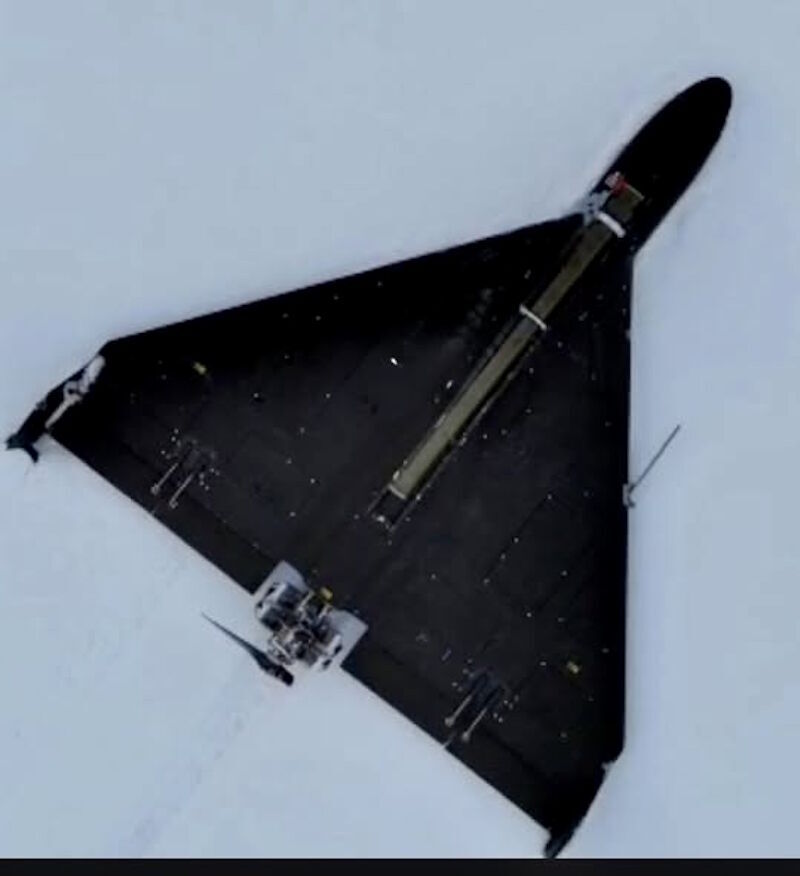
© Serhii "Flash" Beskrestnov/FacebookA Russian Shahed-type kamikaze drone fitted with an Igla-S man-portable air defense system.
At the same time, the disadvantages of this approach directly affect the core strengths of the Shahed drone. Adding a MANPADS launcher and missile to a prop-driven loitering munition imposes significant weight and aerodynamic drag, which can reduce the drone's relatively low endurance, range, and speed. Slower speed or reduced endurance makes the drone easier to detect and intercept, particularly by dedicated counter-UAS systems, and less maneuverable. The need for a continuous radio link and live video feed exposes this new Shahed variant to electronic warfare and jamming, especially in an environment where such measures are actively used.
The added cost of an Igla-S also undermines the economic logic of Shahed operations, which rely on mass production and saturation attacks: deploying more complex air defense-armed variants means fewer drones available for primary strikes per sortie, potentially reducing the saturation effect Ukraine has struggled against. Finally, unlike purpose-built air defense systems, the Shahed lacks radar, advanced target tracking, or integrated fire control, meaning successful engagements depend heavily on operator skill, communication stability, and favorable geometry against low-flying targets.
The Igla-S configuration follows earlier attempts to give Shahed drones limited air-to-air capability. In December 2025, Ukrainian soldiers from the same Darknode battalion intercepted a Shahed fitted with a Soviet-era R-60 air-to-air missile, marking an earlier effort to threaten aircraft intercepting drone swarms. That configuration reportedly included multiple cameras, a mesh radio modem, and a pylon mounting system, but it required the entire drone to be aimed toward the target to support infrared seeker lock. Compared with the heavier R-60, a MANPADS such as Igla-S is lighter and simpler to integrate, although both approaches reflect a broader pattern of iterative modifications capable of limited self-defense or ambush rather than a one-off field experiment. The appearance of these two variants suggests a deliberate effort by Russia to target Ukrainian pilots who have previously been effective in intercepting Shahed swarms at close range.
These developments are occurring alongside sustained large-scale drone and missile attacks by Russia. Ukrainian air defenses have continued to face waves of Shahed, Geran, and decoy-type drones launched from multiple directions, often in combination with ballistic missiles such as Iskander-M or surface-to-air missiles used in a surface-to-surface role. Recent nights have seen dozens to more than a hundred drones launched in single attacks, with Ukrainian forces employing a mix of aviation, surface-to-air missiles, electronic warfare units, unmanned interceptors, and mobile fire groups to counter them. For instance, one recap stated that on the night of January 3, 2026, Russia attacked Ukraine with 95 strike drones from multiple directions, with Ukrainian defenders said to have destroyed 80 of them through combined air defense and aviation actions.
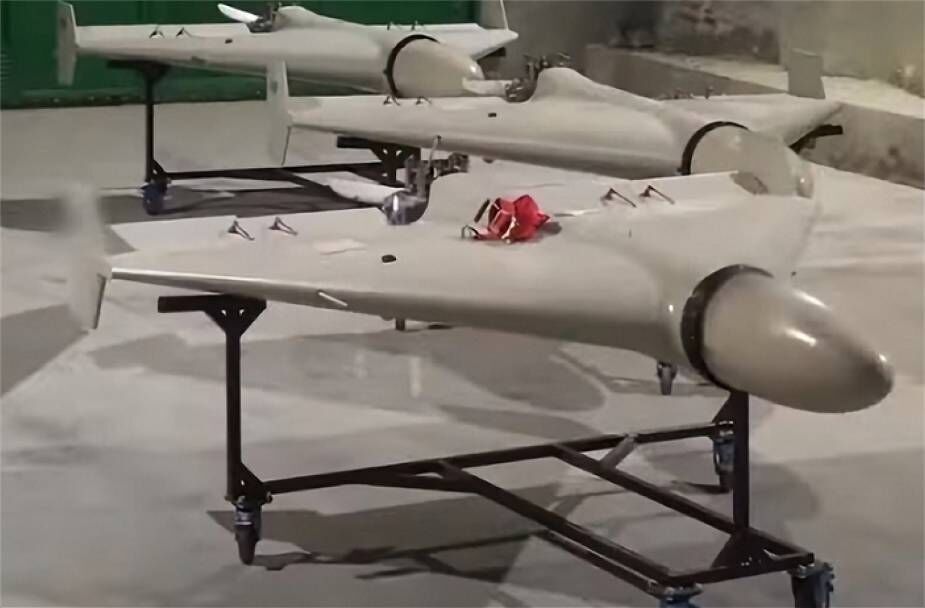
© HESAThe Shahed-136 is an Iranian-made loitering ammunition also called suicide or kamikaze drone developed and manufactured by Iran Aircraft Manufacturing Industrial Company
The Igla-S, for its part, is a shoulder-fired infrared-guided man-portable air defense system (MANPADS) designed to engage low-flying aircraft, helicopters, cruise missiles, and unmanned aerial vehicles. The missile itself weighs approximately 10.8 kilograms, with the complete launch system weighing close to 18 kilograms, and it is typically credited with a maximum engagement range of around 6 kilometers and an effective altitude envelope up to roughly 3.5 kilometers. The Igla-S uses an improved infrared seeker compared with earlier Igla variants, incorporating enhanced sensitivity and greater resistance to countermeasures such as flares, while retaining a fire-and-forget guidance principle once launched. In Russian service, the Igla-S has been widely deployed alongside older Igla models and more recent systems such as Verba, making it available in sufficient numbers for such experimental integration.




Reader Comments