
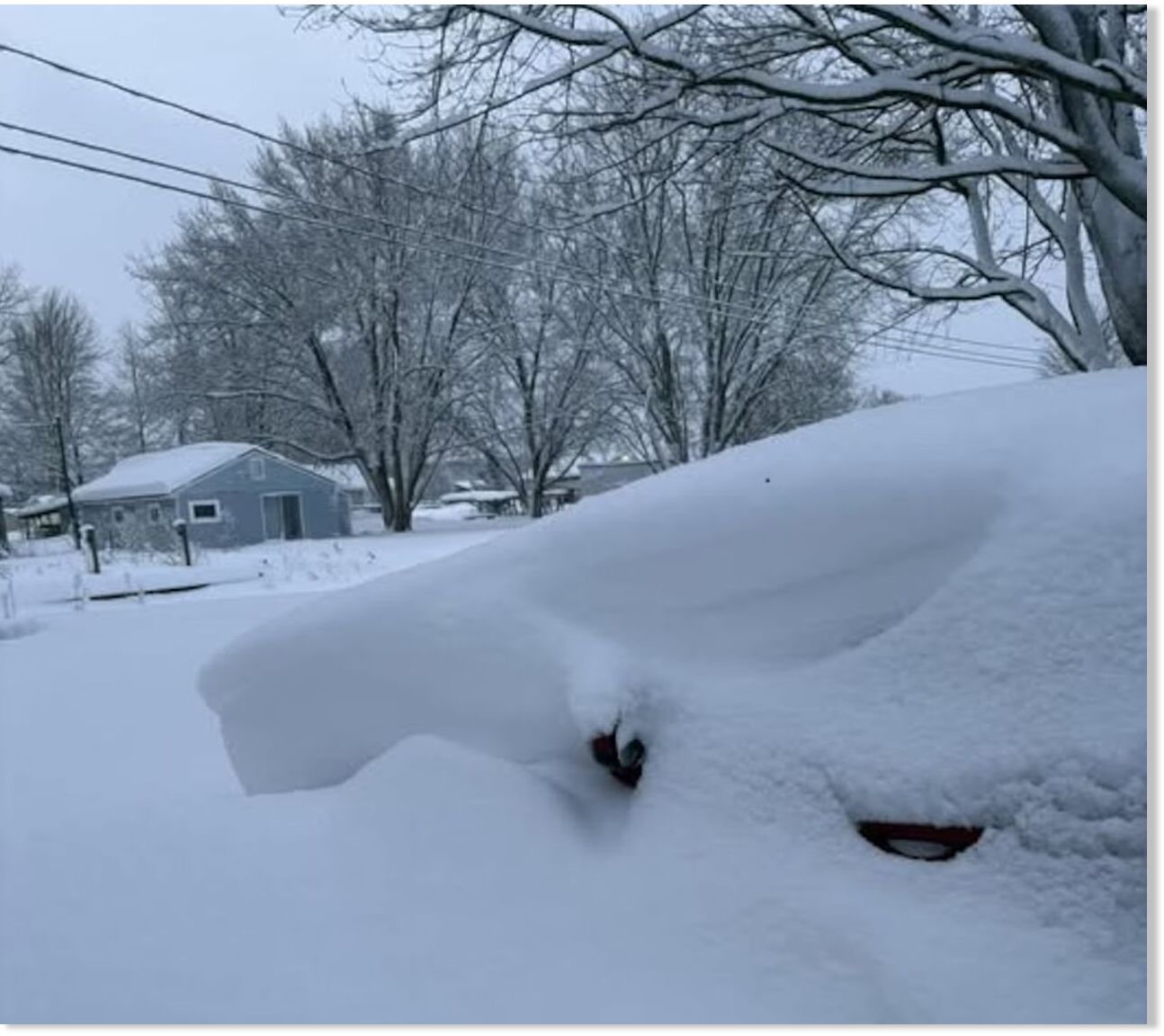
© Jennifer HarveyA car is buried in snow in Sandy Pond, Oswego County, where 3 to 4 feet of snow have fallen in the past 24 hours.
As much as 4 feet of snow has fallen on several towns in Oswego County since New Year's Day, and it's still coming. Businesses have closed and residents have been trapped inside, according to posts on social media.
Pulaski, Sandy Creek and Orwell appeared to be the hardest hit. Some local fire departments have been unable to respond to emergencies.
Most firefighters at the Ringgold Fire Department can't get out of their driveways, and the two firefighters who did make it couldn't get the engine out because 3 to 5 feet of snow blocked the bay doors, said Justin Crowl, first assistant chief.
"It's a tough time for volunteer fire departments right now," Crowl said. "This snow really hitting us, just adds on top of the stress."
Snow fell heavily through the night and into this morning. The National Weather Service predicted snowfall rates of 3 to 5 inches an hour.
"It's been absolutely nuclear for over 2 hours now" in Pulaski, wrote X user Maines Abominable SnowBART at 4:45 a.m. today. "3 to 5/hour rates easy!"
Residents are used to dealing with heavy snow in a region that routinely sees 20 feet or more in a typical winter. But the sheer volume of snow coming down in so short a period taxes even long-time residents.
"We've had it before but we haven't had snow like this in a long time," Jen Harvey said, who had to clear 4 feet of snow from her driveway at home before she could get to Pit Pond BBQ, the restaurant she co-owns.
By 1:30 p.m., the sun was shining in Pulaski, Harvey said.
One to 3 feet of additional snow could fall today as winds whipping from the west draw moisture from Lake Ontario and drop it on the cold slope of the Tug Hill plateau.
Winter storm warnings are in effect for Oswego, Lewis and Jefferson counties.
The nearby Lacona Fire Department has been able to pull together one crew if an engine is needed, but others are still stuck at home, said Lieutenant Connor Rowell.
Rowell said many of his calls today have been for carbon monoxide alarms. Outside ducts can be blocked by snow, causing a dangerous buildup of carbon monoxide in both homes and commercial buildings.
Most fire hydrants in their area are entirely hidden by massive six-foot snowbanks, Rowell said. They will have to spend time today locating and digging out the hydrants, he said.



Reader Comments