
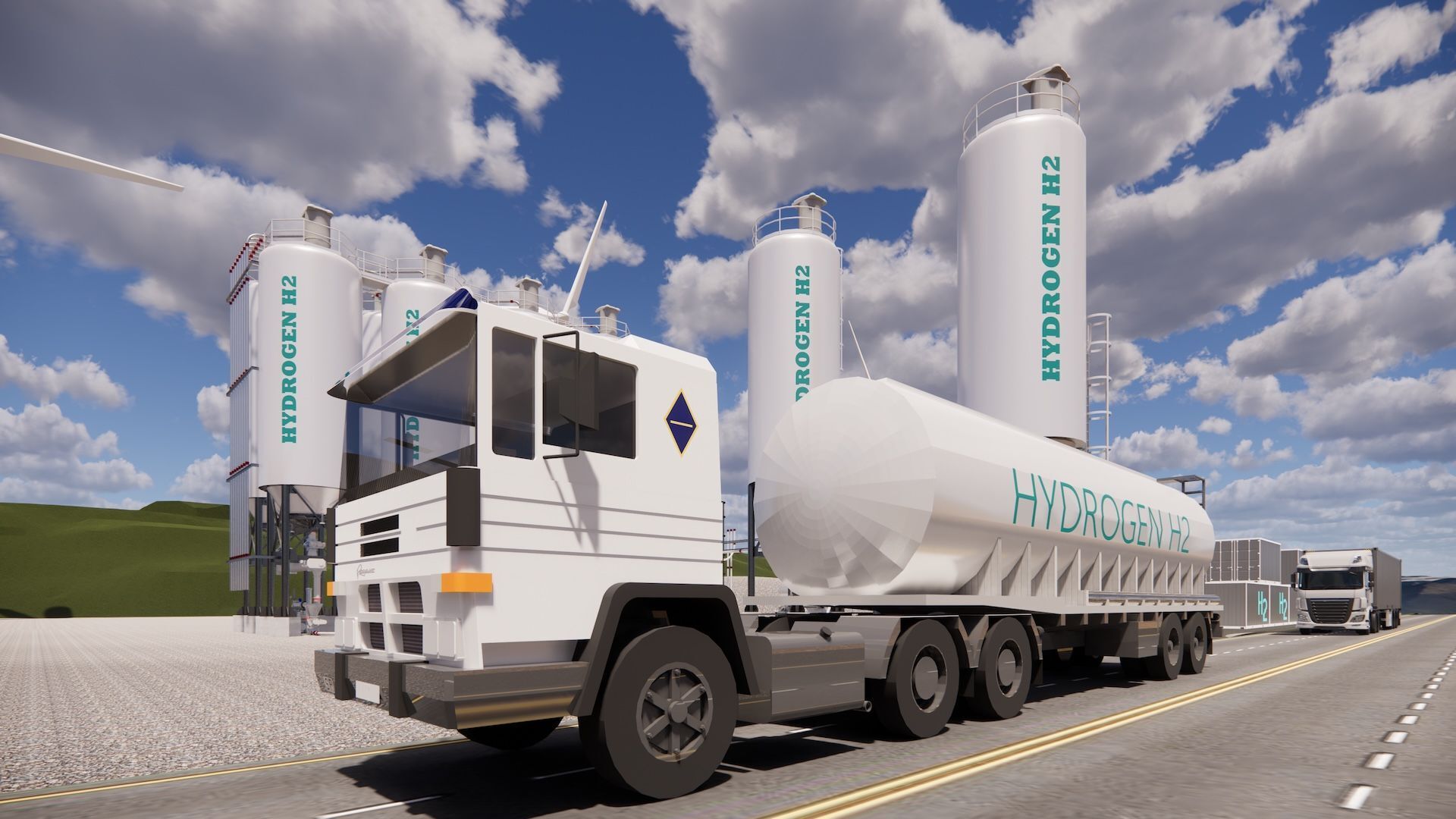
© Panaya Chittaratlert/Getty ImagesA new method of splitting water molecules to produce hydrogen is highly efficient, and could offer a pathway to scalable hydrogen production.
The adapted method lowers energy costs by up to 40% and may offer a "promising pathway for efficient and scalable hydrogen production," the researchers said in a new study published Dec. 1 in the Chemical Engineering Journal.
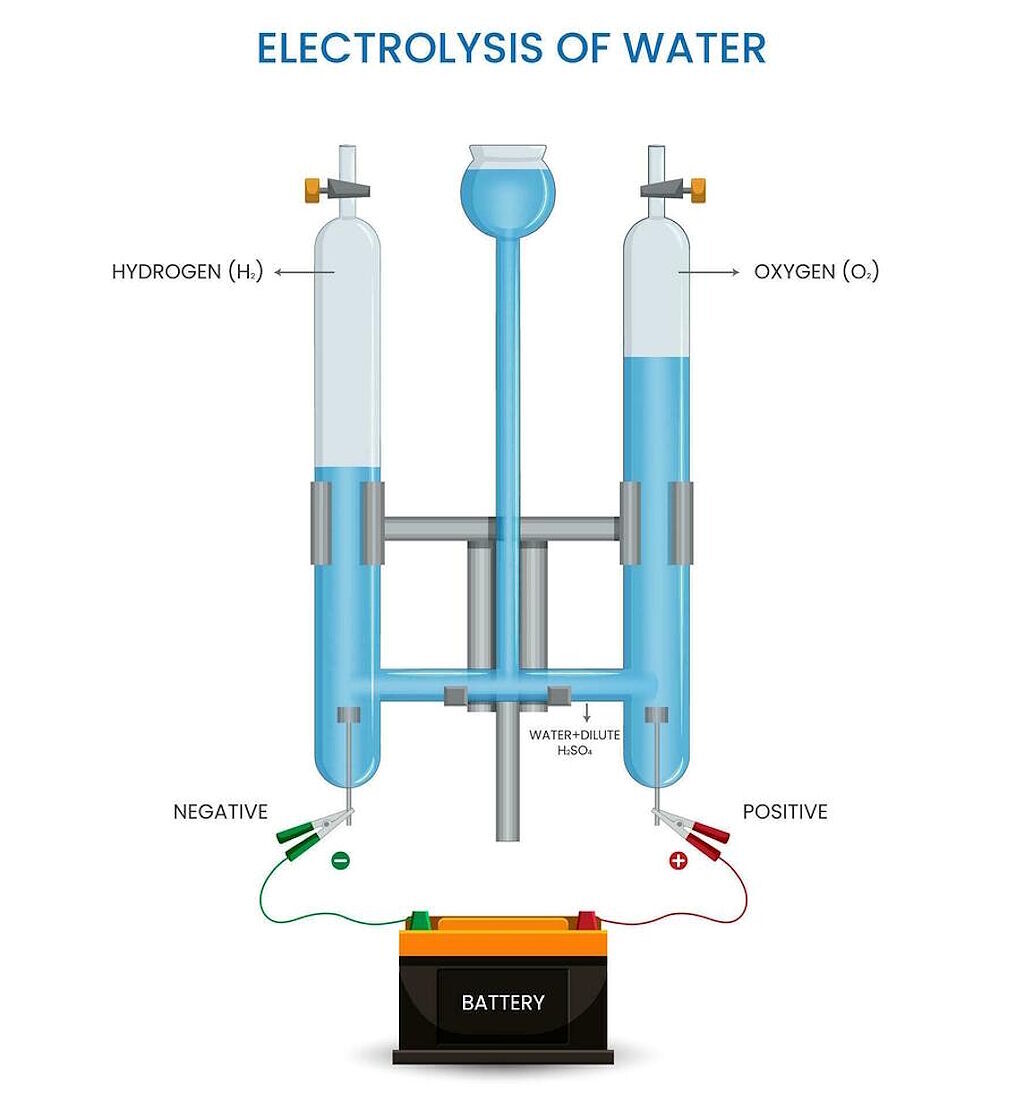
Using electricity to split water into hydrogen and oxygen molecules — a method known as electrolysis — could potentially offer a way to create hydrogen with no direct carbon dioxide emissions.
This works by connecting two metal plates known as electrodes to a direct current supply and submerging the ends of the plates into water. Applying electricity to the circuit generates hydrogen at the negative electrode (anode) and oxygen at the positive one (cathode).
However, electrolysis of water is currently inefficient, expensive and uses a lot of electricity, which often comes from non-renewable sources. The main inefficiency is from producing oxygen at the anode, Heidarpour explained.
© Nandalal Sarkar/ShutterstockResearcher at McGill University the have doubled to efficiency of the well-known process of electrolysis
First, the researchers set up two chambers containing potassium hydroxide (KOH) solutions, which were separated by a thin membrane, and then connected an electrode to either chamber to form a circuit. The team added a chemical called hydroxymethylfurfural (HMF) to the anode chamber, as well as a modified copper catalyst. Heidarpour said that chromium atoms, within the surface of their specifically designed catalyst, help favor hydrogen production by stabilizing the copper atoms in their reactive state.
When the team applied electricity, electrons from the anode oxidized the aldehyde groups in the HMF molecules. This generated hydrogen and a byproduct called HMFCA, which may find use as a chemical feedstock to make bioplastics, Heidarpour said. (Aldehydes have a carbon atom doubly bonded to an oxygen atom and a single bond to a hydrogen atom.)
This adapted method effectively doubles the amount of hydrogen made in one go, when also accounting for the hydrogen created by splitting water molecules at the cathode as usual.
The reactions also ran at around 0.4 volts, which is around 1 volt lower than in conventional water electrolysis. The researchers said this helps reduce overall energy usage by up to 40%.
Heidarpour said the team is not the first to report this type of strategy but explained that they increased the overall hydrogen production rate by using a more efficient catalyst.
HMF is often made by breaking down non-food plant materials such as paper residues, making it an attractive reagent to use in these systems. However, HMF is currently an expensive material.
Other aldehyde-containing molecules such as formaldehyde could be used instead. "Where there is a surplus of low-value organic substrates, oxidizing these into more valuable chemicals with simultaneous hydrogen generation could be an attractive and environmentally-friendly way to make two feedstocks at once," Mark Symes, a professor of electrochemistry and electrochemical technology at the University of Glasgow, who was not involved in the study, told Live Science in an email.
The researchers noted that there are still ways to improve the process to make it more efficient.
For example, further work needs to be done to improve the catalyst's stability so that it "can work for thousands of hours in an industrial setting," Heidarpour said.




Reader Comments
Get rid of government, bankers, mega corps and billionaires, then we can get some real shit done cheaply.
That was the issue between Tesla (who wanted decentralized energy production and consumption) vs. his employer Thomas Edison (who advocated centralized power production and distribution to consumers). Of course the first backer/"investor" of Edison was the banker J.P. Morgan [Link]
To me this isn't clear here at all about the hydrogen production. My assumption is that if it competed with a cash cow energy monopoly, like electrical power plants, distribution centers etc. it would never go anywhere...
Tesla had bad business people work for him, they involved a banker.
Today you can actually raise money, without a banker or bank.
Take it to the people, not the establishment.
Tesla, thought big, central generator to free flow energy. Scale it down to individual. Sell those like home generators.
1. Plug it into your house.
2. Cut the utility line.
3. Give finger to bankers, utilities and government.
I now realize, through much better 'education', that our entire system is obsolete. I've written extensively on this subject, so I won't duplicate my previous explanations unless prompted.
The Universe is INFINITELY DENSE.... THAT should get some wheels churning...
That is the biggest tell of all, that it's controlled.
However, the remainder is still sufficiently correct (accurate) for a lot of applications, and thus served quite well in technical applications. Only under "special circumstances" one might notice something is off ...
You don't get anything from nothing, except perhaps in the imaginary financial world of Western economists and financial "experts" that create "money" out of thin air.
But as long as you need to put in more electrical energy to split water than you get from burning the hydrogen / oxygen, you have just another energy conversion process.
I undecided if the author is just as ignorant as the next "yournalist", or if he is deliberately misleading here. Or both ...
But such a claim is nowhere made in the article. Nor are any overall efficiency values mentioned, which are a primary requirement for a proper technical or scientific article. Only fuzzy claims like in TV ads : "... twice as effective as that other method".
I still maintain this article is dishonest in this regard.
You can't enslave people if they have access to free energy.
Don't be talking nonsense.
[Link]
The crucial role of CO₂ in Photosynthesis has been hidden, to drive the falsified climate agenda! No water is being split anywhere. It is a deception. Water is irreducible! Telestai Nexus Dec 30, 2025 [Link]
[Link]
and for those who remember,
[Link]