
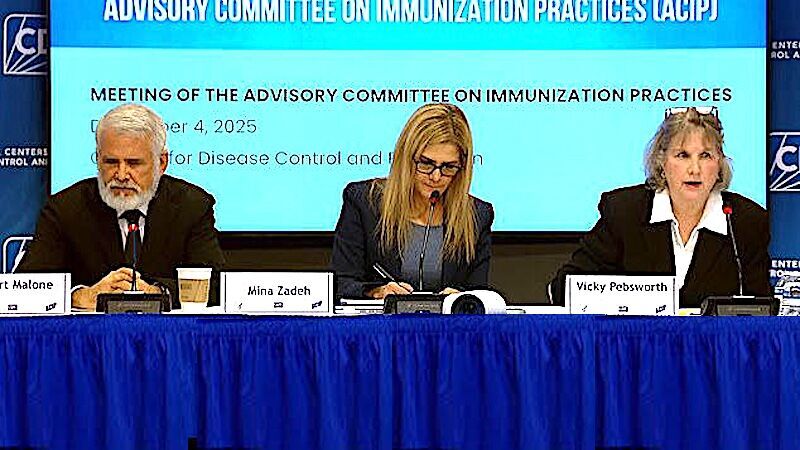
© CDCDr Robert Malone (left) the chair of the committee • Committee member Vicky Pebsworth (R)
After months of delay, the Advisory Committee on Immunization Practices (ACIP) voted 8-3 in favor of lifting the recommendation that all newborns receive hepatitis B vaccinations at birth, the most sweeping change to the childhood vaccine schedule since Health Secretary Robert F. Kennedy Jr. took the helm of the agency.
The vote marked a significant victory for Kennedy who has long targeted the childhood vaccine schedule. It also showed how he has remade federal health agencies.
Kennedy fired all of the members of the panel over the summer and handpicked new ones, many of whom share his skepticism of vaccines.

© UnknownHealth and Human Services Secretary Robert F Kennedy Junior
The shift is not expected to affect insurance coverage of the shots, and people who want to vaccinate their children will still be able to. But public health experts warned the vote and discussion will create unnecessary fear and confusion and undermine the progress the nation has made towards eliminating hepatitis B among newborns.
Richard Besser, president and chief executive of the Robert Wood Johnson Foundation and a former CDC acting director, said:
"The vote flies in the face of the best scientific evidence and endangers our children. Policymakers, physicians, and families must turn to reputable medical and public health groups for guidance, and health insurers should do the same for informing what vaccines they will cover."Hepatitis B can cause severe liver disease and cancer, and a mother can pass it to her infant at birth. There is no hepatitis B vaccine mandate in the U.S., and parents can decide whether to vaccinate their newborn against the infection. Most states require children to be vaccinated against hepatitis B before they start school.
The recommendation isn't binding. It must be endorsed by the acting CDC director before it goes into effect.
Panel member Joe Hibbeln, arguing that there was no scientific rationale or data presented as to why the birth dose should be delayed, said:
"This is unconscionable. This has a great potential to cause harm, and I simply hope that the committee will accept its responsibility when this harm is caused."Ahead of the hepatitis B vote, no career CDC subject matter experts presented on the shot. Presentations were made by two longtime anti-vaccine activists as well as a climate and autism researcher who has published work in anti-vaccine publications.
Critics of the change argued that the safety of the birth dose has been proven by more than three decades of use, with randomized control trials and the national vaccine-safety surveillance system finding no unusual harms.
ACIP member Cody Meissner, who led the opposition to changing the guidance, said:
"We've heard 'do no harm' is a moral imperative. We are doing harm by changing this wording. We will see more children and adolescents and adults infected with hepatitis B."ACIP also voted 6-4 to recommend that parents discuss hepatitis B antibody testing with their children's care providers "when evaluating the need for a subsequent HBV vaccine dose."
The standard hepatitis B schedule is three doses. But there is no evidence suggesting fewer doses offer lifelong protection.









Just whack 'em any and every where.
Thak you.