
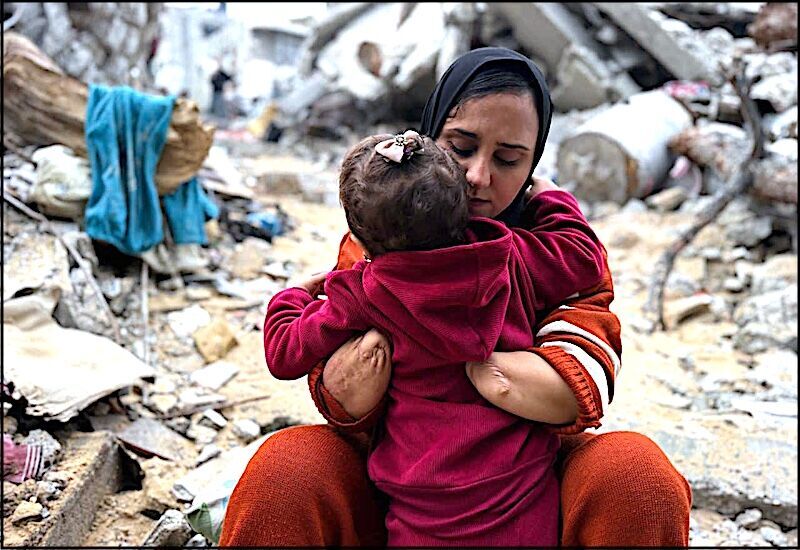
© Saja Nael Al-Louh/MondoweissNebal al-Hissi and her daughter, Rita • November 2025
When two-year-old Rita cries at night, her mother, Nebal al-Hissi, can only call to her from her mattress. Without hands, she cannot lift her daughter, comfort her, or offer her a sip of water. "My arms hurt me badly whenever I try to carry or hug her," the 27-year-old says in a trembling voice. "I rely on painkillers, and they barely ease anything."
Nebal's life changed on October 7, 2024, the first anniversary of the start of the genocide, when Israeli artillery shelling struck her shelter in the Nuseirat Camp in central Gaza. The area had been designated a "safe zone" under Israeli evacuation directives. The blast severed both her hands. "My forearms were amputated immediately," she recalls. "I watched blood pour from my arms before my eyes."
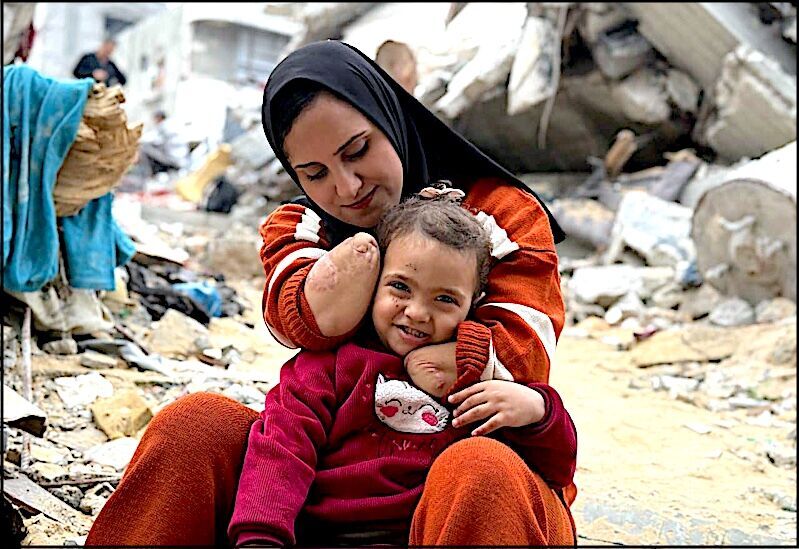
© Saja Nael Al-Louh for MondoweissNebal al-Hissi and her daughter, Rita
Motherhood shattered
In the hospital immediately after the blast, wrapped in bandages and hospital sheets, Nebal begged nurses to bring her infant daughter. She remembers Rita taking one look at her and crying uncontrollably. "She refused to come near. That moment destroyed my mental health."
Before the war, Rita had been only weeks old. Nebal had been savoring her first months of motherhood. "I was building a small family with my husband in our lovely home," she says. "I loved everything about being a mother. Changing her clothes, feeding her, holding her tightly. Now I can do nothing for her."
Even at her age, Rita sensed the change. "She knows I can't do things for her anymore," Nebal says. "She gets angry, stressed, and sometimes avoids me."
Still, Nebal tries to hold on to what remains. "I try to compensate by staying beside her all day," she says in a soft voice. "I let her play around me. I buy her toys. I tell her stories. I talk to her as if she is older and understands everything."
Despite Nebal's best efforts, the physical attention Rita needed was out of reach. Nebal eventually hired a housekeeper to help with daily care. The shock came when Rita started calling the housekeeper "mama."
"At that moment, I lost my mind," Nebal says quietly. "I realized what my injury had taken from me. My right to practice motherhood. I realized that losing my hands affects every part of my life."
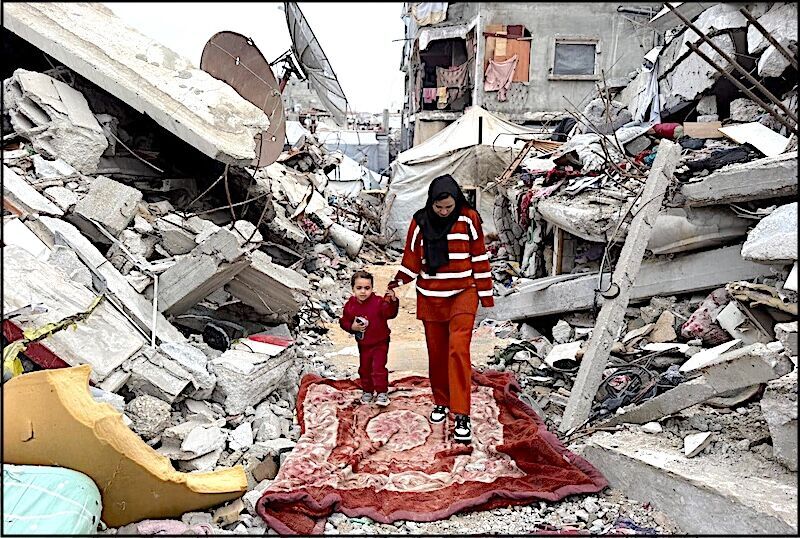
© Saja Nael Al-Louh for MondoweissNebal and Rita • Walking in the rubble
Before the attack, Nebal was strong, active, and fully independent. She cooked, cleaned, dressed herself, brushed her hair, and took care of her home with ease. All of that disappeared in one moment. Now she depends on the availability and empathy of others.
"What makes it harder is that I need someone to help me and help my daughter," she says. "I need someone to carry Rita when she cries, feed her when she is hungry, change her diapers, dress her, brush her hair. Everything."
"I can't rush anyone," she adds. "I have to wait until they are available."
The emotional weight of this dependence crushes her. "The hardest feeling I've had since the amputation is this overwhelming sense of disability," she says. "I feel like a burden on everyone around me. I don't blame them. Everyone has responsibilities. No one can devote their life to watching what I need."
She pauses. "I even feel sympathy for myself, that I have become a burden. People love you when you are strong. When you are weak and need help, nobody is there for you."
People often describe her as strong and resilient. Inside, she says, "I am broken, defeated, and alone."
Every part of her life stands as a constant reminder of her loss. She needs help with even the most private tasks. "This is the hardest part of my day," she says. "I have to wait for someone in the house to wake up and help me to the toilet. Can anybody even bear this?"
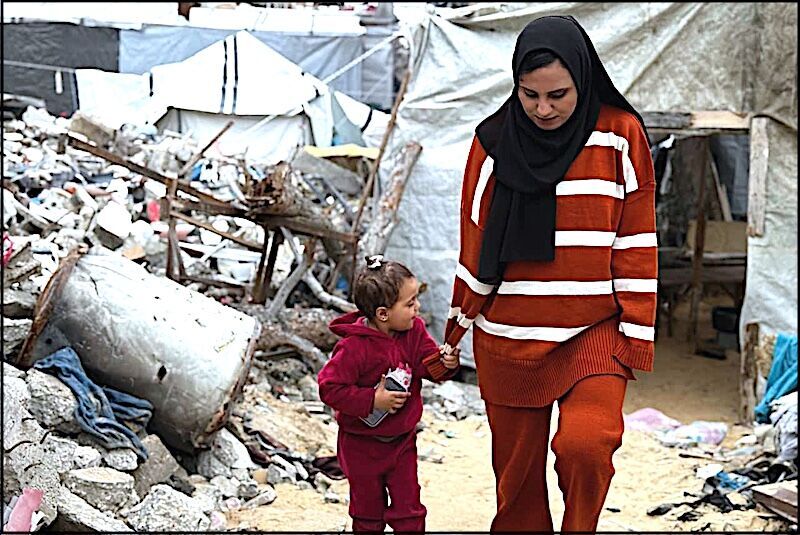
© Saja Nael Al-Louh for MondoweissOut for a walk
Meanwhile, Rita continues to struggle with her mother's injury. "She cries whenever she asks me for something and I can't do it," Nebal says. "Being unable to care for my daughter breaks my heart every single day."
Yet Nebal refuses to give up. "Rita is my whole life," she says firmly. "She is the only reason I keep going."
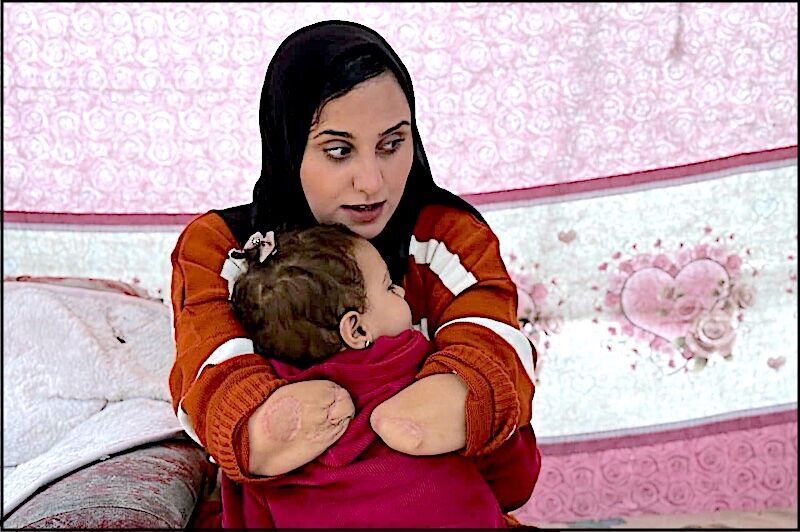
© Saja Nael Al-Louh for Mondoweiss"Rita is my whole life."
Today, Nebal's greatest wish is to travel abroad for treatment and receive prosthetic hands that might restore a measure of independence and allow her to reclaim parts of her identity and motherhood. "I just want to take care of myself and my daughter again," she says.
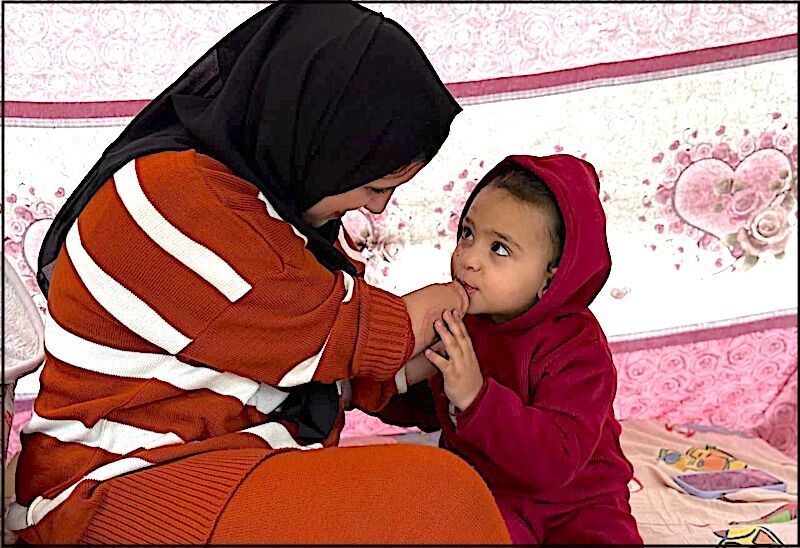
© Saja Nael Al-Louh for Mondoweiss"My daughter, my reason to live."
But the crossing never opened. Palestinian officials and humanitarian groups reported that Israel refused to allow medical transfers to leave, which they described as another violation of the ceasefire agreement.
The Israeli war on Gaza caused the martyrdom of more than 16,483 people and the injury of 170,706. Among the injured are at least 16,000 patients who require immediate evacuation for treatment abroad. Nebal's story is just one of thousands.






Comment: Absolutely heart-wrenching...and this is only one account.