
© Unknown
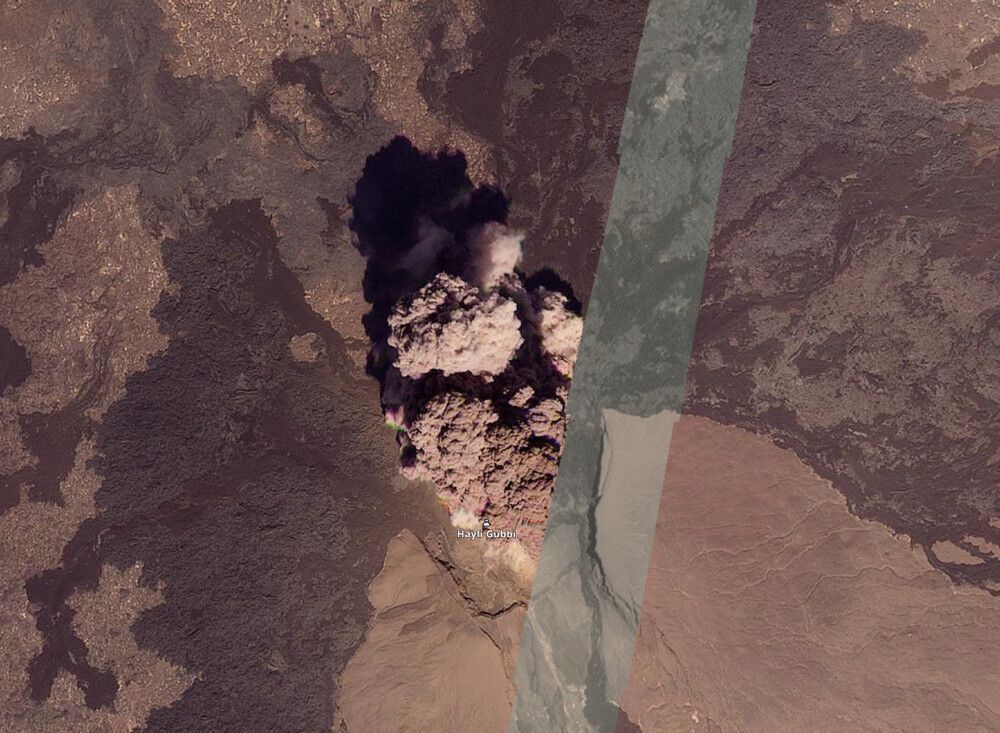
The eruption began on Sunday, November 23, 2025, and lasted for several hours, producing thick plumes of ash visible from miles away. Situated within the seismically active Rift Valley, where tectonic plates pull apart, Hayli Gubbi rises roughly 1,500 feet and has long been classified as a dormant volcano.
Ash Cloud Drifts Across Continents
© Unknown
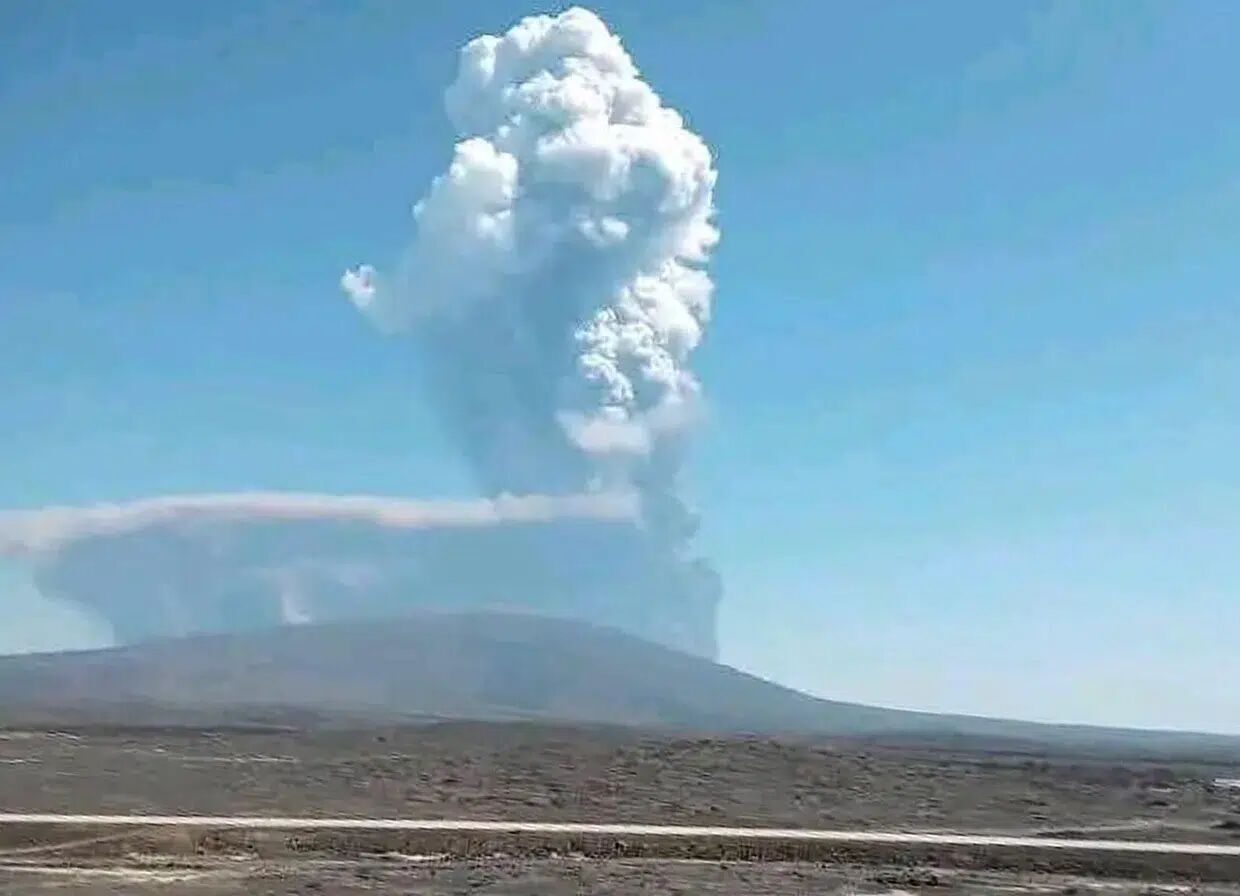
Volcanologist Simon Carn of Michigan Technological University confirmed on Bluesky that the ash cloud was "spreading rapidly east in the subtropical jet stream," underscoring the eruption's intensity and unusual scale.
Images released by the Afar Government Communication Bureau showed a massive white plume shooting upward from the volcano's crater, while videos circulating on social media captured similar scenes, though independent agencies have not yet verified them.
A Volcano Without Recorded Eruptions in the Holocene
The Smithsonian Institution's Global Volcanism Program noted that Hayli Gubbi has no known eruptions during the Holocene epoch, which began roughly at the end of the last Ice Age. Professor Carn also confirmed that "Hayli Gubbi has no record of Holocene eruptions," making this event scientifically remarkable and historically significant.
Communities Covered in Ash but No Casualties
Local administrator Mohammed Seid reported that, fortunately, no human casualties or livestock deaths have been confirmed. However, he warned of potentially serious economic consequences for communities dependent on herding.
"Many villages have been covered in ash," Seid told the Associated Press. "While no human lives and livestock have been lost so far, their animals have little to eat. We fear for the livelihoods of residents."
The Afar region, known for its harsh climate and frequent earthquakes, is home to pastoralist communities whose survival relies almost entirely on grazing lands, now blanketed by volcanic ash.
Residents Describe Shock and Fear
Residents described the eruption as sudden and frightening. One man, Ahmed Abdela, told the Associated Press: "It felt like a sudden bomb had been thrown with smoke and ash."
Another resident reported hearing a loud "blast-like sound" followed by a shockwave, which is consistent with explosive volcanic activity in tectonically active regions.
Afar's Volcanic and Tectonic Landscape
The Hayli Gubbi volcano sits within Ethiopia's segment of the Great Rift Valley, one of the most active geological zones on Earth. The region hosts several volcanoes, including Erta Ale and Dabbahu, and regularly experiences earthquakes as the African and Arabian plates gradually drift apart.
Scientists say the eruption may help provide valuable data about volcanic behavior in the Afar triangle, one of the planet's few places where tectonic plates are visibly diverging above sea level.
Ongoing Monitoring
Ethiopian authorities, global volcanic monitoring agencies, and local administrators continue to assess the eruption's impact. Transportation, air safety, and health officials are monitoring ash distribution due to its potential effects on air travel and respiratory health.
As of now, Hayli Gubbi appears quiet, but experts caution that volcanic systems can remain unstable for days or weeks following an initial eruption.





entering a new "ice age" period. While most are thinking it's a light version of an ice age, there are some factors (like this ancient volcanic eruption) that might be signaling a deeper ice age may be in the works.
It would seem the sun has a cycle itself, which in turn kicks off by these events of volcanic eruptions emitting sulfur dioxide and other particulate matter into the atmosphere along with other anomalies. These block solar rays that cool the planet by a certain degree amount. There are other factors, but I'll leave it there for now.