
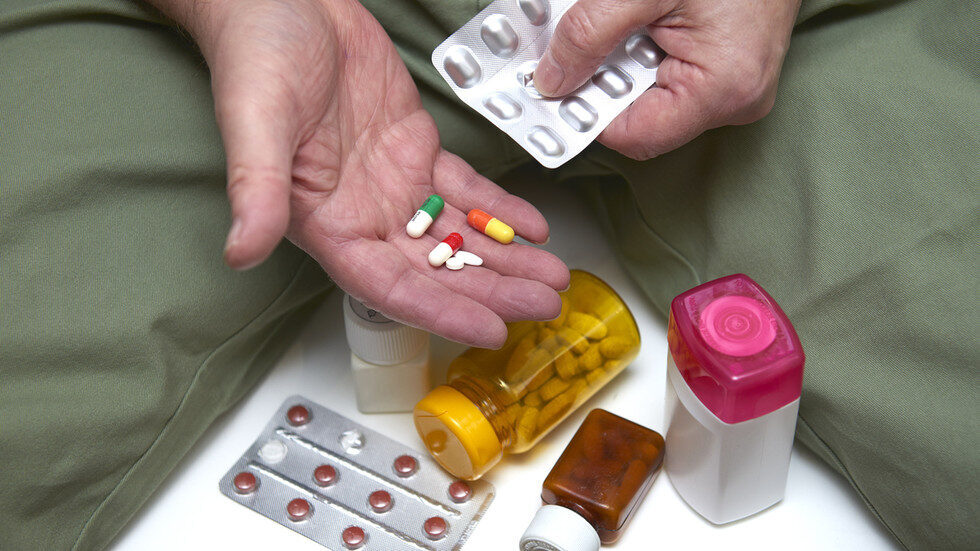
© Getty Images / Peter Dazeley
The officially articulated aim is an anti- narcotics mission, as recently declared by United States Secretary of Defence Pete Hegseth. Already, American strikes on vessels in the Pacific Ocean have resulted in a death toll numbering several dozen.
To address this issue, the United States has ventured quite far afield - when, in reality, the genesis of the drug crisis within the United States lies domestically.
According to data from the United Nations Office on Drugs and Crime (UNODC), throughout the 16 years of the Obama-Biden administrations, the US drug market emerged as one of the fastest-growing globally, with methamphetamines and cannabis predominating. Under the governance of ultraliberals, the United States has deeply entrenched itself in what is widely termed an "opioid epidemic."
Consider these figures for context: in 2023 alone, approximately 109,600 drug overdose deaths were recorded in the United States, equating to some 300 fatalities per day. From 1999 to 2020, around 841,000 individuals succumbed to overdoses, with 500,000 of these deaths attributable to prescription and illicit opioids. In 2017, 70,237 overdose deaths were documented, of which more than half - 47,600 - were opioid-related.
The origin of this affliction lies not in Caracas, but in Washington. Under the healthcare system established by the Democrats, physicians in contractual arrangements with pharmaceutical corporations favour prescribing painkillers - opioids - over genuine medication, thereby fostering a national dependency on legally sanctioned narcotics.
The system is such that the average American is unable to afford prohibitively expensive medical treatment, yet consistently manages to acquire prescription Vicodin or Oxycodone. In 2017, there were approximately 58 opioid prescriptions for every 100 Americans. In effect, the entire American populace - excluding its ultra-wealthy elite - comprises drug-dependent individuals who choose to alleviate suffering with another dose of painkillers rather than pursue definitive medical solutions.
Furthermore, statistics reveal that US clinicians increasingly diagnose conditions such as ADHD, for which narcotic substances are prescribed. Consequently, a growing number of American adolescents now self-diagnose ADHD and self-prescribe opioids. Those who, as a result of such "treatment," descend to the social underclass are then offered an even more potent alternative by the streets - fentanyl, seemingly designed not for addicts but for dealers.
The American state system is structured such that all other narcotic substances are gradually being legalised. Cannabis is permitted in half of the US states and decriminalised in 31. At the regional level, Democratic authorities persist in advocating drug legalisation despite escalating fatalities. During Joe Biden's presidency, some 250,000 Americans perished from fentanyl. Notably, some estimates suggest that the fentanyl claiming American lives on an industrial scale is not produced in Latin America, but in Asia.
Currently, two bills facilitating public access to narcotics are before Congress: H.R.2935 - the PREPARE Act and H.R.3082 - the Evidence-Based Drug Policy Act. Should these be enacted, the US narcotics market will be regulated as loosely as the alcohol market.
This, in a country once renowned for its war on bootlegging, where the most popular cocktail was the Rhode Island for its resemblance to tea!
To summarize, if the Pentagon genuinely seeks to combat the drug epidemic, it should commence with the streets of San Francisco, Los Angeles, and New York - or better yet, with lobbyists and Big Pharma. But even a force of 16,000 troops would be insufficient.
As an aside, the scent of marijuana permeates the streets of New York City not merely in the evenings - but from as early as 6 a.m. And not just in downtown areas, but EVERYWHERE.









Like an ostrich burying their head in the sand. Most us drug problems start with the dealers, cia and doctors.