
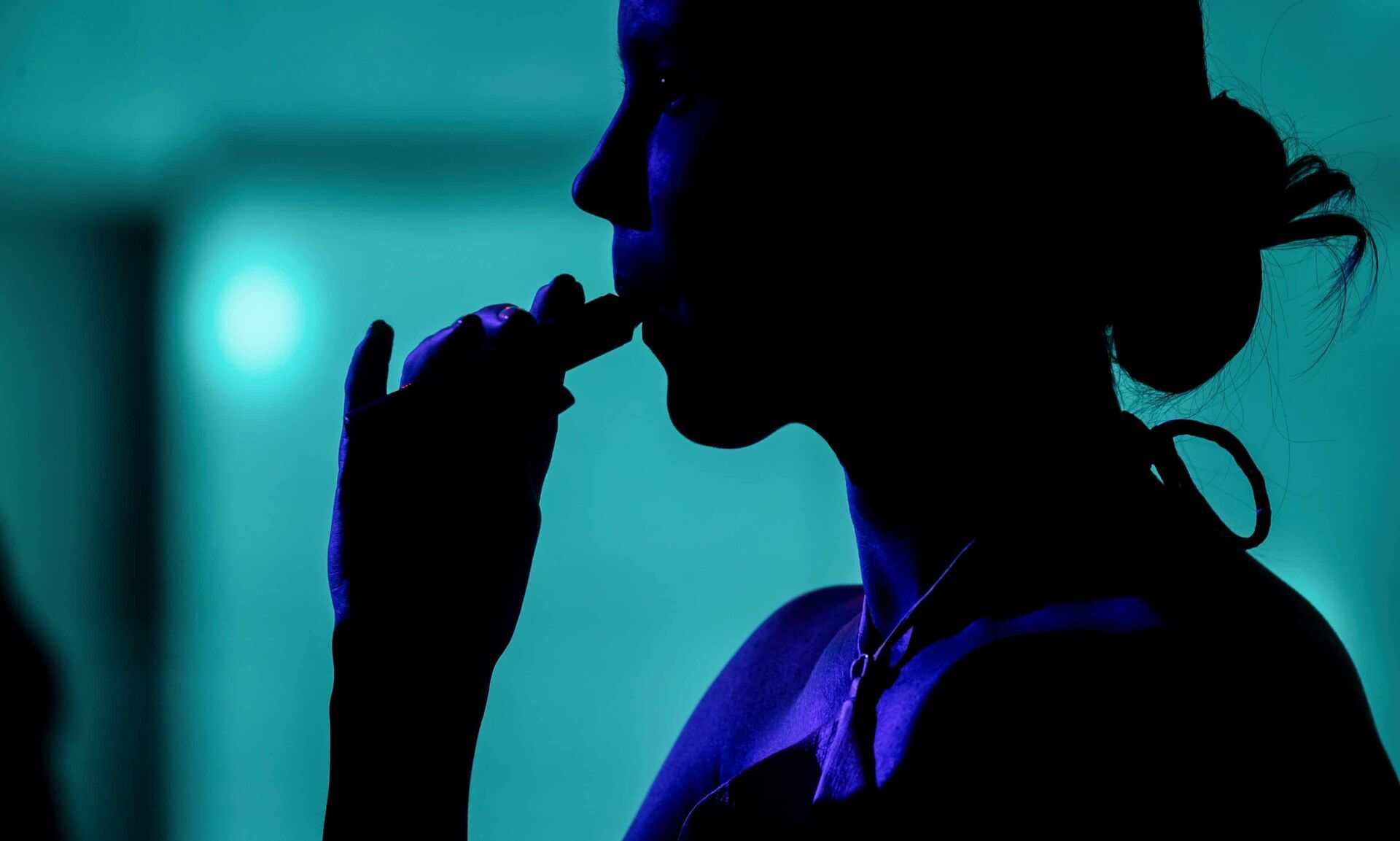
© Miguel Gutiérrez/EPAThe changes are expected to come into effect towards the end of this year or early 2025.
The government is also seeking to make vaping less appealing to children by restricting sweet and fruity flavours, introducing plain packaging and making displays less visible in shops, under newly announced powers. The changes are expected to come into effect towards the end of this year or early 2025.
Announcing the move, Rishi Sunak said: "As any parent or teacher knows, one of the most worrying trends at the moment is the rise in vaping among children, and so we must act before it becomes endemic."
He added: "As prime minister, I have an obligation to do what I think is the right thing for our country in the long term. That is why I am taking bold action to ban disposable vapes - which have driven the rise in youth vaping - and bring forward new powers to restrict vape flavours, introduce plain packaging and change how vapes are displayed in shops."
The move forms part of a wider response to a public consultation on smoking and vaping, which has resulted in plans for some of the world's toughest anti-smoking measures, first revealed by the Guardian, including a ban on selling tobacco products to anyone born on or after 1 January 2009.
Although vaping can be a useful tool in helping adult smokers to quit, doctors are concerned about the unknown long-term health impact of vaping on young people and their developing respiratory systems, as well as nicotine addiction, which can cause anxiety, trouble concentrating and headaches during withdrawal.
Recent figures show the number of children using vapes in the past three years has tripled, with 9% of 11- to 15-year-olds now using vapes. The proportion of 11- to 17-year-old vapers using disposables has increased almost nine-fold in the past two years.
The ban will also reduce the major environmental impact of disposables, since 5m vapes are thrown away each week, up from 1.3m last year.
The Royal College of Paediatrics and Child Health welcomed the announcement, which follows its campaign launched in June to ban disposable e-cigarettes and introduce marketing restrictions.
Dr Mike McKean, a vice-president for policy at the college, said: "Bold action was always needed to curb youth vaping and banning disposables is a meaningful step in the right direction."
He told the Guardian that the success of the changes would depend on the detail and close monitoring of its impact on the behaviour of children and smokers. "I anticipate this will make a difference, but the size of the difference we don't know yet," he said. "I don't think this area of policy is done and dusted - it's one we watch and see if it needs tweaking and further development. This is a good bill and we should back it, but watch it very carefully."
Despite recent research suggesting banning disposables could discourage the use of e-cigarettes among people who are trying to quit smoking, he felt it was the right policy. "There are many other ways of supporting adults to come off cigarette smoking, including reusable vapes. I just don't buy this argument. I can understand people raising concerns, but I would challenge them back and say they're not putting children and young people first."
Sunak's plans to ban the sale of tobacco products to anyone born after 1 January 2009 look set to be met with opposition from his own benches. Rebels include the former prime minister Liz Truss, who told the Times the move was a "wholly un-Conservative policy".
The government is hoping to introduce the legislation that will ban disposable vapes as soon as possible by using existing environmental protection laws. The ban will also be implemented in Scotland, Wales and Northern Ireland through devolved legislation.
Ministers will have to pass the tobacco and vapes bill, included in the king's speech, to obtain powers to restrict flavours, introduce plain packaging and change how vapes are displayed in shops. The speed of its passage depends on other outstanding legislation and will be followed by a six-month implementation period to give retailers time to adjust.
To crack down on underage sales, the government will also bring in fines for shops in England and Wales that sell vapes illegally to children, including giving trading standards officers powers to hand out on-the-spot fines. Vaping alternatives such as nicotine pouches will also be outlawed for children.
Of the 25,000 responses from parents, teachers, healthcare professionals and the public to the government's public consultation, 70% said they were in favour of a disposable vape ban, though support was mixed for flavour restrictions.
Dame Rachel de Souza, the children's commissioner for England, said: "When I asked children a couple of years ago about all aspects of their health and wellbeing, I was shocked and concerned to hear from children as young as 12 who told me that vaping was normalised among their peers - even on school premises. This announcement will help tackle that issue and I know that many children and parents will be extremely relieved."
The UK Vaping Industry Association (UKVIA) said that while it welcomed on-the-spot powers for enforcement officers to deal with underage sales, it was "dismayed" by the decision, which it said could discourage smokers from using vapes to quit.
A spokesperson said: "The answer to youth vaping doesn't lie in counterproductive bans and restrictions, but rather in effective and proactive enforcement - which is woefully lacking - of the law which states that it is illegal for vapes to be sold to minors."
The UKVIA is presenting a scheme based on an industry-wide consultation to parliamentarians in February that will set out ways to make it harder for rogue traders to sell to minors.



Reader Comments
I smoked for over 20 years and the way I was finally able to quit nicotine completely was with vaping. I got used to not carrying a pack of cigarettes with me, and got used to not having the taste and feel of the smoke in my lungs and mouth, and then I finally just got annoyed with how expensive it was and the government telling me (a 43 year old) that I couldn't have flavored vapes so that kids wouldn't start.
Now, I don't know what the kids are doing these days, but in my day, we started smoking in high school and then spent the next decades trying to quit. Did your son just start using nicotine at 31? If so, what was his logic? Most people who make it to 18 without using nicotine never start.
One of the talking points anti-vaping folks (who initially were funded by big tobacco) use is that vaping causes popcorn lung because it contains diacetyl (buttered popcorn flavoring). This is a lie because only certain flavors contain diacetyl and all cigarettes contain it in amount 100x that of any e-juice flavoring.
The point is, best we can tell if we exclude all the conclusion-first research is that vaping is far safer than smoking cigarettes.
I don’t remember Ratatouille being elected by anyone. Of course his inbred dumb head could never come up with ways for better age restriction enforcement instead of treating the adults like children.
We know Sunak is not helping the country, so this is a narrative. What is going on?
Bryan Ardis has stated that nicotine prevents the binding of the "covid" "spike protein" with the nicotinic receptor and thus blocks its toxic effects. People who have had symptoms from the vax, report that many of them are reduced or eliminated with nicotine.
In a book A Critique of Nicotine Addiction by Frenk and Dar of TelAviv University, they conclude there is NO scientific evidence that proves nicotine addiction. It is "scientism".
There have been other reports of governments taking more actions against cigarette smoking in the past year. Always it is for the HEALTH of the people. What is the intent? Nicotine is preventing people from dying.
Because I had "shingles" in December, and that is one of the effects of shedding, I am taking 2 mg nicotine lozenges to see what happens. As I have noted, it seems to get rid of fogginess.