

View of a vial of Calixcoca, a vaccine for cocaine and crack addiction being developed at the Federal University of Minas Gerais in Brazil.
Dubbed "Calixcoca," the test vaccine, which has shown promising results in trials on animals, triggers an immune response that blocks cocaine and crack from reaching the brain, which researchers hope will help users break the cycle of addiction.
Put simply, addicts would no longer get high from the drug.
If the treatment gets regulatory approval, it would be the first time cocaine addiction is treated using a vaccine, said psychiatrist Frederico Garcia, coordinator of the team that developed the treatment at the Federal University of Minas Gerais.
The project won top prize last week — 500,000 euros ($530,000) — at the Euro Health Innovation awards for Latin American medicine, sponsored by pharmaceutical firm Eurofarma.
The vaccine works by triggering patients' immune systems to produce antibodies that bind to cocaine molecules in the bloodstream, making them too large to pass into the brain's mesolimbic system, or "reward center," where the drug normally stimulates high levels of pleasure-inducing dopamine.
Similar studies have been carried out in the United States — the world's top cocaine consumer, according to the United Nations Office on Drugs and Crime. But they stalled when clinical trials did not demonstrate sufficient results, among other reasons, Garcia says.
Calixcoca has so far proven effective in testing on animals, producing significant levels of antibodies against cocaine and few side effects.
It also protected rat fetuses against cocaine, researchers found, suggesting it could be used in humans to protect the unborn babies of pregnant addicts.
The vaccine is now set to enter the final stage of trials: testing on humans.
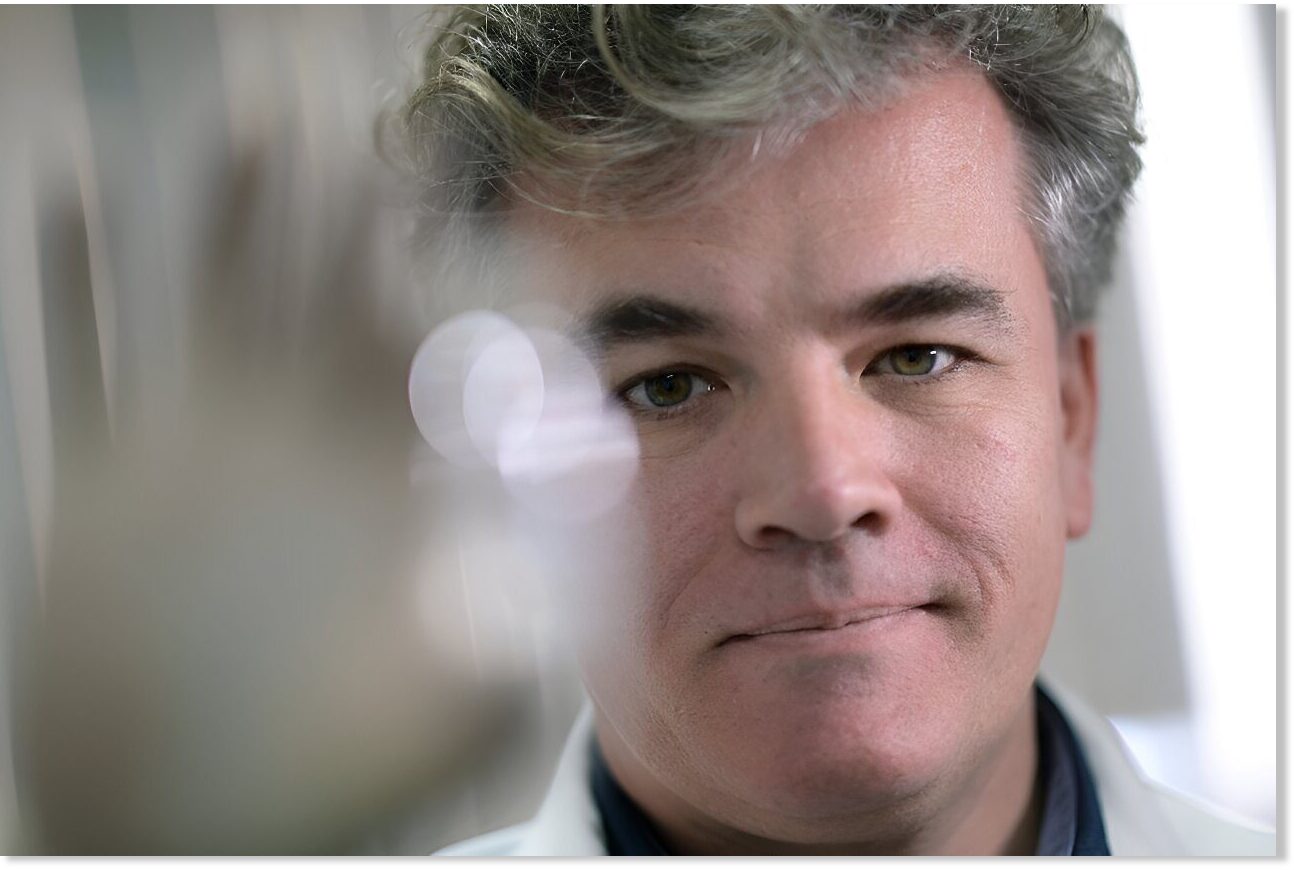
Brazilian psychiatrist Frederico Garcia says Garcia says Calixcoca could reshape addiction treatment.
Garcia says Calixcoca could reshape addiction treatment.
"There's no specific registered treatment for cocaine and crack addiction. We currently use a combination of psychological counseling, social assistance and rehabilitation, when necessary," he says.
Calixcoca could add an important tool to that regimen, helping patients at critical stages of recovery, such as when they leave rehab, he says.
The vaccine is made with chemical compounds designed in the lab, rather than biological ingredients, meaning it would be less expensive to produce than many vaccines and would not have to be stored at cold temperatures.
But it won't be a "panacea" that can be administered to anyone, Garcia says.
The exact target group will depend on the outcome of clinical trials, but is theoretically meant to be recovering addicts "who are off (cocaine) and want to stay that way," he says.
The goal is to change what Garcia calls a "sad statistic": according to the US National Institute on Drug Abuse, one in four regular cocaine users becomes addicted.
And just one in four addicts manages to quit after five years of treatment.
Given the stakes, anticipation around the vaccine is high. More than 3,000 people have contacted Garcia's team to volunteer to take part in the clinical trials.



Reader Comments
I guess we'll find out five years after the fact as per usual.
M aybe that's what happened to Jordan Peterson.
Just speculating.
Anyway, a bad idea to tinker with such stuff, IMO.
Also, Big Pharma don't seem create anything that doesn't have 'hooks' attached.
I remember Rowan Cocoan telling me that with some varieties of benzo, they re-wire your brain in a matter of weeks, and if you try and come off them even after a short time, you get seizures.
Our band is reformed now with Carol Adams as new lead vocalist and she is very very talented. We also added a new lead guitarist, and drummer. We decided to rename the band to something quite approximate for Kelowna….FIRESTORM, ha ha. Kelowna lost about 250 homes this year to wildfires….pretty insane !
But nice and cool here now !!
Gambling/Drugs/Sex/Money/TV/Sugar/Tobacco/The-rapist
oh wait on reflective second thought the Powers That Shouldn’t Be would be out of business then.
/vakˈsēn,ˈvakˌsēn/
noun
1.
a substance used to stimulate immunity to a particular infectious disease or pathogen, typically prepared from an inactivated or weakened form of the causative agent or from its constituents or products.
"every year the flu vaccine is modified to deal with new strains of the virus"
Who knew cocaine was a virus!