
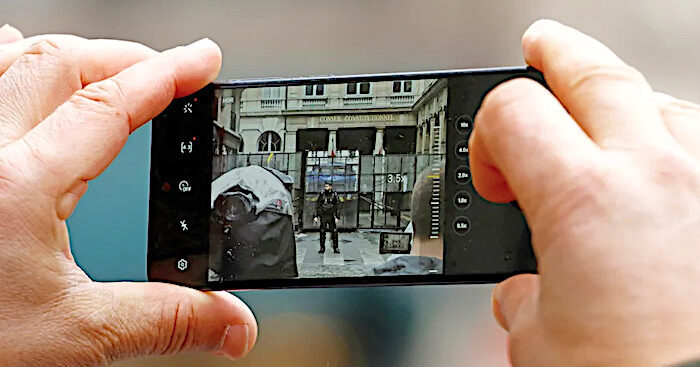
© Reuters/Gonzalo FuentesPolice surveil suspects
Late Wednesday, lawmakers agreed that police in France should be able to spy on suspects by remotely activating the camera, microphone, and GPS on their phones and other gadgets. With 80 votes in favour, it appears that this frightening prospect will soon become a reality.
The snooping clause, which is part of a larger justice reform bill, has been criticised by the Left and human rights activists as an authoritarian snoopers' charter. Once it becomes the law, avoiding governmental surveillance would be impossible, even with VPN services or encrypted messaging.
As privacy advocates and politicians from both parties express concern over the decision, Justice Minister Éric Dupond-Moretti continues to deny that the provision will turn the country into the next Orwellian dystopian nightmare.
France's justice reform bill
Covering laptops, cars and other connected objects as well as phones, the measure would allow geolocation of suspects in crimes punishable by at least five years' jail.
Devices could also be remotely activated to record sound and images of people suspected of terror offences, as well as delinquency and organised crime.
During debate on Wednesday, MPs in President Emmanuel Macron's camp inserted an amendment limiting the use of remote spying to "when justified by the nature and seriousness of the crime" and "for a strictly proportional duration".
Any use of the provision must be approved by a judge, while the total duration of the surveillance cannot exceed six months. And sensitive professions including doctors, journalists, lawyers, judges and MPs would not be legitimate targets.
Emanuel wants to set up a "surveillance state"
Despite the outcry, Dupond-Moretti maintains:
"The law will save people's lives. We're far away from the totalitarianism of 1984, George Orwell's novel about a society under total surveillance."The contested measure, part of an article containing several other provisions, was voted through by National Assembly members as a wider justice overhaul bill making its way through parliament. The opposition parties and rights groups are concerned that the Macron government is using this as a smokescreen to establish a 'surveillance state'. However, the justice minister claims that the law and its provisions will only be applied to a 'dozen cases a year'.
Digital rights group La Quadrature du Net wrote in a May statement:
"The provisions raise serious concerns over infringements of fundamental liberties, the right to security, right to a private life and to private correspondence and the right to come and go freely. The proposal is part of a slide into heavy-handed security."The group claimed that police will exploit security flaws to target the dissidents. Furthermore, it may exploit security flaws rather than instructing manufacturers on how to close them.
According to experts, the timing of the bill's passage could not be worse. The country is protesting against Emanuel Macron's government after the death of 17-year-old by police in a Paris suburb.



Reader Comments
to our Newsletter