
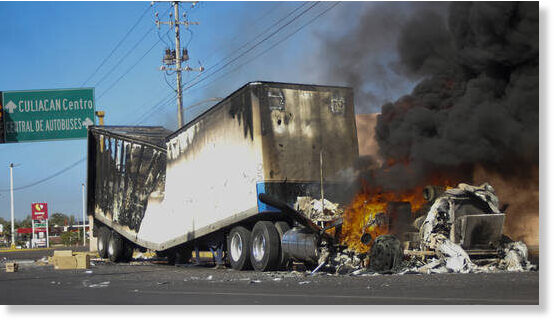
© AP / Martin UristaA truck burns on a street in Culiacan, Sinaloa state
The capture of Ovidio 'El Raton' Guzman-Lopez in a military raid on Thursday morning triggered clashes with the security forces, plunging the city of Culiacan - home to the Sinaloa drug cartel - into chaos. The cartel is considered by the US to be the largest and most powerful drug trafficking organization in the world.
The governor of Sinaloa state, Ruben Rocha Moya, has reported at least six deaths in the fighting so far, as well as 29 people wounded, including eight civilians and 21 police officers. He has urged citizens to shelter in place.
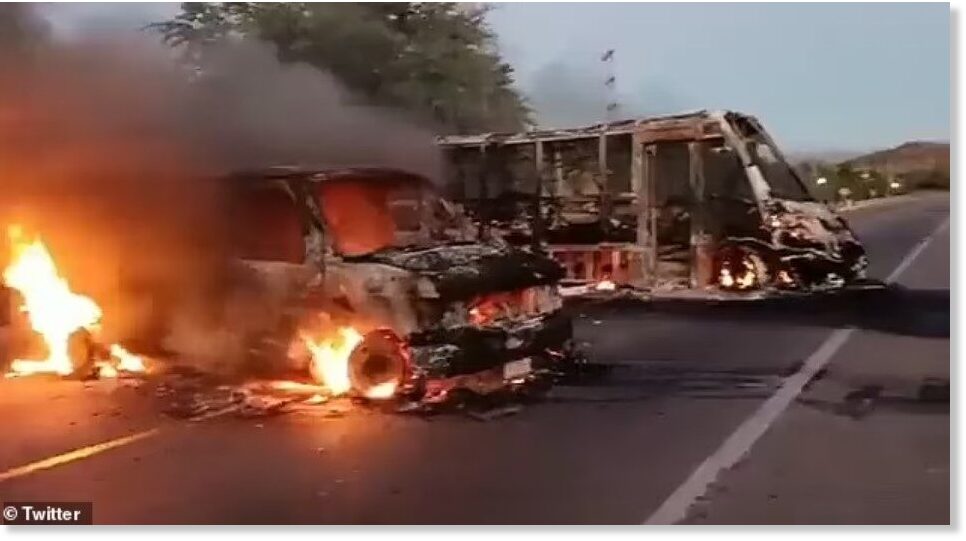
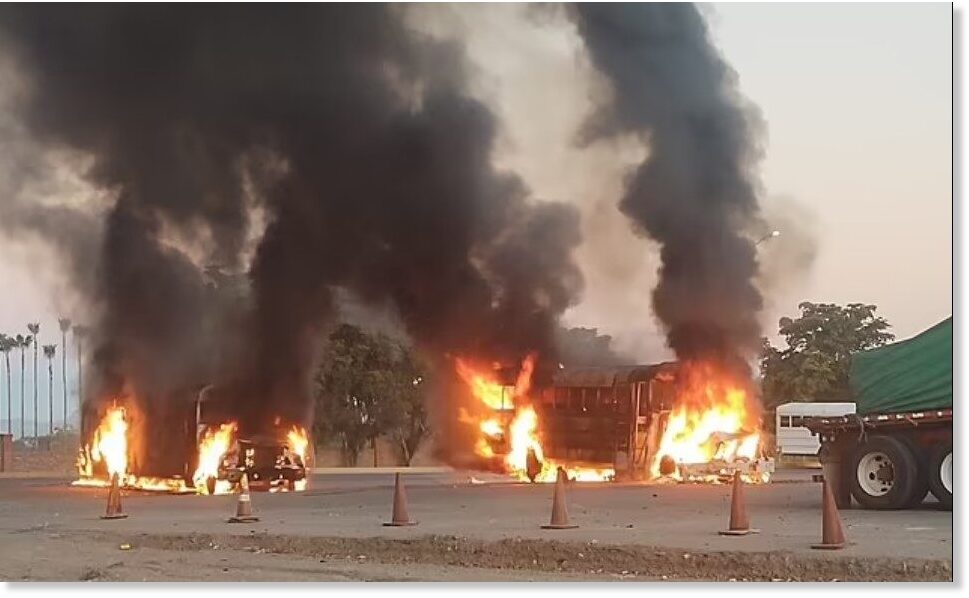
Vehicles remain ablaze in Sinaloa after news spread of Guzmán arrest, the videos uploaded to twitter by local media and residents of the city
Videos also show a large number of torched cars parked near cartel 'narco blockades' around Culiacan, as well as the charred remains of a public transit bus. According to Governor Moya, around 250 vehicles have been reported stolen in the city.
Heavy gunfire could be heard in some clips, with civilians seen ducking for cover on a roadway as the sounds of combat ring out in the distance.
Media reports have also noted cases of looting and riots in Culiacan, including a mass escape attempt by convicts at the Aguaruto prison. A cache of military rifles and other contraband was seized at the prison last year, but clashes at the facility suggest some prisoners were still armed.
Gunfire around Culiacan airport also disrupted commercial flights, with one plane bound for Mexico City hit by a bullet on Thursday afternoon, prompting passengers and crew to take cover. While there were no injuries, Aeromexico decided to temporarily halt flights amid the unrest.
The son of the infamous Sinaloa drug lord, known as 'El Chapo', Guzman-Lopez, was previously arrested by the Mexican authorities in 2019, but was later released after heavy gun battles with the cartel, closely mirroring the latest clashes. Thursday's raid was supported by troops with the Mexican Army, Navy, National Guard, as well as local law enforcement, with the security services saying the operation followed six months of surveillance and planning.



Reader Comments
Mexican military and police don't make enough money to risk their lives against an internal enemy armed and financed by the United States.
Think of the cartels as Mexican ISIL.