
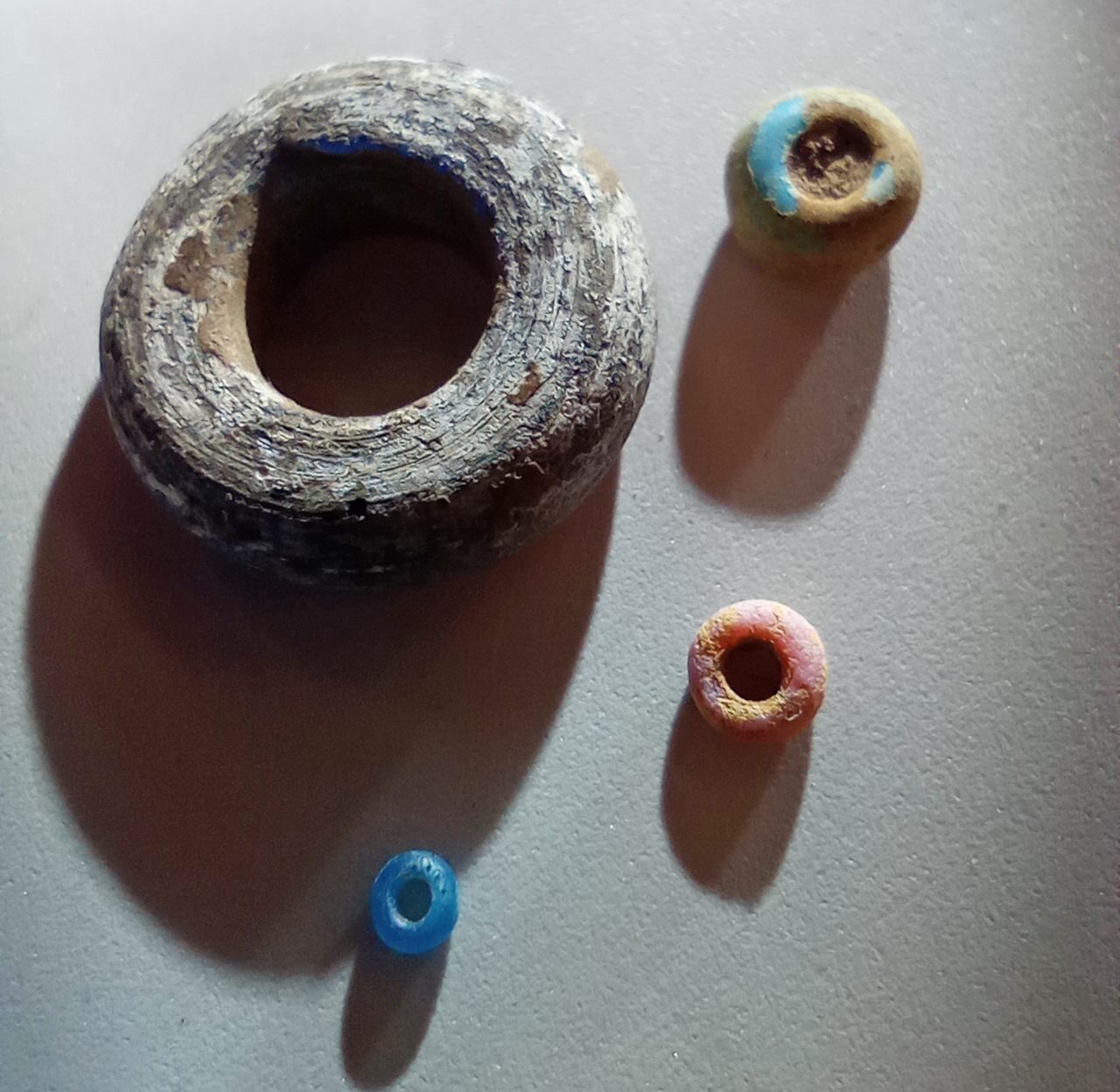
© Jessica ThompsonThese four beads were found in the Kasitu Valley in northern Malawi. The biggest is about the size of a Cheerio, while the smallest is the size of a grain of rice. Courtesy of
Jessica Thompson was looking for bones, not beads. But as the Yale archeologist sifted through the fertile soil of Kasitu Valley in northern Malawi in the mid 2010s, she kept finding small glass orbs, many about the size of grain of rice. Some were white, others were dotted with red, and a few were either dark blue, blue-green, or turquoise. "I had not expected to really see that," she says.
These beads were part of the monetary system in northern Malawi in the 18th and 19th centuries. Then, they were used to buy goods and food, pay taxes imposed by local chiefs, and even purchase enslaved people. Today, the 29 beads Thompson discovered are part of a history that is still being written for the under-studied region. According to a paper co-authored by Thompson, the miniature spheres are evidence of direct and indirect trading that was occurring between Europeans and Africans along indigenous trade routes created at least 1,000 years before Europeans began widespread exploration in that region.
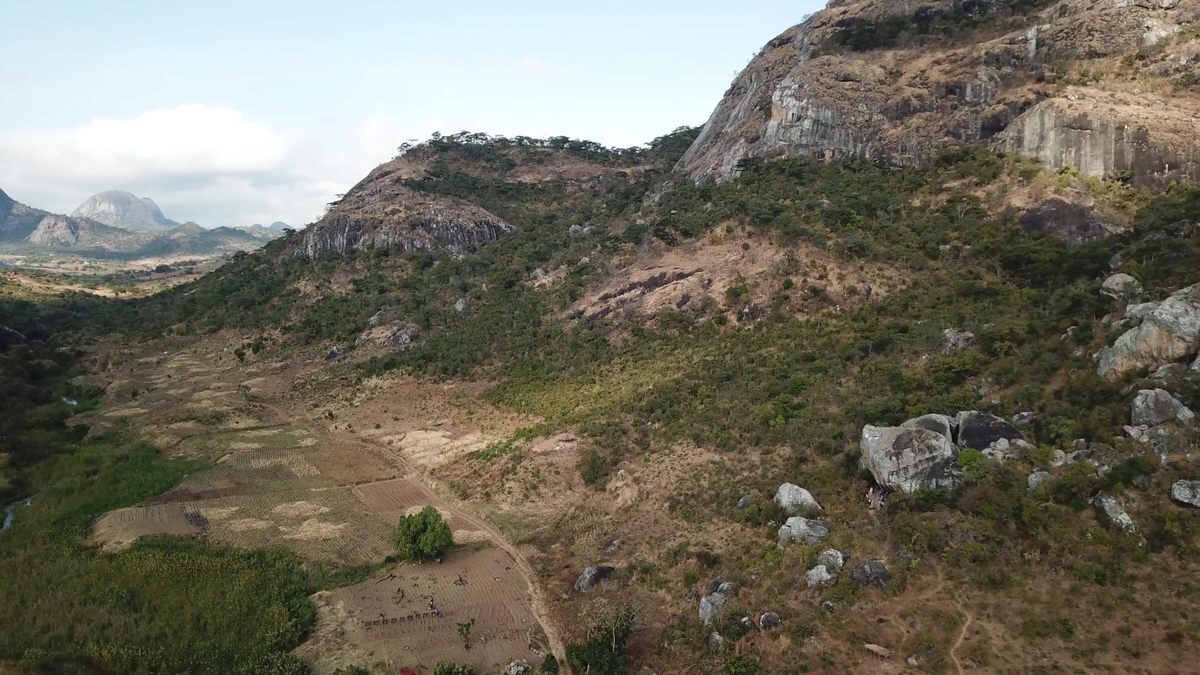
© Jessica Thompsonhe Mazinga 1 excavation site in Northern Malawi is in a triangular rock shelter where people have taken refuge for thousands of years.
Some of the beads found in Malawi were so tiny — as little as one millimeter in diameter — that Thompson and her team couldn't quite figure out what they were. When it came to analyzing them in Chicago, Dussubieux says that having agile fingers was the key. "You had to be very careful when placing the beads on the chamber because the problem with beads is that they roll," she says.
The study concluded that all but one of the 29 beads were manufactured in Europe between the 17th and 19th centuries. The one non-European bead had a chemical composition of mineral soda-high alumina typical of beads manufactured in South Asia, specifically in Chaul on the Maharashtra coast, India. The beads' origins suggest that they found their way to Malawi via Indian Ocean trade routes but further research is needed to understand those trading patterns.
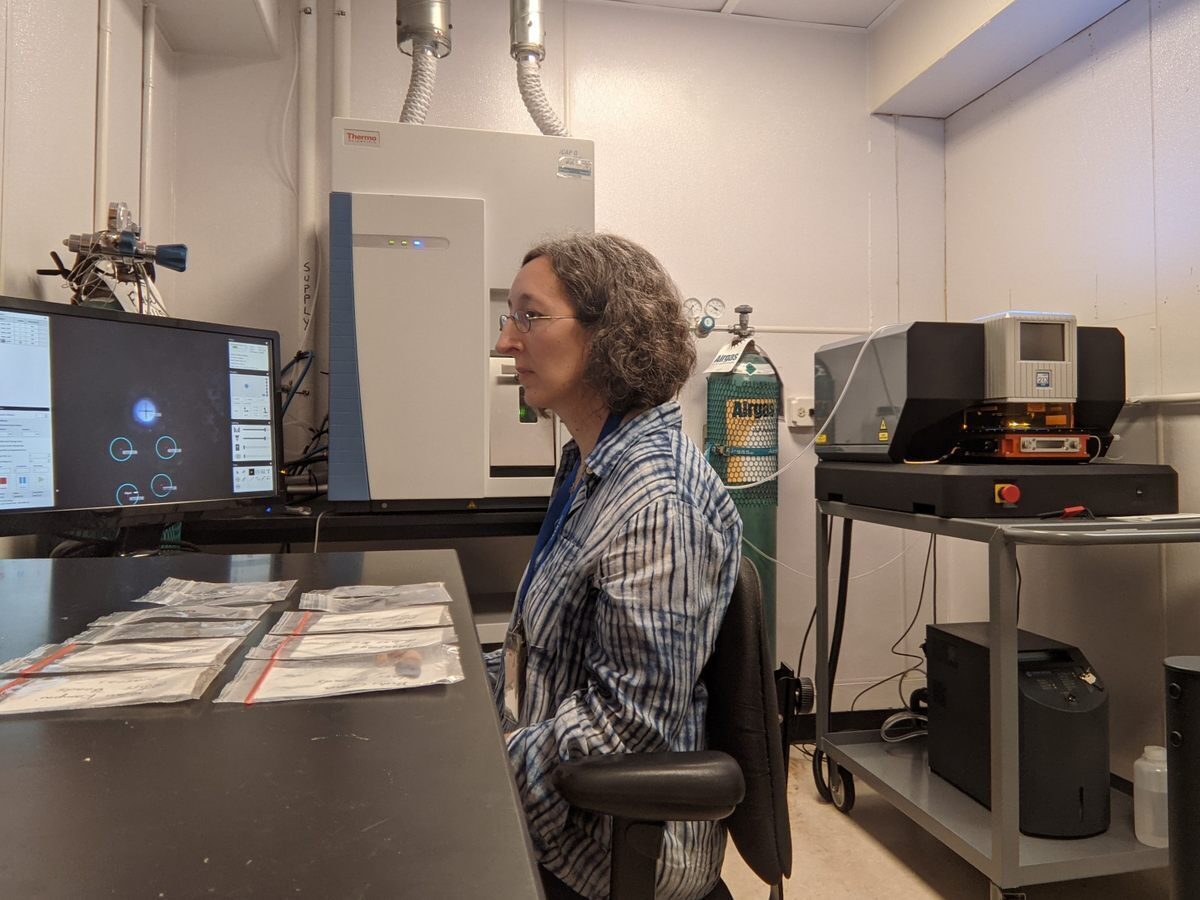
© Laure DussubieuxLaure Dussubieux used laser ablation inductively coupled plasma mass spectrometry to study the artifacts. This is the first time the technology has been used to analyze beads excavated in Malawi.
The presence of these European beads in Malawi is an indication of the increased interest that Europe had in that region during the 18th and 19th centuries but, as Thompson says, "the trade goods were things that people in the interior wanted and had their own purposes for." (The only non-European bead is believed to have been brought into the interior in the 16th century by the Portuguese, who knew that African consumers, at the time, preferred Indian beads over European ones.)
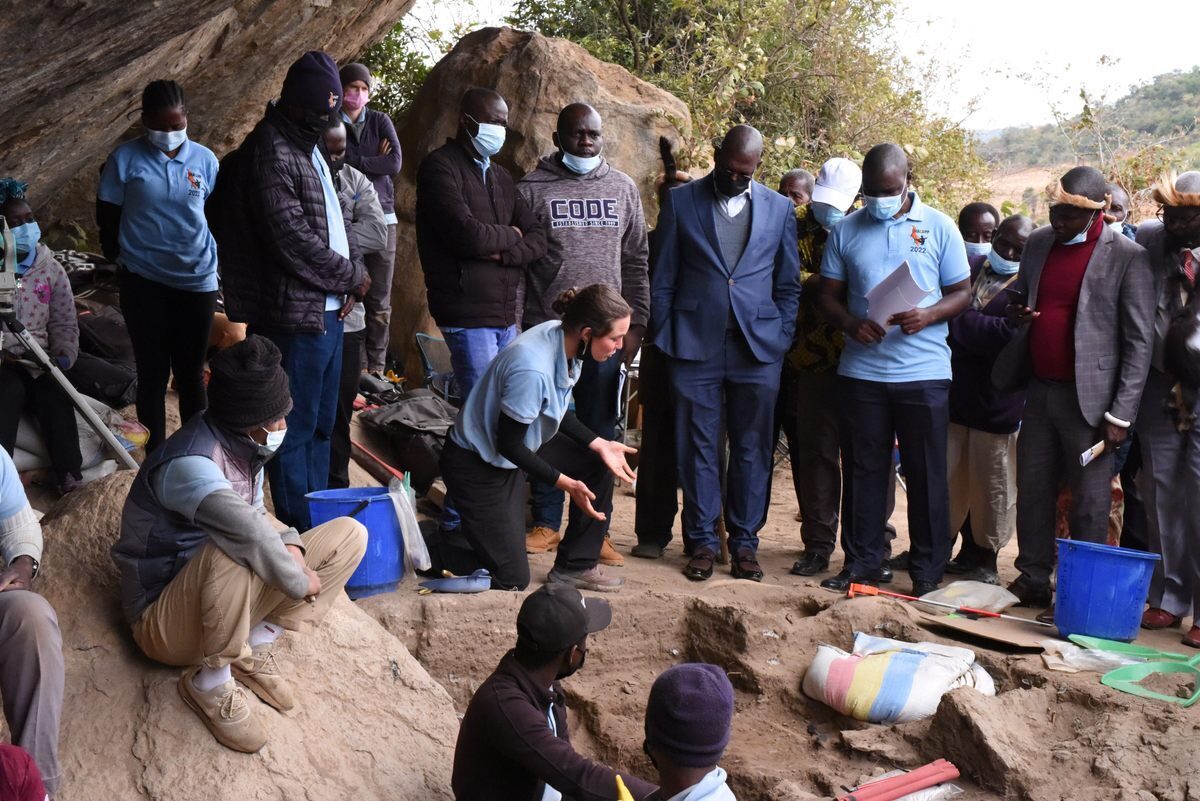
© Jessica ThompsonArchaeological investigations at the Mazinga 1 site have generated much local interest in what archaeology can offer instead of — or in addition to — the written record
This past summer, Thompson and her colleagues went back to northern Malawi to do more excavation work. They have already uncovered more beads. Now that she knows what she's looking for, Thompson says, "they're just kind of sitting here, potentially ready to be analyzed." They could reveal a history not documented by Europeans exploring the African interior.



Reader Comments
Haven't they heard Biden declare the pandemic to be over?
I was kind of wondering how and also expecting a somewhat longer scope of time to be revealed. They must have carried those tiny ones around in teensy bladders as artists used to use for rare pigments.
Not playing around.
Serious business.