
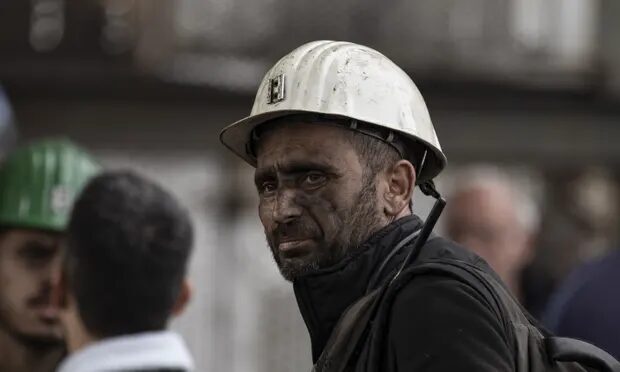
© Anadolu Agency/Getty ImagesAgence France-Presse and Reuters in IstanbulA co-worker of the coal miners trapped under the rubble waits at the explosion site.
Interior minister, Süleyman Soylu, said Saturday that 40 miners were confirmed dead. Eleven were injured and hospitalised, while 58 others managed to get out of the mine on their own or were rescued unharmed. The status of one remaining miner was unclear.
He also confirmed early reports that almost 50 miners were still trapped in two separate areas between 300 and 350 metres below ground.
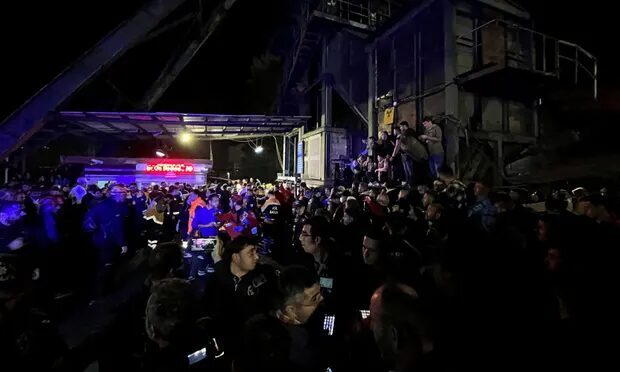
© Nilay Meryem Comlek/Depo Photos/ReutersPeople wait for news outside the coalmine.
Recep Tayyip Erdoğan, the Turkish president, was expected to fly to the scene of the accident on Saturday.
Most initial information about those trapped inside was coming from workers who had managed to climb out relatively unharmed. The Amasra mayor, Recai Çakir, said many of those who survived suffered "serious injuries".
The blast occurred moments before sunset and the rescue effort was being impeded by the dark. Turkey's Maden-İş mining workers' union attributed the blast to a buildup of methane gas. But other officials said it was premature to draw definitive conclusions over the cause of the accident.
Rescuers sent in reinforcements from surrounding villages to help search for signs of life. Television images showed paramedics giving oxygen to the miners who had climbed out and then rushing them to the nearest hospitals.
The local governor said a team of more than 70 rescuers had managed to reach a point in the pit about 250 metres below.
It was not immediately clear if the rescuers would be able to come any closer to the trapped workers or what was blocking their further passage.
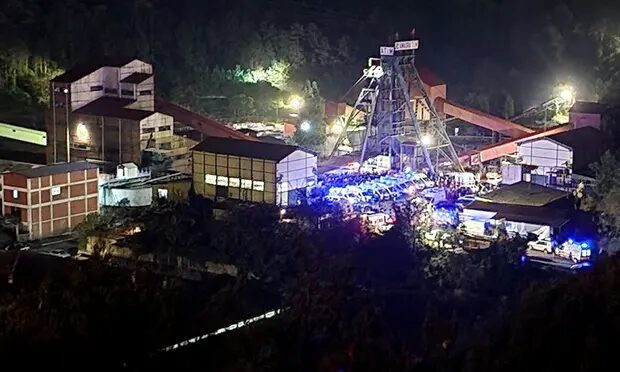
© Ihlas news agency/AFP/Getty ImagesAmbulances and firefighters arrive at the site of the coalmine.
The local public prosecutor's office said it was treating the incident as an accident and launching a formal investigation.
Turkey suffered its deadliest coal mining disaster when 301 workers died in a blast in the western Turkish town of Soma in 2014.





Comment: Although coalmine and gas-related explosions aren't exactly rare occurrences, there is reason to suspect that their frequency is increasing, and with a variety of causes to blame, including human error, earth changes, even sabotage, but their occurrence is even more notable at a time when the world is suffering an energy crisis: 10 dead in huge gas station explosion in Donegal, Ireland