

Sewage undergoes biological treatment in a tank at the San José-Santa Clara Regional Wastewater Facility on Thursday, Sept. 1, 2022, in San Jose, Calif. Left: Birds float on an algal bloom in Berkeley.
Comment: Which just proves how primed, uncritical, and misinformed, people are.
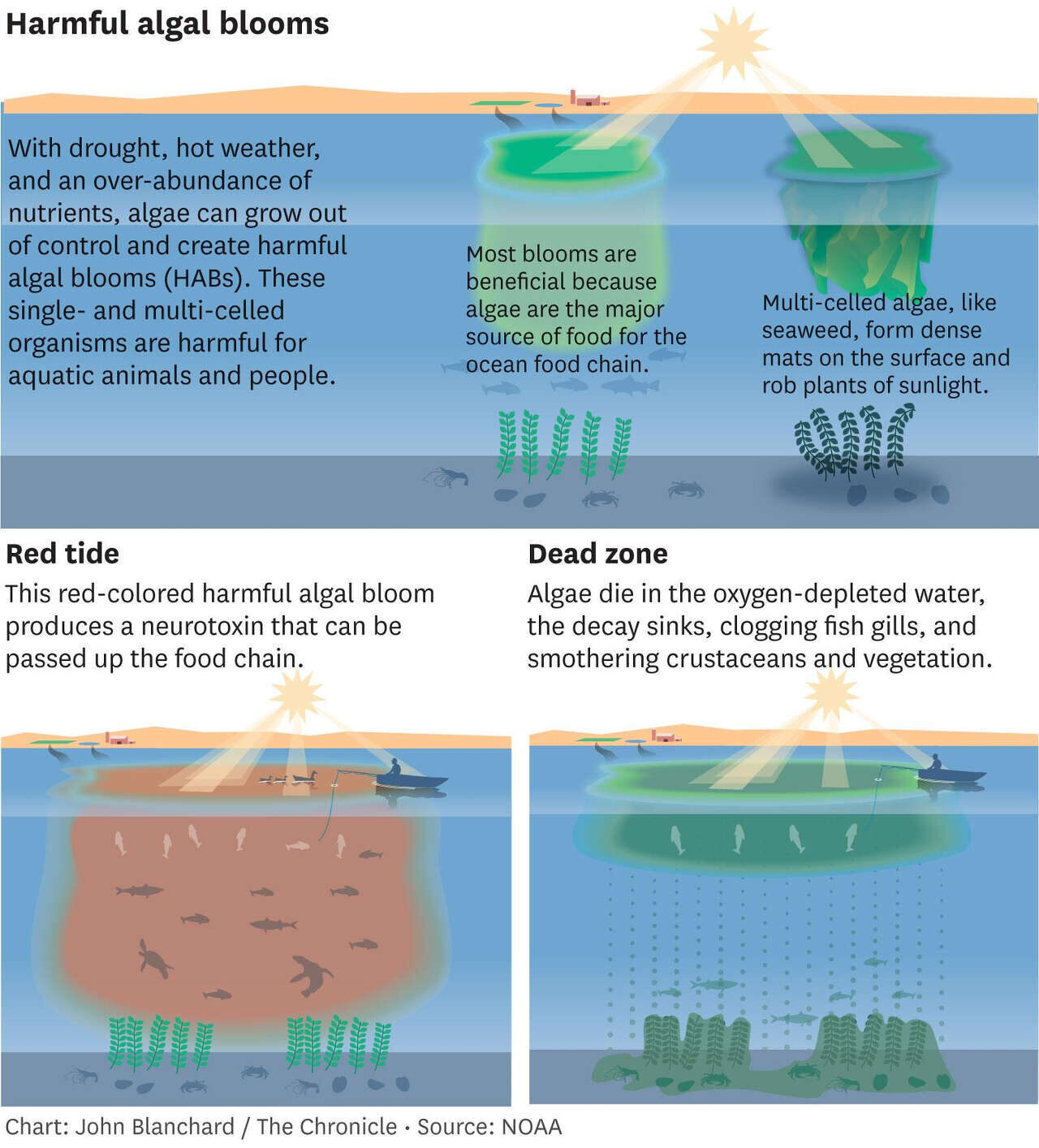
While scientists suspect climate change played a role in triggering the bloom, what fueled it is not a mystery.
Comment: Climate change is also apparently causing deadly blood clotting in otherwise young and healthy recipients of the experimental Covid jabs.
Algae blooms need food to grow, and this one had plenty: nutrients originating in wastewater that the region's 37 sewage plants pump into the bay.
In other words — we wouldn't have this problem without the poop and pee of the Bay Area's 8 million residents.
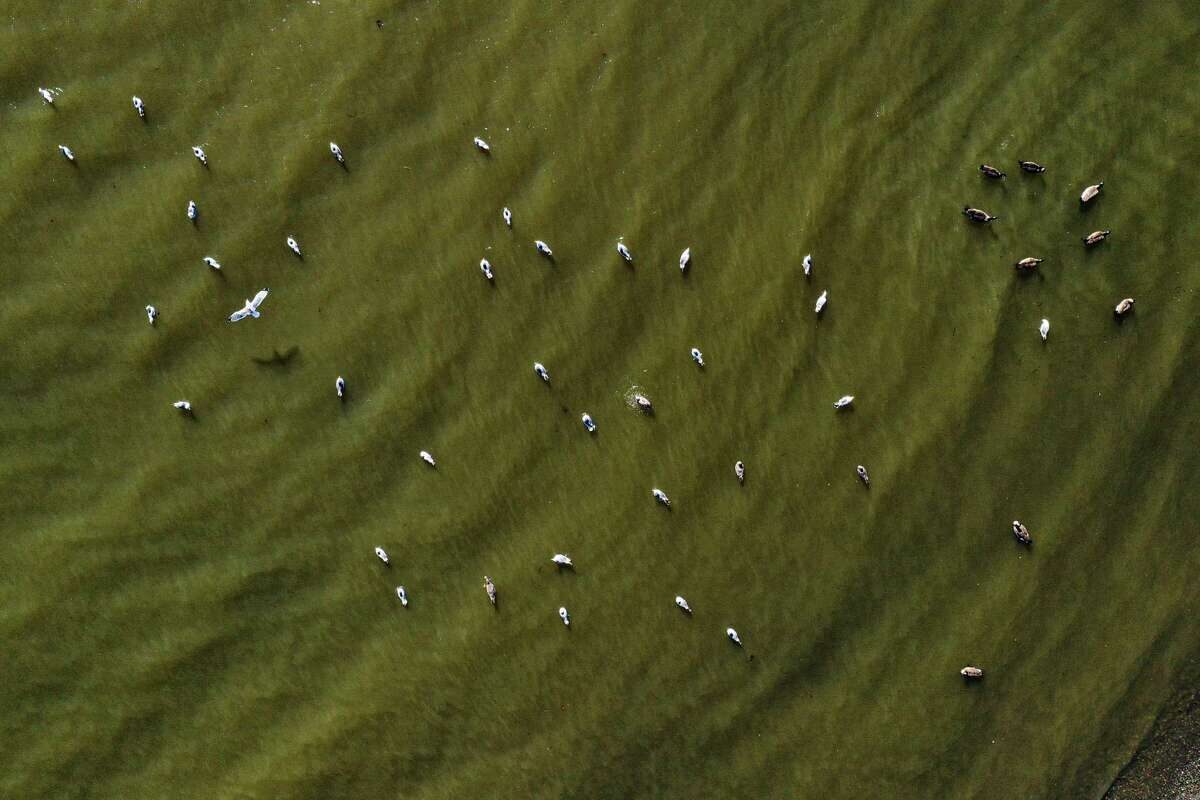
© Santiago Mejia / The ChronicleLeft: Birds float on an algal bloom in Berkeley.
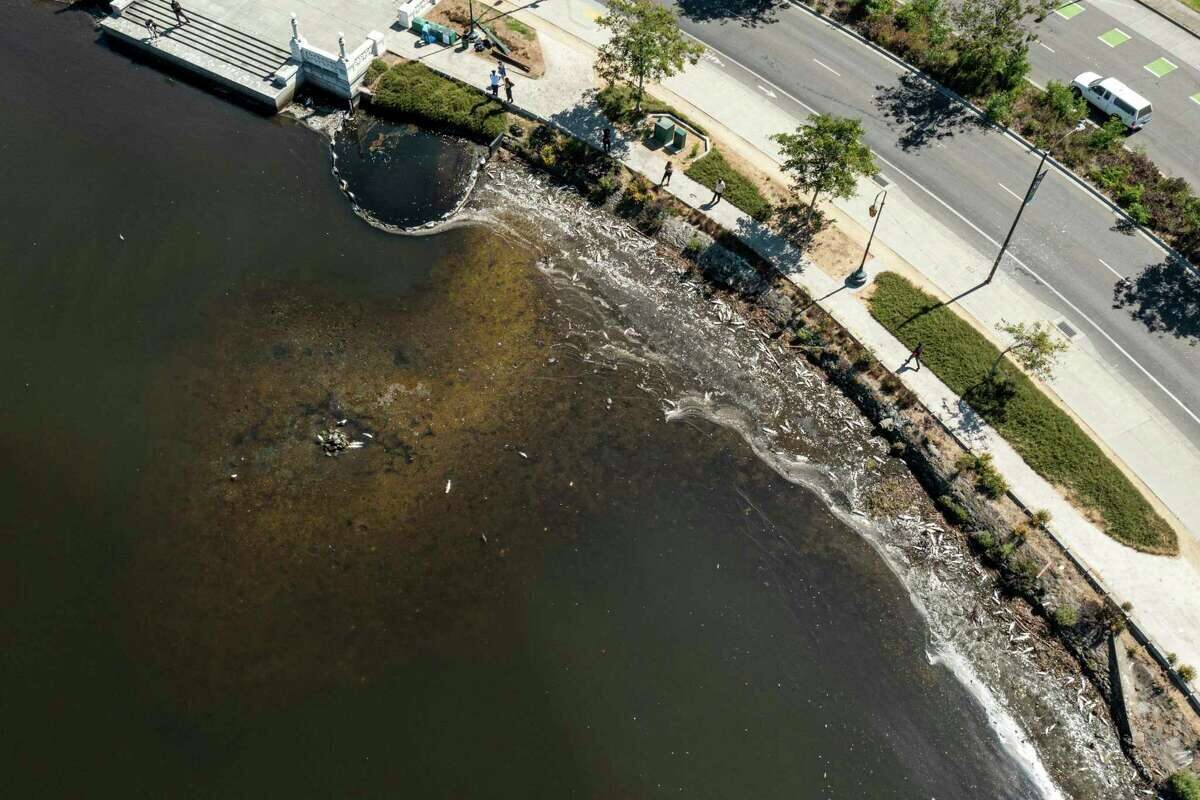
© Santiago Mejia / The ChronicleAn algal bloom at Lake Merritt in Oakland.
Comment: Nitrogen, a waste that governments are claiming is so damaging that they're using it as their excuse to throw farmers off their land in Canada and the Netherlands; and waste that, were governments really as green as they claimed to want to be, could be converted into fertilizer; fertilizer that was critically low this year and that farmers desperately need, and without which will struggle to feed people.
There has been no evidence of a raw sewage leak; rather, it's the regular amount of those nutrients that have long made the bay primed for a harmful algae bloom like this one, which started in late July in Alameda and has recently flared up as far as Sausalito, Vallejo and Fremont.
Nutrients "may not have triggered this specific event," said David Senn, senior scientist at SF Bay Nutrient Management Strategy of the San Francisco Estuary Institute, a group formed to study the issue 10 years ago. "But they contributed to its size, the amount of the organism and how long it lasted."
Comment: Their bills might triple, but you can bet that the waste will continue to dumped into the waterways.
"It's a multibillion-dollar Bay Area issue that needs to be thought through very carefully, taking the science into effect," she said. "There's all of sorts of different treatments, and none of them are cheap."
A major challenge is that most of the treatment plants date to the 1970s and '80s, after the passage of the 1972 Clean Water Act and other regulations. Previously, municipalities simply pumped raw sewage into the bay.
Comment: So following the regulations, treatment plants stopped being built.
Federal, state and local governments and the treatment plants themselves have spent millions to research the issue, but like much of climate change planning, the science and policy are moving slower than the problem is progressing.
Comment: Meanwhile governments have been suspiciously quick to push their green agenda on citizens, who, if they fail to comply, are threatened with all kinds of punishments.

© Noah Berger / Special to The ChronicleGrease and scum float in a raw sewage intake tank at the San José-Santa Clara Regional Wastewater Facility.
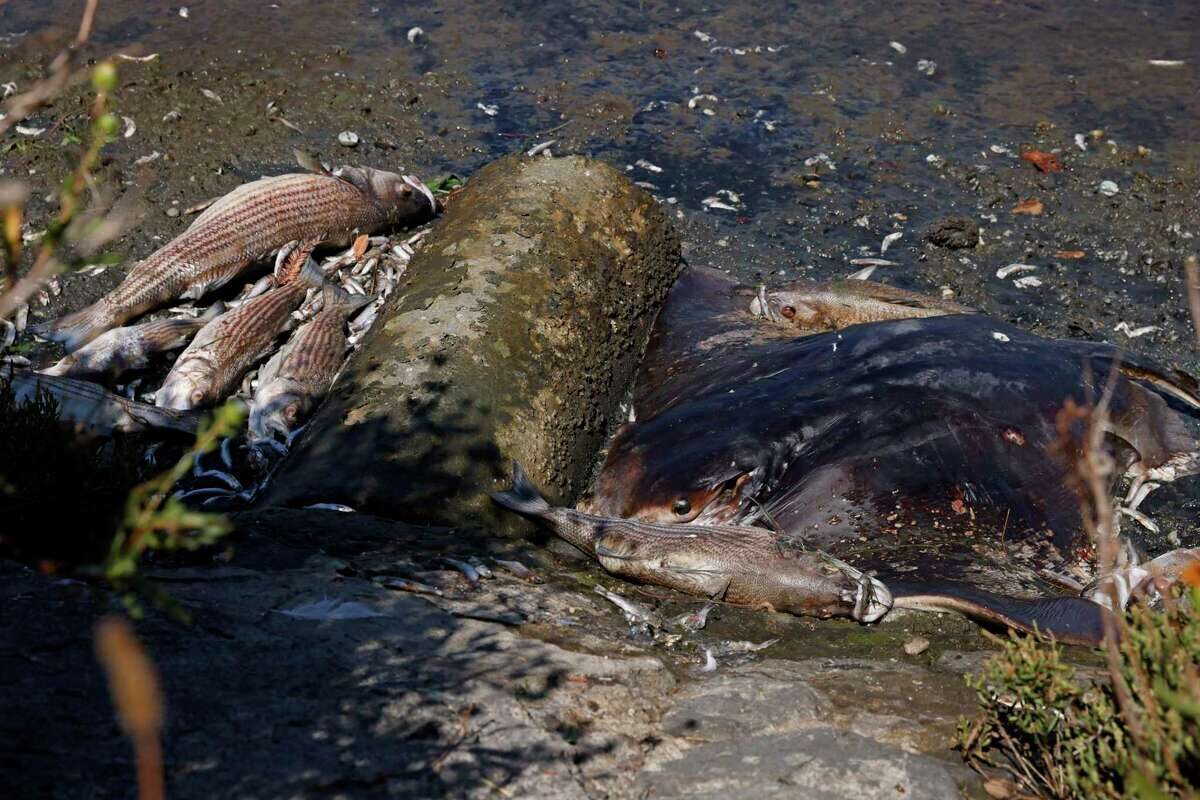
© Santiago Mejia / The ChronicleA dead bat ray is surrounded by other dead fish at Lake Merritt in Oakland, Calif., Wednesday, Aug. 31, 2022.
The algae bloom, of an organism called Heterosigma akashiwo, is most toxic to fish, requiring an emergency cleanup of dead fish at Lake Merritt. In the bay it has killed a reported 10,000 yellowfin goby along with hundreds of striped bass and white sturgeon and a small number of endangered green sturgeon, according to the state Department of Fish and Wildlife. Though the bloom was showing signs of slowing down this week, the heat wave may exacerbate it.
"If loads from wastewater treatment plants had been lower, would that have prevented this event or lessened its extent?" said Lorien Fono, director of Bay Area Clean Water Agencies, which represents the 37 plants and said they're waiting on research to determine that. "This is not something we've seen before."
Some local agencies have taken steps to reduce their nutrient loads, while others have been less proactive. The San Jose/Santa Clara Regional Wastewater Facility, which serves Silicon Valley, releases more discharge water into the bay than other large facilities, at an average of 85 million gallons per day. Yet its nitrogen load is 5.5 tons a day.
Meanwhile San Francisco's treatment plants release an average of 55 million gallons of wastewater into the bay daily, with 9.5 tons of nitrogen; the city also releases additional wastewater into the ocean.
Comment: It's a bit rich (and symbolic) that the city bureaucracy can't deal with its own crap but it expects others to be able to.
"There are many of us who discharge into our San Francisco Bay Estuary, but we are certainly one of them," said San Francisco Supervisor Aaron Peskin, who plans to conduct a hearing on the issue this month. "We've got a ways to go not just on the bay side, but also on the ocean side," he said, when it comes to reducing the nutrient load in effluent.
But he noted that the SFPUC is funded by ratepayers, who need to be taken into account.
"The issue of bellying up to the bar and spending hundreds of millions of dollars to deal with what climate change is going to require us to do, to reduce our nitrogen loads, is not going to happen overnight," he said.
Comment: Cue green initiatives whose only real solution is to deindustrialise; which isn't really a solution at all, because people need to work to make money.
John Coté, spokesperson for the SFPUC, said in a statement that the agency is an active participant in the scientific studies on nutrients in the bay.
"We are currently in compliance with all of our regulatory requirements, and we stand ready to undertake the planning and implementation around any modified nutrient-based regulatory requirements that the Regional Water Quality Control Board issues in the future," he said.
Algae need the same things that crops need to grow — sunlight, nitrogen and phosphorous. While the nitrogen and phosphorus have long been in the water due to the treatment plants, the sunlight has been hampered by frequent fog or wind that stirs up sediment, making it less clear, or more turbid.
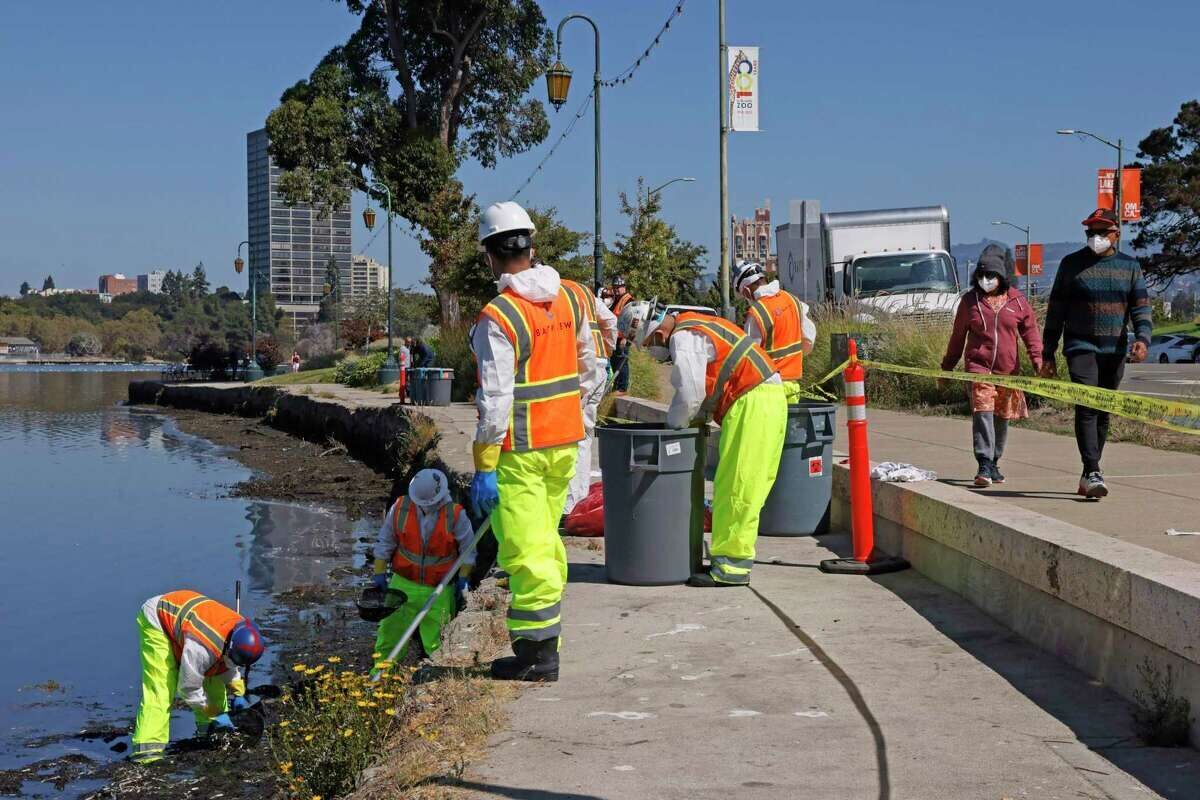
© Santiago Mejia/The ChronicleCrews remove dead fish from Lake Merritt in Oakland in August. Thousands of dead fish washed ashore at Lake Merritt because of a harmful algae bloom spreading across the Bay Area. The microorganism, Heterosigma akashiwo, is believed to be the largest harmful algae bloom seen in the region in over a decade.
Comment: They may have a point that certain aspects of our changing climate are disrupting the normal course of matters, but it's unlikely to be the driving factor. It is true, however, that there has been a significant uptick in, otherwise, unexplained dead zones and massive algae blooms:
- Mysterious, massive and deadly algae bloom 'whirlpool' discovered in the Baltic Sea
- Worldwide ocean anoxia driven by global cooling was possible factor in previous mass extinctions
The water in the bay has also been more clear in the past decade, likely because the heavy sediment that originally made it down from the Sierra during the Gold Rush has finally stopped flowing into rivers for the most part, said Warner Chabot of the San Francisco Estuary Institute.
Bay Area residents' role in the issue starts with the flush of the toilet — each of us contributes 0.03 pounds of nitrogen per day, White said. The waste goes to wastewater treatment plants and through various processes including chlorination and dechlorination, removing pathogens, before it's pumped into the bay. And while this water is generally safe for marine life, it's not often given an extra step and filtered for nutrients that algae needs to grow and bloom.
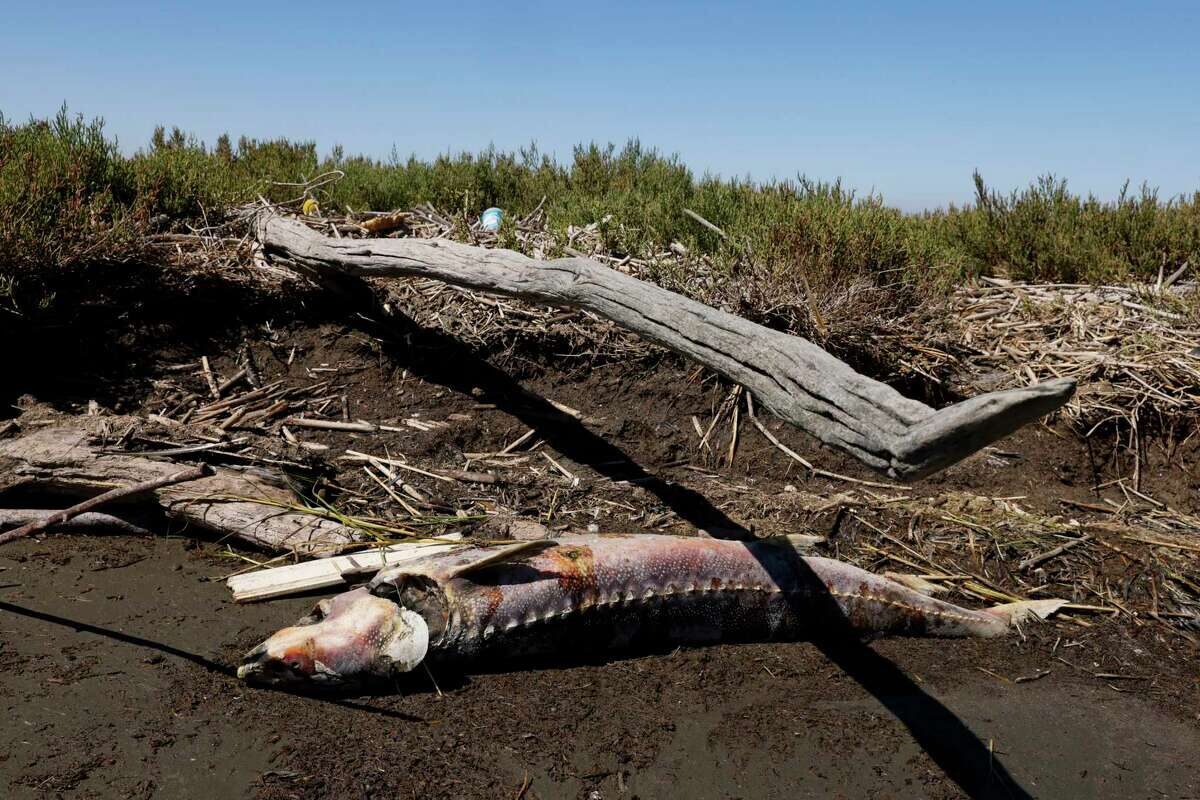
© Santiago Mejia / The ChronicleThousands of fish like this sturgeon on Mare Island have washed up on bay shores because of a harmful algal bloom.
"The science is still premature in determining the exact cause of these algal blooms, but we're going to continue to do what we can on our part," said Amit Mutsuddy, deputy director of the facility.
In the past year, the amount of nitrogen in its effluent went down from 17 to 11 milligrams per liter at no extra cost, just by using existing infrastructure, he said.
But other agencies may have to spend up to $1 billion, depending on where treatment facilities are located, White said.
Other ways to deal with nutrients include recycling wastewater and constructed wetlands, a nature-based process that uses soil and vegetation to treat water, but those processes are still being evaluated for their cost-effectiveness.
"We're all in this together. We're all going to have to pay for this," Wren said. "If you're OK with that, we're going to have a better bay."
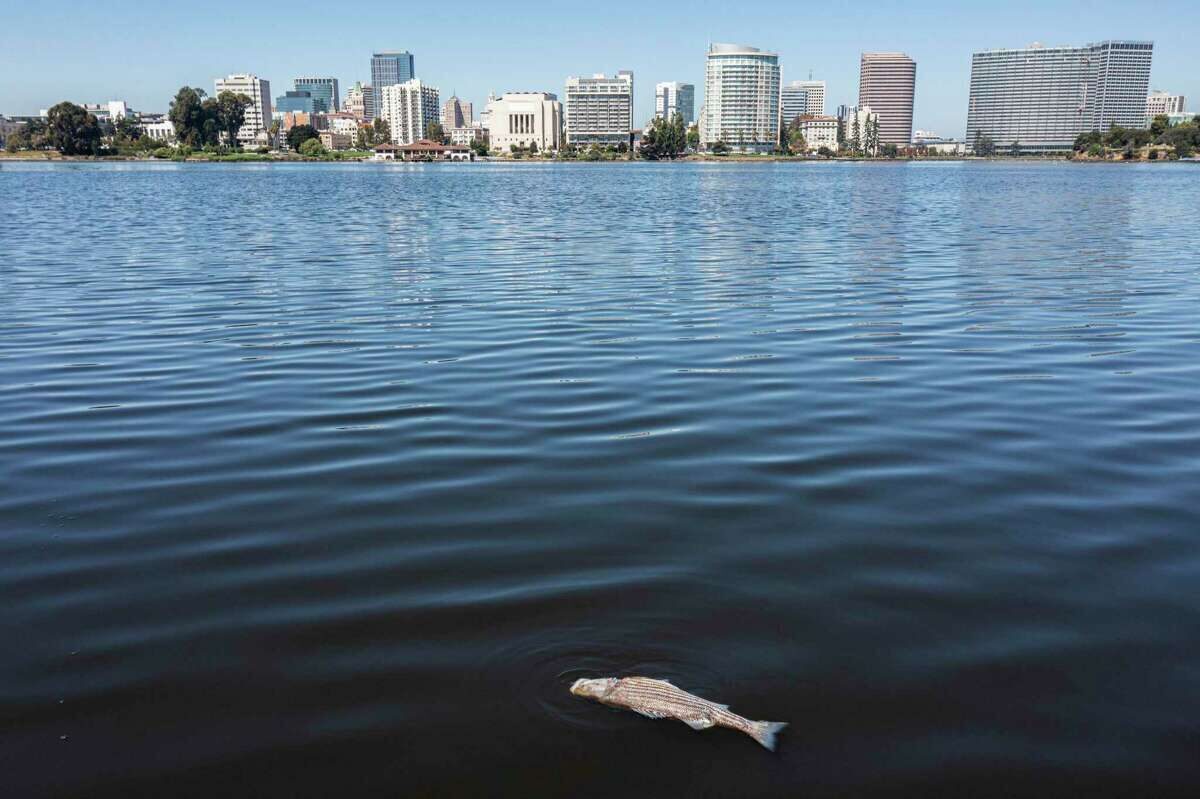
© Santiago Mejia/The ChronicleThousands of dead fish washed ashore at Lake Merritt due to a harmful algal bloom spreading across the Bay Area.








Liar. Now the "mysterious problem" will be used as a grift for research funding, this could drag on for years, while they continue killing the Bay. 🤦