
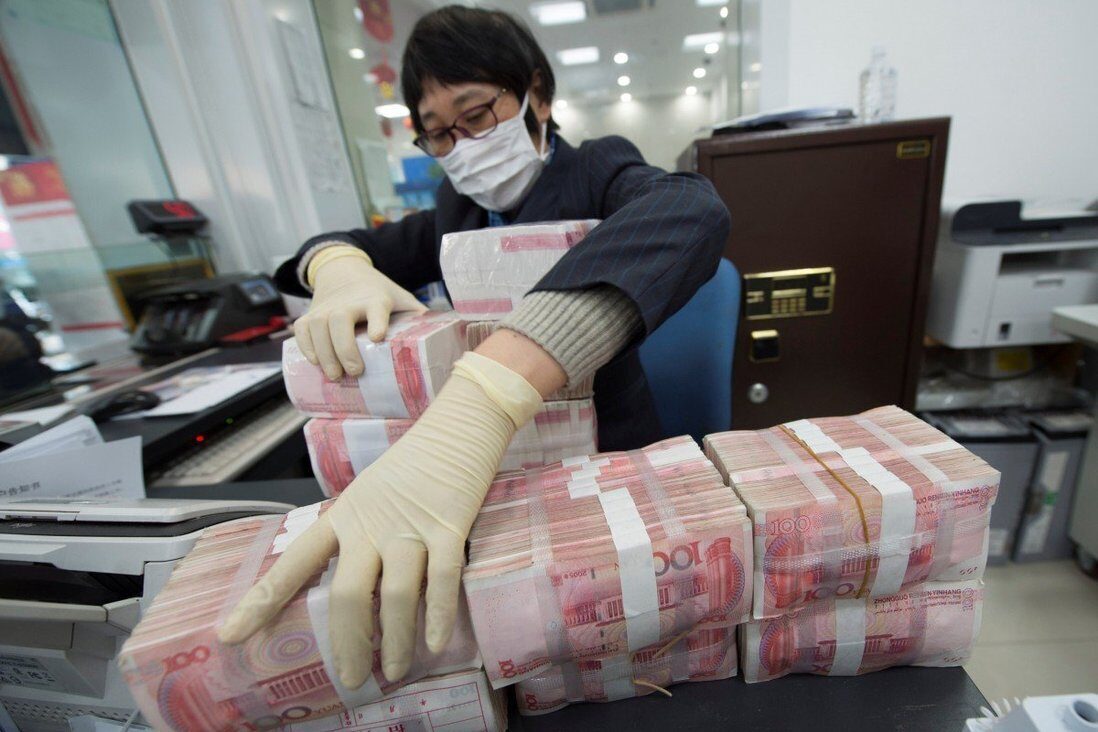
© ReutersThe loan prime rate (LPR) has been considered China’s de facto benchmark funding cost since 2019.
The one-year loan prime rate (LPR) - on which most new and outstanding loans are based - was cut from 3.85 per cent to 3.8 per cent at the December fixing, while the five-year LPR - which is a reference for mortgages - remained at 4.65 per cent, according to the People's Bank of China (PBOC).
The LPR has been considered China's de facto benchmark funding cost since 2019. The rate is decided by a group of 18 banks and is reported in the form of a spread over the interest rate of the central bank's medium-term lending facility.
It had remained unchanged for 20 months having last been adjusted in April 2020, when the one-year LPR was cut from 4.05 per cent to 3.85 per cent.
"The People's Bank of China authorised the National Interbank Funding Centre to announce that on December 20, 2021, the market quoted interest rate (LPR) for loans is 3.8 per cent for one-year LPR and 4.65 per cent for five-year or longer LPR. The above LPR is valid until the next LPR is issued," said the PBOC statement on Monday.
An earlier decision by the PBOC to lower banks' reserve requirement ratio came into effect in the middle of last week, freeing up 1.2 trillion yuan (US$188 billion) worth of long-term funds.
Goldman Sachs analysts had predicted last week that the PBOC may reduce the one-year LPR rate by 5 basis points.
A total of 29 out of the 40 traders and economists polled by Reuters on Friday predicted cuts in China's LPR.
Among those polled, 15 forecast a five-basis-point cut in the one-year LPR only, while 14 predicted cuts of that magnitude in both the one-year and five-year LPRs.
"[The] cut will immediately feed through to outstanding floating rate business loans and should also lead to cheaper loans for new fixed rate borrowers," said Mark Williams, chief Asia economist at Capital Economics, who described the one-year LPR as "another modest easing step".
"We expect a cut to the five-year LPR before long which will make mortgages slightly cheaper and help official efforts support housing demand. The PBOC has already pushed banks to increase the volume of mortgage lending.
"There was a marked increase in new mortgage issuance last month: targeted support for property buyers does appear to be limiting one of the more severe downside risks facing the economy."
Last week, an influential Chinese think tank said China should lower interest rates and boost infrastructure investment to ensure the economy will grow by at least 5 per cent next year.
China's year-on-year economic growth is expected to drop below 4 per cent in the fourth quarter of 2021, way down from a 18.3 per cent rise in the first quarter.
The fast decline has fuelled concerns of an economic hard landing, triggering calls for more supportive measures.
"We expect a further 45 basis point of cuts to the one-year LPR during 2022. Just as important is what happens to quantitative controls on credit, including on borrowing by local governments. Early signs are these will be relaxed, but not greatly," added Williams.
"The overall impression, including from [Monday's] announcement, is that policy is being eased but not dramatically."



Comment: China has been taking a variety of measures to deal with a possible default from some of the country's largest property developers - including the largest, Evergrande - as well as preventative measures, such as its ban on cryptocurrency speculation by financial institutions, but it remains to be seen whether it will be enough to weather the coming global financial storm:
- China's real estate crisis explained
- China's Evergrande shares hit record low as it edges closer to default, central bank lowers reserve requirement again in attempt to bolster growth
- China declares transactions involving cryptocurrencies illegal, claims they 'disrupt economy, facilitate crime'
- Reports say Russia to ban new cryptocurrency purchases
Also check out SOTT radio's: NewsReal: Pandemia Today, Pandemia Tomorrow, But Not Forever