
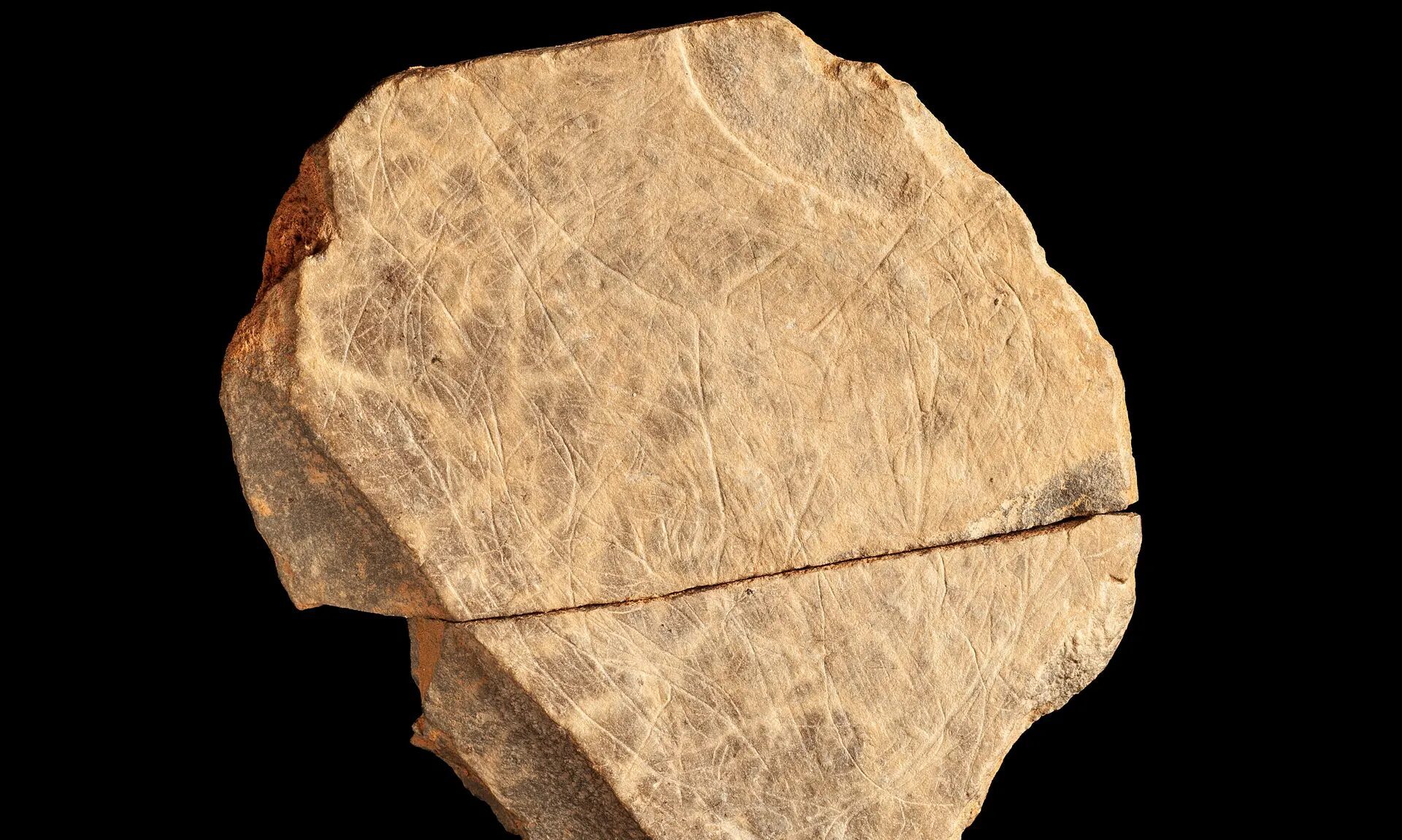
© Ice Age Island/PAOne of the engraved stone fragments from Jersey, dated to the Upper Palaeolithic age, with simple lines unrelated to meat cutting, says the study’s lead author, Silvia Bello.
The stones were found at Les Varines, on the island, between 2014 and 2018, and are believed to have been made by a group of hunters about 15,000 years ago.
While at first glance the engravings appear to be a haphazard array of marks, experts say a careful analysis has revealed the cuts were made in deliberate ways and in a clear order with straight lines made first and deeper, curved, lines made last.
Dr Silvia Bello, of the Natural History Museum, in London, who was first author of the research, said: "It is not just a table that they used to cut meat, for example. In some cases, [the curved lines] seem to represent incipient examples of the back of a horse or the mouth of a horse, or in some cases the profile of an elephant. They are very, very simple - not very obvious."
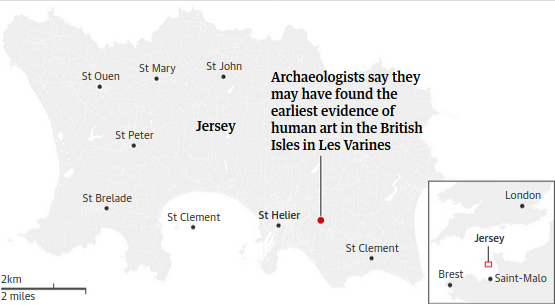
Location of pre-historic engraved stones on Jersey.
The team say the engravings are the earliest example of artistic expression yet discovered in the British Isles, though Bello said sea levels were lower during the Upper Palaeolithic so "strictly speaking this could have been [in contemporary terms] more French than British".
Thousands of engraved, smooth, tablet-like stones, known as plaquettes, have been found previously in France, Spain and Germany. The Magdalenian culture is also noted for other art forms, including engravings of bone and antler, as well as cave art.
"They were artists, I wouldn't say the best ones, but they were creative," said Bello. In the UK there are cave engravings by Magdalenians at Creswell Crags, Derbyshire -which some have suggested could depict dancing girls - while an engraved bone of a cannibalised human has been found in a cave at Chedder Gorge, although Bello said it is debatable whether the latter is art. Both are thought to date to slightly after the Jersey plaquettes.
While Bello said the plaquettes might have been practice pieces, she said it was likely the makers had no interest in the final object. "For us art is something that we put on the wall, it is something that we can admire. For them it is more likely that the act of producing the engraving was the meaningful thing," she said, noting among evidence for this is that the lines were not easy to see and the plaquettes had been broken and discarded.
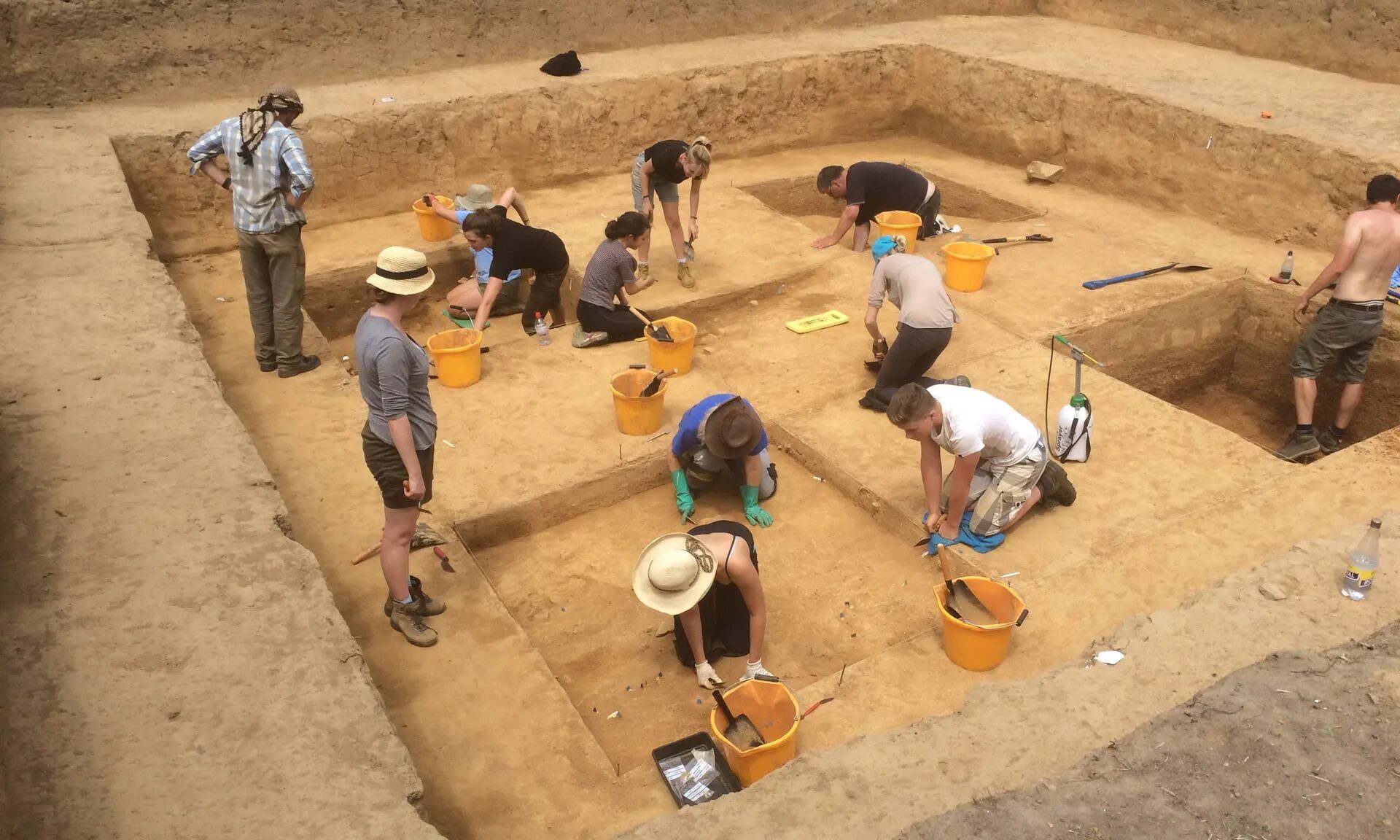
© Trustees of the Natural History Museum/Newcastle University/PAArchaeological site in Jersey where the marked stones linked to the Magdalenian culture were found.
Pettitt said: "Based on examples found in large number elsewhere we would expect these [marks] to be most likely depictions of the large herbivores such as wild cattle, deer and mammoths, which formed the prey of the Magdalenians, perhaps less likely to be human faces, and possibly doodling as individuals relaxed by firelight. Art in our modern sense it is not - but it is visual culture, however fleeting and however vague."




Comment: See also:
- Book Review: Where Troy Once Stood
- Mysterious 25,000-year-old circular structure built from bones of 60 mammoths discovered in Russia's forest steppe
- Europe's earliest bone tools found at Britain's Boxgrove "Horse Butchery Site"
- Depicting plasma? Ancient 'mantis-man' petroglyph discovered in Iran
And check out SOTT radio's: