
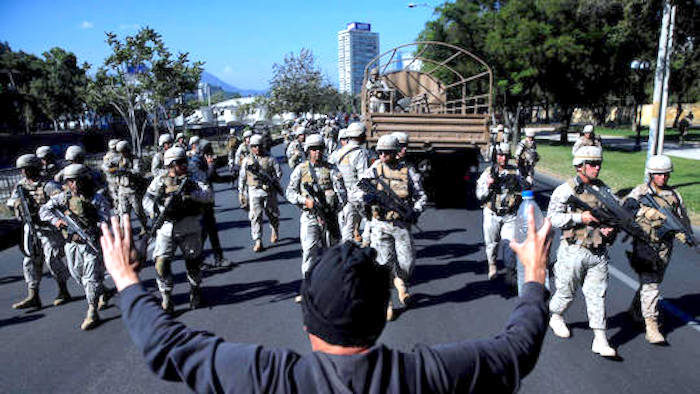
© Reuters/Edgard GarridoChilean armed soldiers advance during a protest in Santiago, Chile, October 20, 2019.
To prevent looting and arson attacks, thousands of armed troops have been patrolling the capital over the weekend, under the state of emergency introduced in Chile for the first time since the military dictatorship of Augusto Pinochet. Following another day of clashes with protesters, the general in charge of security in Santiago announced an extension of the curfew until 6am on Monday morning.
"This is not an action against the citizens, these are not restrictions for the sake of restrictions," said General Javier Iturriaga del Campo. "We do this to protect people's lives."
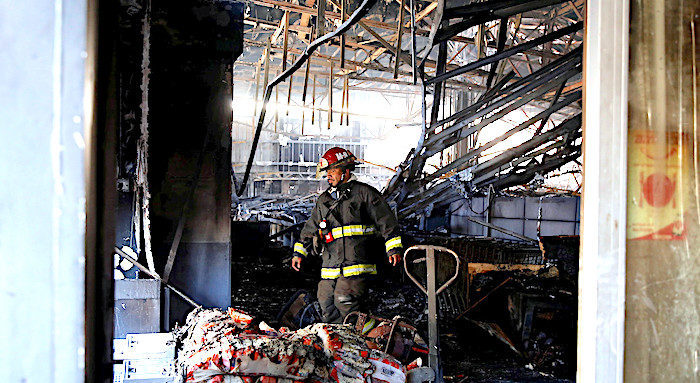
© Reuters/Rodrigo GarridoFirefighter inside a burnt and looted supermarket in Valparaiso, Chile October 20, 2019

© Reuters/Ivan AlvaradoA man takes photos of burned buses, which were destroyed during a protest against the increase in subway ticket prices in Santiago, Chile, October 20, 2019.
"The unrest had a degree of organization, logistics, typical of a criminal organization" and urged Chileans to "unite in this battle against violence and delinquency. We are at war against a powerful enemy, who is willing to use violence without any limits."
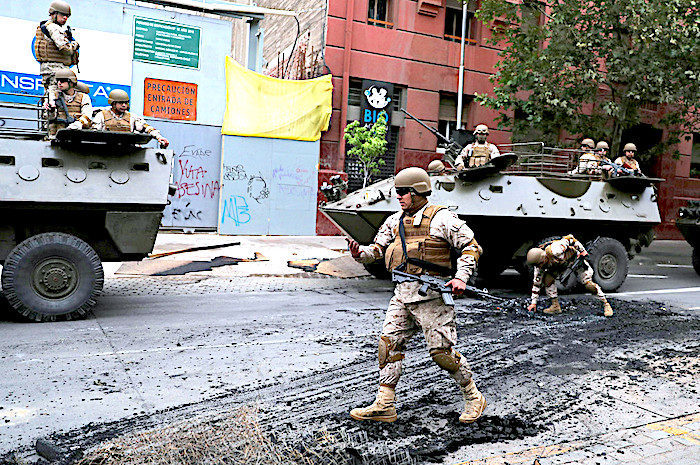
© Reuters/Ivan AlvaradoSoldiers patrol a street after a previous day's protest against the increase in subway ticket prices in Santiago, Chile, October 20, 2019
The state of emergency has now been extended to five more cities besides Santiago - and over 9,000 armed soldiers are deployed in the streets. Defending the government's heavy-handed response to the crisis, Pinera stated:
"Democracy not only has the right, it has the obligation to defend itself using all the instruments that democracy itself provides, and the rule of law to combat those who want to destroy it."In a bid to defuse the crisis, Pinera hastily reversed the contentious transport fare hike, but it was not enough, as a wider public discontent over the government's economic policies and growing social inequality seems to have reached its tipping point.
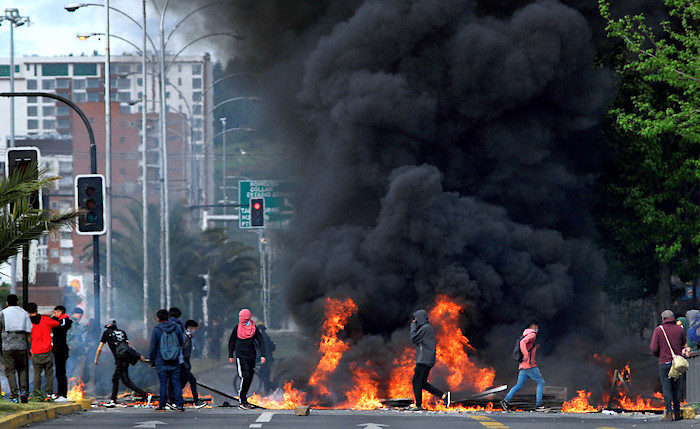
© Reuters/Jose Luis SaavedraDemonstrators stand next to a burning barricade in Concepcion, Chile, October 20, 2019



Comment:
See also:
Santiago, Chile: Military curfew declared, president agrees to reverse transport fare hike