
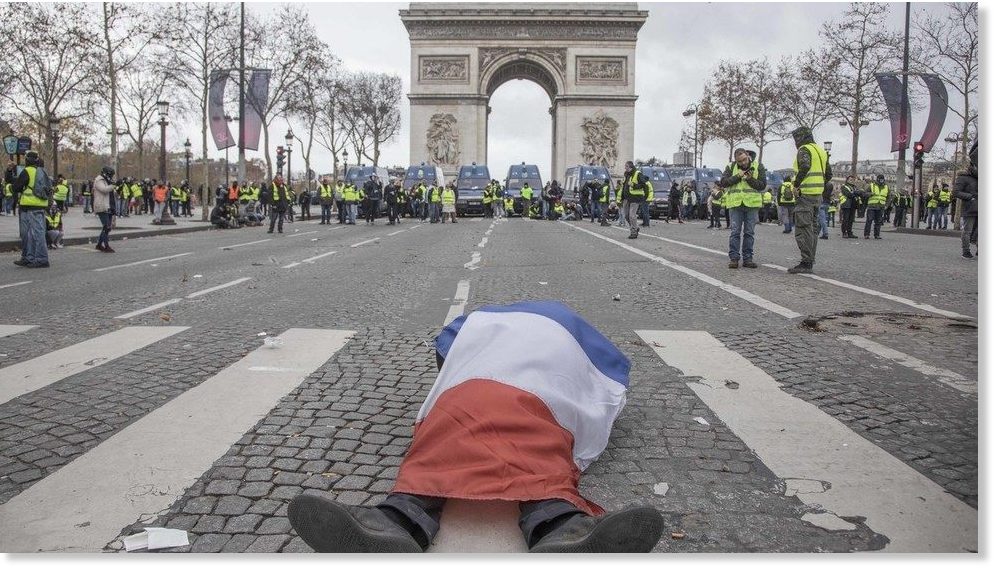
© Global Look Press / Giorgos PapadopoulosProtester laying down as dead with the French Flag on top, Paris
Shortly after slashing its assessment of economic growth, in the final quarter, in half, the central bank has cut overall growth on Thursday. Meanwhile, the regulator remains optimistic about unemployment which they expect will continue to fall.
While the new figures show that the economy is expected to slow just 0.1 percent in 2018 and 2019 compared to previous assessment, in real money the sum is quite significant. It may cost the protest-riven EU country up to $28 billion based on the IMF forecast for the country's GDP for 2018 of almost $2.8 trillion.
"Overall the more the movement lasts, the bigger the loss for the French economy," Governor of the Bank of France, Francois Villeroy, told French business newspaper Les Echos.
The chief official of the French central bank added that the forecasts do not include French President Emmanuel Macron's recent concessions he made in attempt to quell raging protests. Macron's measures, including the promises to increase minimum wage and introduce special tax exemptions, will cost the country between 8-10 billion euros ($9-$11.3 billion), the junior minister for public accounts announced earlier this week.
Meanwhile, Moody's Investors Service said that the French government measures can weaken the near-term fiscal picture and may increase the budget deficit next year.
The nationwide Yellow Vest movement which began as protests against the government proposed fuel tax hikes and escalated into a general revolt against economic policies started on November 17.
Last week's violent demonstrations resulted in more than 200 people injured and a record number of detentions across France, with more than 1,700 people arrested. Despite President Macron's pledges and the deadly Strasbourg Christmas market shooting, protesters are still unwilling to give up and are eager to take to the streets for the fifth consecutive weekend.



France is not following Italy's way in solving its debt crisis. No. It chooses riots to get EU's acceptance for increasing its budget deficit. This way the public attention is not focused in government's actions but the fault is in someone else.
The riots last as long as it takes to get the acceptance and money from European Central Bank.