
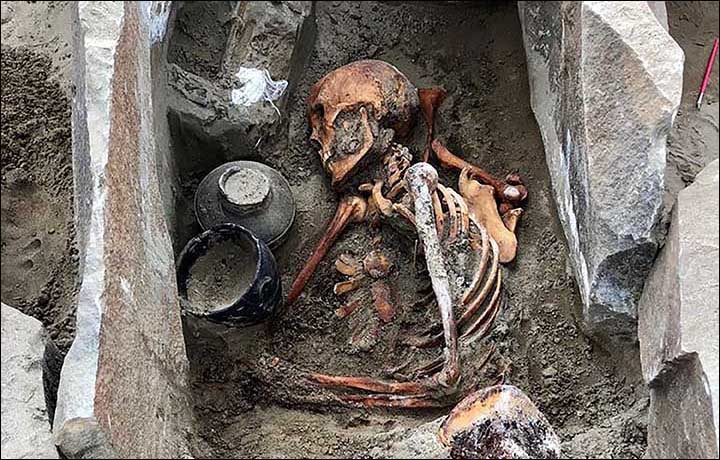
© Marina KilunovskayaThe ancient woman was buried wearing a silk skirt with a funeral meal
After a fall in the water level, the well-preserved mummy was found this week on the shore of a giant reservoir on the Yenisei River upstream of the vast Sayano-Shushenskaya dam, which powers the largest power plant in Russia and ninth biggest hydroelectric plant in the world.
The ancient woman was buried wearing a silk skirt with a funeral meal - and she took a pouch of pine nuts with her to the afterlife.
In her birch bark make-up box, she had a Chinese mirror.
Near her remains - accidentally mummified - was a Hun-style vase.
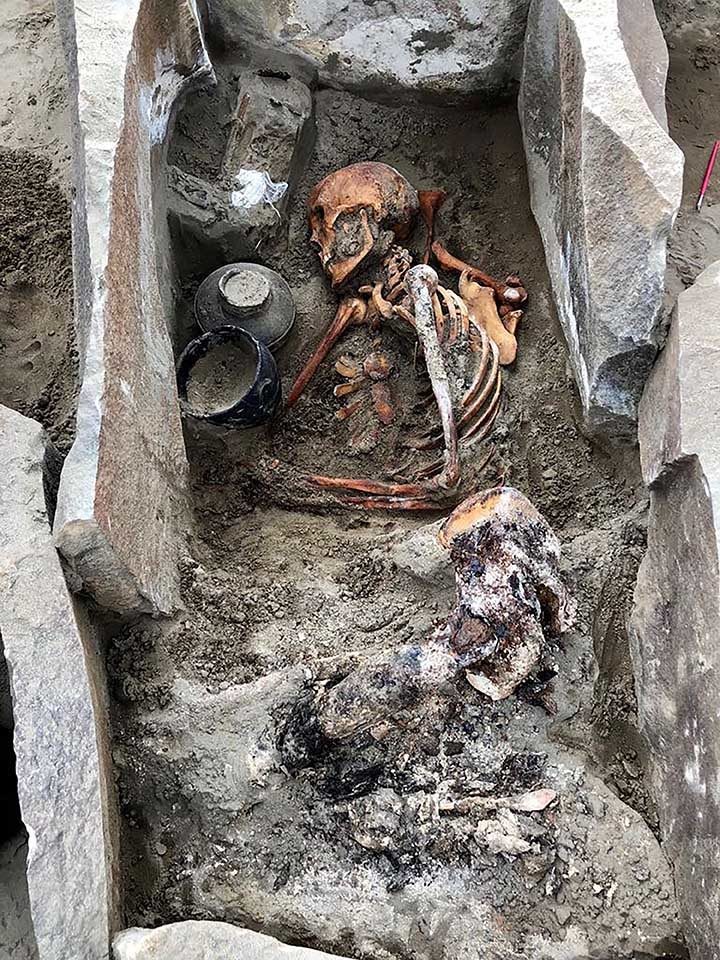
© Marina Kilunovskaya'The lower part of the body was especially well preserved.'
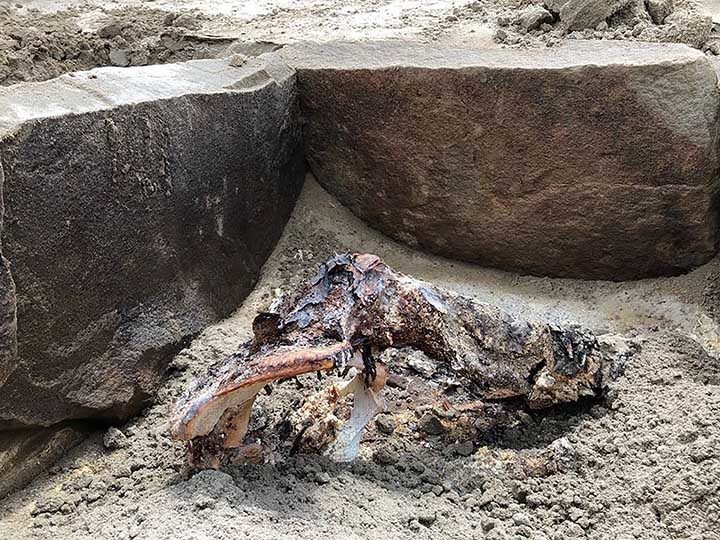
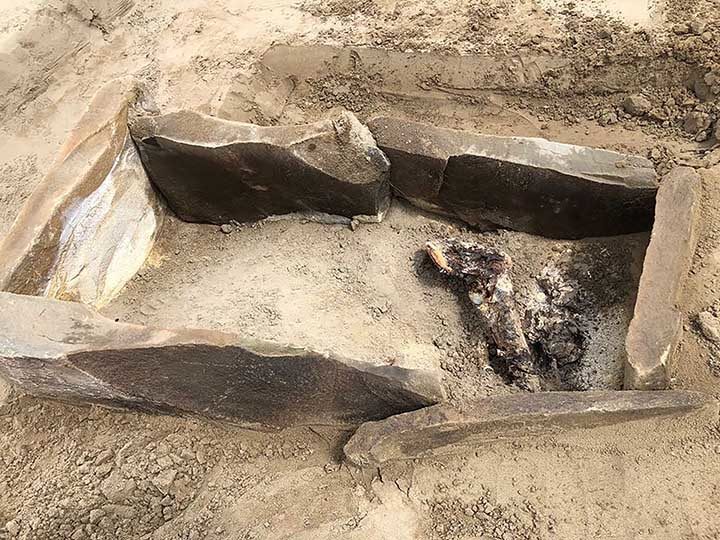
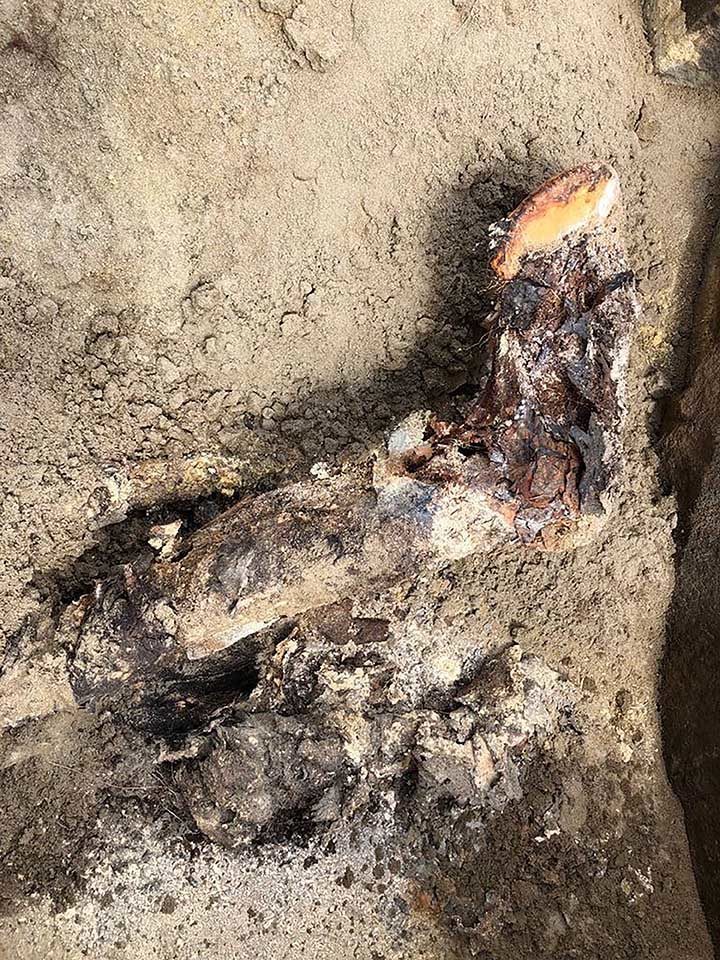
'The mummy was in quite a good condition, with soft tissues, skin, clothing and belongings intact,' said a scientist.
Natalya Solovieva, the institute's deputy director, said: 'On the mummy are what we believe to be silk clothes, a beaded belt with a jet buckle, apparently with a pattern.
Archeologist Dr Marina Kilunovskaya said: 'During excavations, the mummy of a young woman was found on the shore of the reservoir.
'The lower part of the body was especially well preserved ...
'This is not a classic mummy - in this case, the burial was tightly closed with a stone lid, enabling a process of natural mummification.'
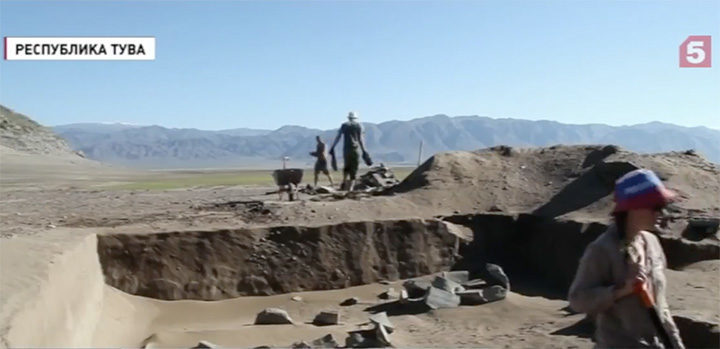
© Channel 5'This is not a classic mummy - in this case, the burial was tightly closed with a stone lid, enabling a process of natural mummification.'
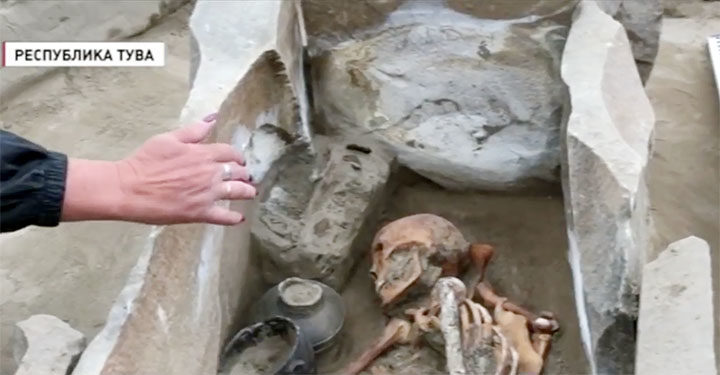
Astonishingly, the remains were preserved even though they have been underwater for periods since the dam became operational between 1978-85.
Dr Solovieva said: 'Near the head was found a round wooden box covered with birch-bark in which lay a Chinese mirror in a felt case.'
Near the young woman were two vessels, one a Hun-type vase.
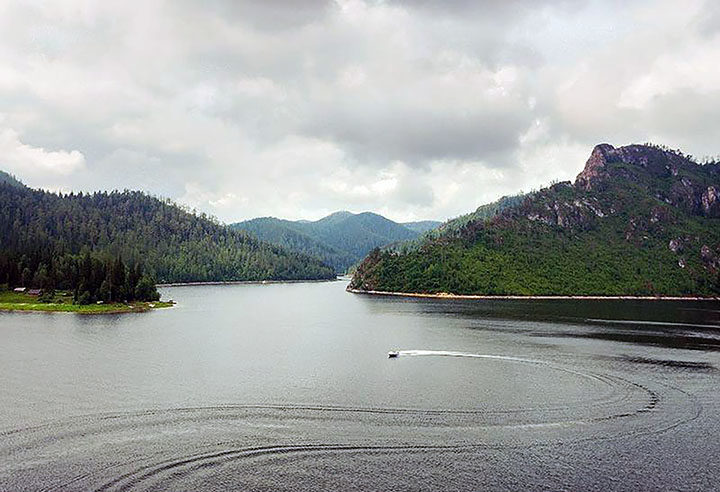
Sayano-Shushensk water reservoir. The shoreline of the reservoir when the water retreats.
'There was a funeral meal in the vessels, and on her chest a pouch with pine nuts.'
Restoration experts have started working on the mummy.
Analysis of the find is expected to yield a wealth of information on her life and times.
Scientists received a grant from the Russian Geographical society to rescue the unique archeological finds in flooded areas.



Comment: Siberia is certainly turning out some interesting finds of late: