
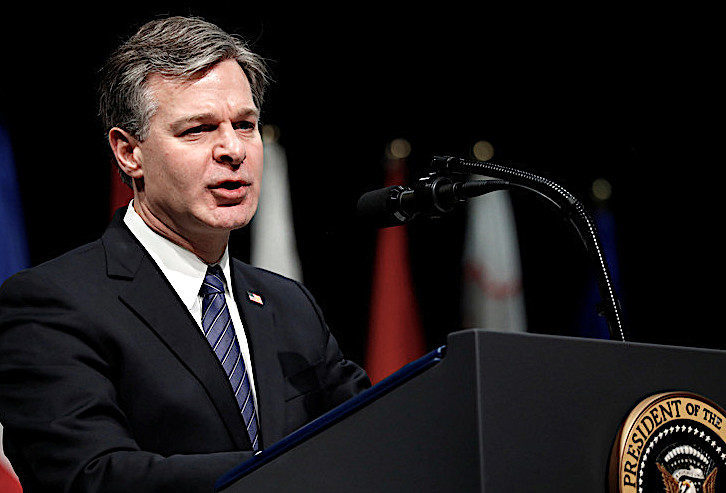
© Jonathan Ernst / ReutersFBI Director Christopher Wray
In a speech at a cyber security conference in New York on Tuesday, Wray said the FBI was unable to access data from nearly 7,800 devices last year despite possessing the legal authority to do so, Reuters reports. This was more than half of the devices the bureau tried to crack into. "This is an urgent public safety issue,"Wray said, adding that finding a solution to the problem is "not so clear cut."
In an effort to protect data many devices and applications now encrypt content by default. Some applications, such as WhatsApp or Telegram, use end-to-end encryption, which means private communications cannot be intercepted.
"We face an enormous and increasing number of cases that rely heavily, if not exclusively, on electronic evidence," Wray told the International Conference on Cyber Security. Finding a solution to the problem will require "significant innovation," Wray said, before adding that he does not "buy the claim that it is impossible."
Wray also railed against encryption while speaking before Congress last Thursday.
"Unfortunately, there is a real and growing gap between law enforcement's legal authority to access digital information and its technical ability to do so. The FBI refers to this growing challenge as 'Going Dark' and it affects the spectrum of our work," he told the house.
"Where, at all possible, our agents develop investigative workarounds on a case-by-case basis, including by using physical world techniques and examining non-content sources of digital information (such as metadata). As an organization, the FBI also invests in alternative methods of lawful engineered access."
The FBI was embroiled in an encryption controversy in 2016, when it demanded that Apple break into a device used by San Bernardino gunman Syed Rizwan Farook. Apple refused to provide access, saying it was unable to unlock the iPhones protected by encryption features. The bureau later admitted that a contracted firm had found a way to break into Farook's device.



As an IT professional, I'm fucking appalled by the the abysmal lack of foresight by the director of the FBI. They've got the Spectre and Meltdown vulnerabilities which enterprises won't be patching quickly due to the performance hits systems are taking. What more do they want? They must just want criminals to start lining up to throw themselves in jail. Do your fucking job, FBI, and quit blaming necessary encryption (and all the fucking federal regulations requiring such measures) for your failures.