
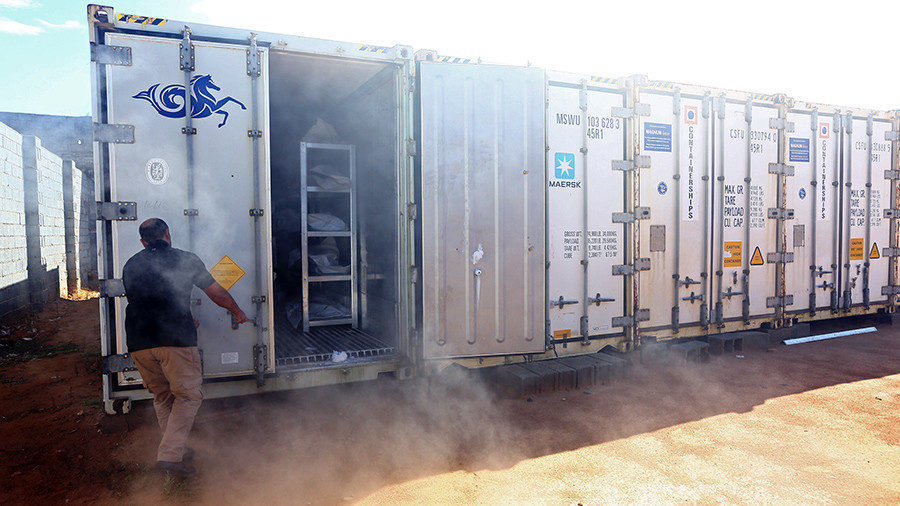
© Mahmud Turkia / AFPAli Tuwaileb who is in charge of a high security anti-organised crime complex in Misratah where the bodies of Islamic State (IS) group fighters are being stored opens one of the refrigerated containers at a make-shift morgue on October 26, 2017
Around 700 bodies have been kept inside multiple containers in Misrata at temperatures low enough to prevent decomposition, AFP reveals. The improvised morgue has housed slain jihadists since December 2016, when Islamic State (IS, formerly ISIS/ISIL) was driven out of the coastal city of Sirte - the jihadists' last bastion in Libya.
The corpses are stored in numbered and classified bags, and each body has a file and DNA sample, which allows their nationalities to be identified. Most of the dead bodies belong to foreign fighters who came from abroad to fight alongside IS, which previously recruited large numbers of foot soldiers from Africa's poorest countries.
"We don't know if countries have contacted [Libya's] prosecutor general to recover the bodies of their nationals, but as far as we're concerned nobody's come here to try to identify the bodies," Ali Tuwaileb, a man in charge of the facility, told AFP.
Tuwaileb said all the files were handed over to the prosecutor general's office in Tripoli to decide where the bodies would be buried. The corpses are mainly of Tunisians, Egyptians, Sudanese, and some Libyans, but so far, no families have come to claim them.
The makeshift morgue is in urgent need of equipment required to store and identify the bodies, Tuwaileb said. There are two old stretchers under a tent that serves as a forensic lab.
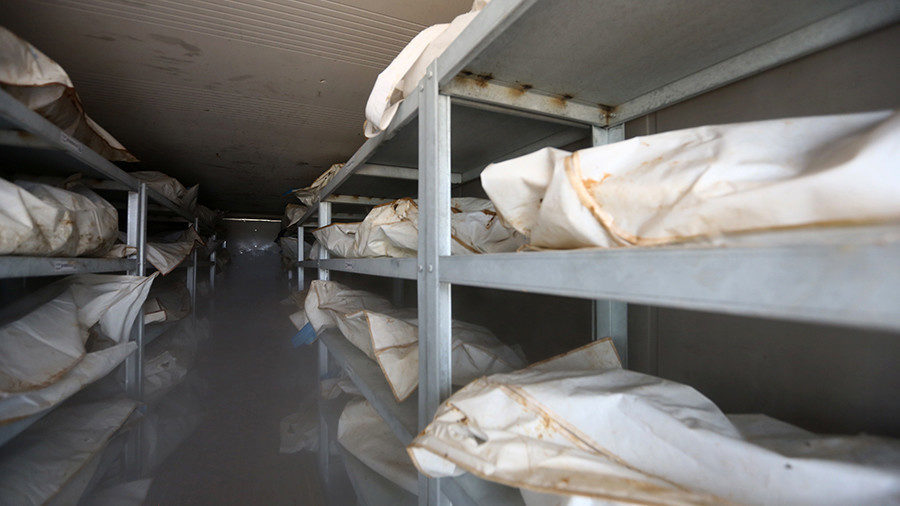
© Mahmud Turkia / AFPA general view shows the bodies of Islamic State (IS) group fighters that are being stored in refrigerated containers at a make-shift morgue in high security anti-organised crime complex in Misratah on October 26, 2017
According to Tuwaileb, between 1,500 and 2,000 jihadists were buried in Sirte, but the presence of bodies decaying in the open provoked fears of epidemics among locals. "We don't have enough fridges, or we would have exhumed all the bodies," he said. He added that the containers were borrowed from private companies.
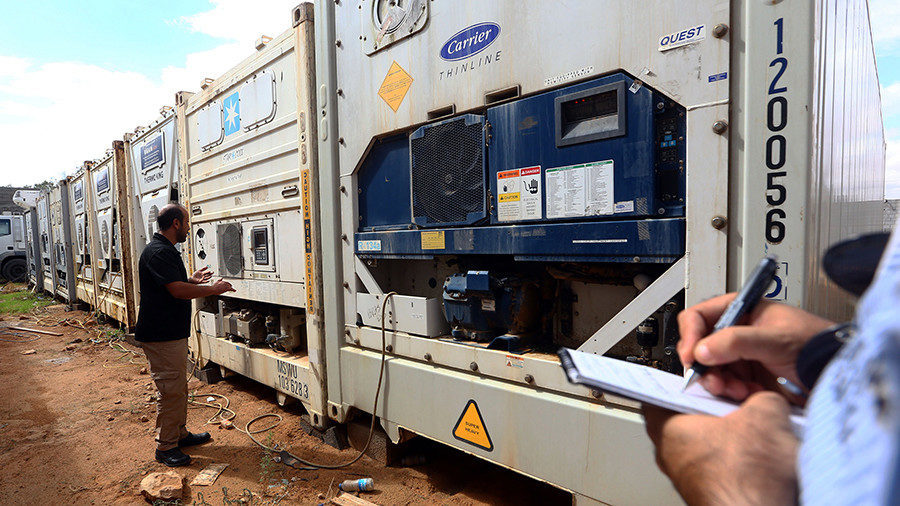
© Mahmud Turkia / AFPAli Tuwaileb who is in charge of a high security anti-organised crime complex in Misratah where the bodies of Islamic State (IS) group fighters are being stored checks the refrigerated containers at a make-shift morgue on October 26, 2017
"In the meantime, the bodies will stay here," Tuwaileb said, adding that some of the companies who lent out the refrigerated containers want them back. "Every time I tell them they can take the fridges if they want, but with the contents."
Islamic State fighters have now been almost completely driven out by troops of Libya's new UN-backed government, which launched an offensive in May.
However, some regional leaders believe the battle against IS is far from over in Libya. Last week, Egyptian President Abdel-Fattah al-Sisi warned that the defeat of Islamic State in Iraq and Syria was likely to have forced militants to seek safe haven in Libya, AP reports.
According to him, they could later cross into his country, where security forces have been battling militants on the Sinai Peninsula.




Comment: Libyan officials have gone beyond their civil duty in waiting for these militants to be identified. They need to get in gear and find a place in the desert to bury the bodies so their society can move on.