

© Watter FréresPeople mingling around the entrance to the government palace and bazaar in Raqqa. Circa 1910s.
Raqqa, Syria's sixth largest city, is located in an oil-rich province which bares the same name on the northern banks of the Euphrates River, about 160 kilometers east of Aleppo. Before the war broke out, Syria had been experiencing a tourism revival and there was a drive to restore ancient ruins in places off the beaten track like the Euphrates river valley and the country's far eastern regions. The area surrounding Raqqa was particularly rich in historical sites and was the site of a number of excavation.
All that changed when the city found itself in the eye of the storm as several rebel groups vied for power in that part of the country. With much of its approximately 300,000 population made up of Sunni Arab tribes, Raqqa became a natural center of rebellion against Bashar el Assad's Alawite regime. It attracted several rebel groups including al Nusra Front, the Free Syrian Army, and ISIS which eventually prevailed over the other two. When it captured Raqqa, ISIS declared the city the capital of its self-declared Islamic caliphate and imposed a reign of terror on the population.
When the U.S. began its bombing campaign in Syria in September 2014, the territory held by ISIS gradually shrunk and the group's fighters became consolidated to small pockets of resistance. One such pocket is Raqqa where, according to the US-backed Syrian Democratic Forces, an estimated 15,000 to 20,000 civilians were being held hostage by nearly one thousand militants. Based on aerial footage, it is hard to imagine that anyone could still live in Raqqa. Like Homs, Syria's third largest city, Raqqa looks like a scene from a post-apocalyptic science fiction movie. The city has been ferociously destroyed by the fighting.
Raqqa has had its fair share of turmoil in its long history, mainly due to its strategic location along one of the Middle East's many trade routes. The city's origin dates back to the 3rd century BCE, when it was known as the ancient Greek settlement of Nicephorium. After witnessing a decline under Roman rule, it regained prominence under the rule of Byzantine Emperor Leo I and was renamed Leontropolis. In 542, the city was razed to the ground by the Persians and then rebuilt by Emperor Justinian I four decades later.
The city gained prominence after the Arab Muslim invasions of the 7th century. During what is known as the golden era of Islam, the ruler of the Abbasid caliphate Harun el Rashid moved the capital from Baghdad to Raqqa which remained the center of the empire from 796 until 809. Beginning in the 9th century, the city entered another turbulent era as it became caught in the midst of another power struggle. In 1260, it was finally wiped out by the Mongol invasions.
At the beginning in the 16th century, under Ottoman rule, Raqqa became a customs post on the Euphrates. It wasn't until the worldwide cotton boom of the 1950s that the city began to develop economically and cotton remained one of its biggest exports until the outbreak of the war.
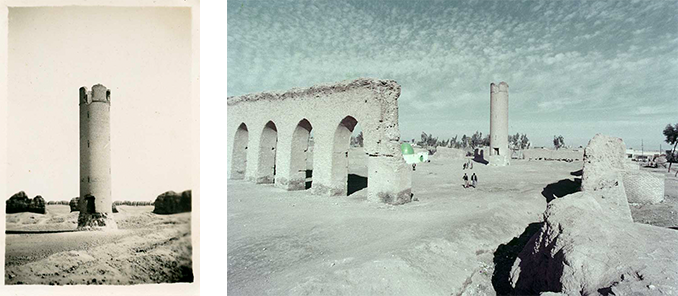
© Norbert Schiller Collection, Phot. (R) Syrian Min. of TourismAn original photo showing the ruins of a mosque build during the Abbasid period circa 1930s, alongside the same mosque circa 1970s.
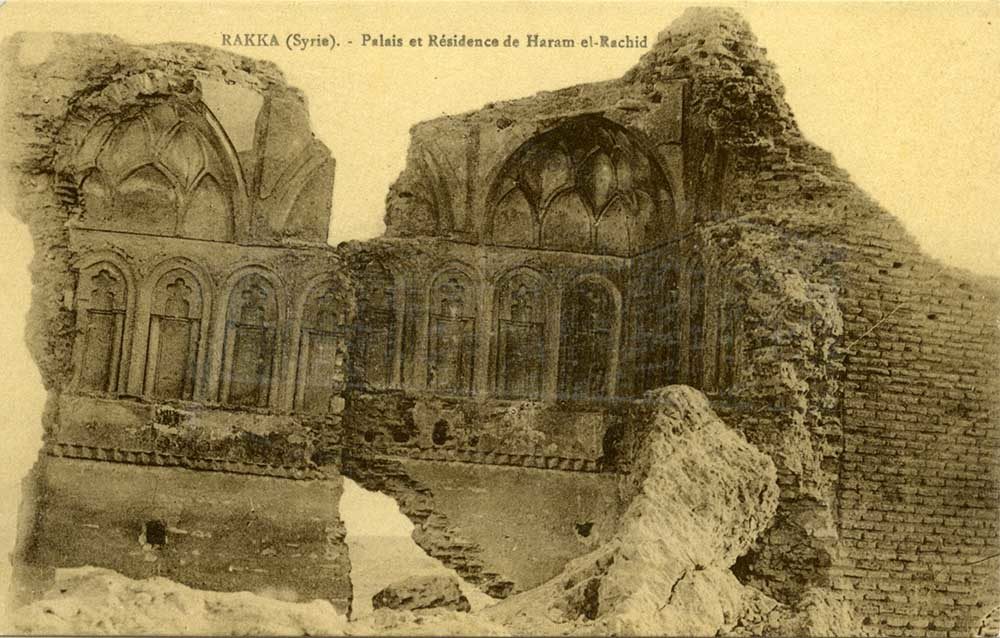
© Watter FréresRuins of Harun el Rashid’s palace dating back to the Abbasid period in the 8th century. Circa 1910s.

Entrance to Raqqa. Circa 1910s
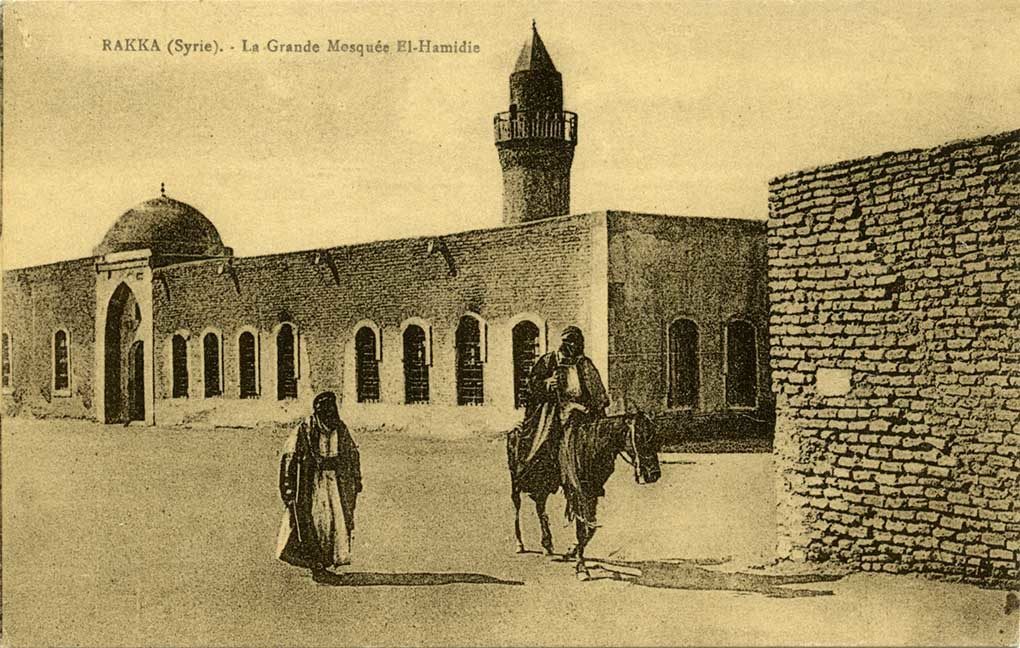
The grand el-Hamidie mosque in Raqqa. Circa 1910s.

Bedouins camped near Raqqa. Circa 1910s.

A boat crossing the Euphrates River near Raqqa. Circa 1910s.
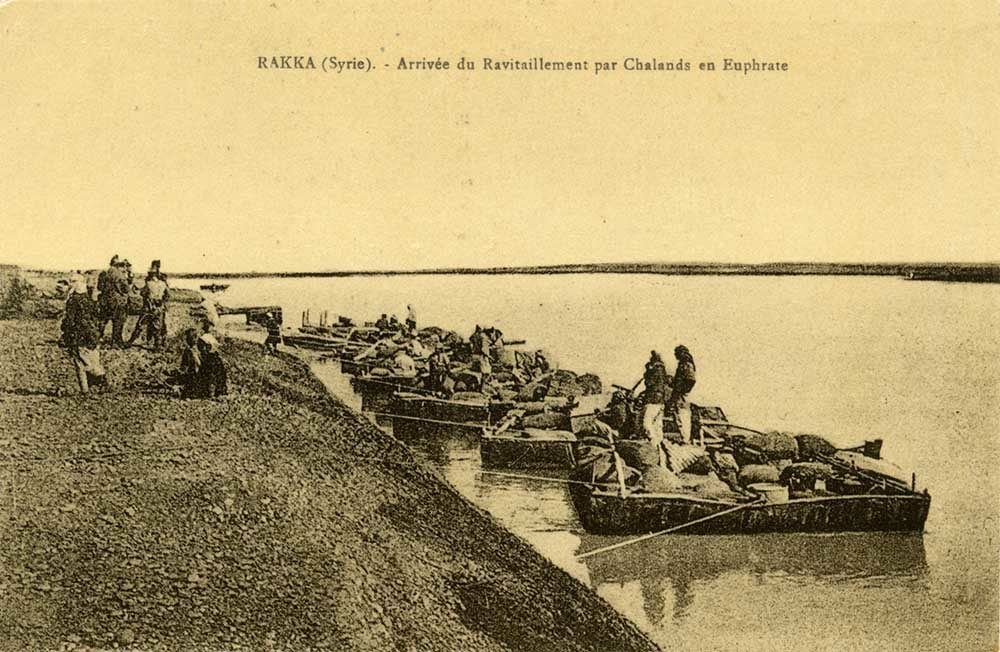
Boats carrying supplies docked on the banks of the Euphrates River near Raqqa.
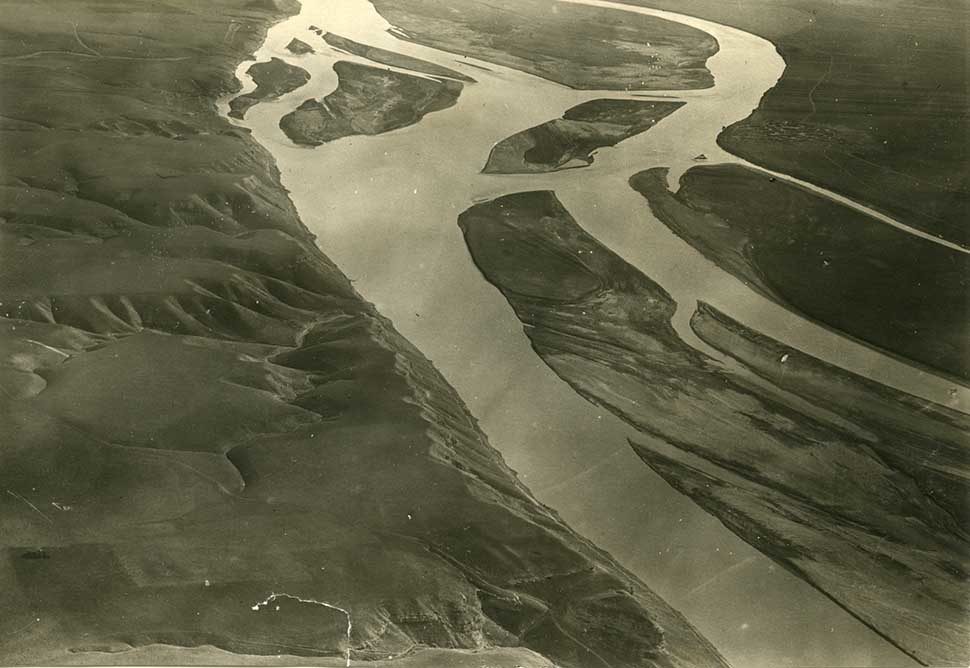
© Norbert Schiller CollectionAn original photograph of the Euphrates River between Raqqa and Deir Ez Zor, taken from the air by the French military. Circa late 1920s, early 30s.

Comment: Raqqa today, thanks to US "intervention":