
© RT
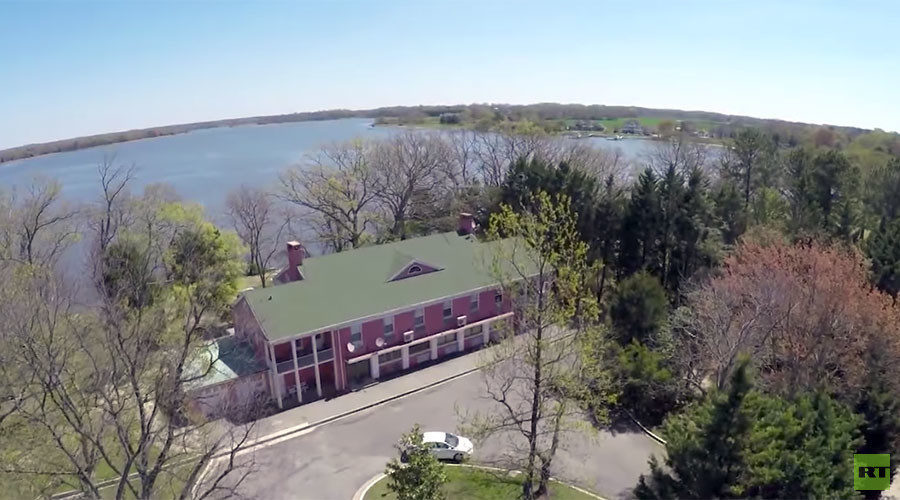
By considering a release of the Russian diplomatic compounds that have remained sealed since December, Washington wants to leave the door open for rapprochement with Russia, Gorka told CNN in an interview on Thursday.
The statement follows a warning by Moscow that it is preparing a "tough response" to the move, which took place in December 2016. During the transitional period for the new administration, the Russian government decided to hold off on retaliatory measures until US President Donald Trump's position becomes clear.
"We want to give collaboration and cooperation a chance," Gorka said, adding that while Moscow and Washington are often not on the same page, there are areas where the two countries are able to find common ground.Gorka's statement comes as several US lawmakers are demanding the premises not be returned to Russia, arguing that such a step "would embolden" Moscow and "invite a dangerous escalation in the Kremlin's destabilizing actions" in a letter signed by Senators Marco Rubio (R-Florida), Jeanne Shaheen (D-New Hampshire), and Johnny Isakson (R-Georgia).
"The fact is we may not share the same philosophy, we may not share the same type of statesman view of the world but the fact is there are some issues of common concern," Gorka said. He noted that the return of the compounds in New York and Maryland would not be unconditional. He cited the ceasefire agreement for southwestern Syria negotiated by the Russian and US leaders on the sidelines of the recent G20 summit as an example of the kind of goodwill the White House expects from the Kremlin.
"If we can see acts of good faith come out of the Kremlin with regards to things such as a ceasefire, then perhaps there is a chance for what [US Secretary of State] Rex Tillerson wants to see happen, which is an improvement in relations between our two capitals," the official said.
Comment: The fact that the US actions against diplomatic property, which has immunity and is considered Russian territory, were illegal does not seem to matter to these "US lawmakers" who are obsessed with US exceptionalism.
Despite media reports in May that the US is reviewing former President Barack Obama's decision to confiscate the compounds and is considering their return if Moscow greenlights the construction of the US consulate in St. Petersburg, the issue is still up in the air.
The issue was reportedly brought up during the first face-to-face meeting between Russian President Vladimir Putin and Donald Trump at the G20, but no breakthrough followed.
Moscow, which also had 35 of its diplomats expelled with only 72 hours' notice to leave the country, now says that its patience is wearing thin.
"I believe that it is just shameful for such a great country as the US, which champions international law, to leave the situation in suspension," Russian foreign minister Sergey Lavrov said this week, calling the unresolved situation with the Russian diplomatic property in the US "just outrageous."Lavrov went on to say that Russia was preparing a response to the seizure, considered to be by Moscow a violation of the 1961 Vienna Convention on Diplomatic Relations that demands respect for diplomatic immunity.
While Lavrov did not specify what Russia's response would be, Deputy Foreign Minister Sergey Ryabkov noted that if Washington continues to drag its feet on the issue, there will be a "tough response."
There have been reports in the Russian media that Russia might expel 30 US diplomats and seize a summer residence of the US Embassy in northwestern Moscow in a tit-for-tat measure.
Moscow will not negotiate any conditions to get the diplomatic property back, as the situation is "unacceptable" and the seizure violates international law, according to Kremlin spokesman Dmitry Peskov, who responded to Gorka's statement.
"Taking the diplomatic property back to Russia cannot and should not be conditional on anything, it vehemently violates international law," Peskov said.
"So far the head of state, who determines Russian foreign policy principles, has not taken any decisions. However, we have repeatedly stressed that the situation with the diplomats, the diplomatic property continues to be unacceptable," the Kremlin spokesman stated, adding that it "is a serious test of Russia's patience."Russian Foreign Ministry stated that it is hard to cooperate with the US in the light of diplomats' repatriation and confiscated Russian property, which was under diplomatic immunity during its illegal seizure by the Obama administration in 2016.
"The seized objects have not been returned. Washington has not only failed to cancel the decision to expel our employees, but also refuses to issue visas to those who are to replace them," Russian Foreign Ministry spokesperson Maria Zakharova said on Friday.She added that at least Washington could have given access to Russian diplomats to the compounds while the issue is stalled.
Moscow is ready to retaliate unless the situation does change, Zakharova warned.
"We have something to retaliate with: the personnel of the US Embassy in Moscow greatly exceeds the number of our embassy staff in Washington," she said.Zakharova did not elaborate on an exact time when Moscow would take retaliatory measures. She noted that everything depends on coming talks in Washington, but "time is running out."
"For now we have the date of consultations on the issue and a clear position that time is running out," she said. She added that Moscow did not react immediately as it considered the move of the Obama administration as "provocative" and an attempt to disrupt bilateral relations under the new authorities.Justifying the closure of the compounds at the time, Obama called them a "necessary and appropriate response" to alleged Russian meddling in the US election. The US authorities claimed that the compounds were used by Moscow for "intelligence-related purposes," allegations Russia has repeatedly denied.
Zakharova stressed that the US had enough time to deal with the "disgusting legacy and to start building relations based on mutual respect," but still nothing has changed.
"It's been half a year, but we do not see concrete steps. However, nothing impedes the new administration from showing independence and doing it. We have repeatedly raised this issue during bilateral contacts, we were ready to consultations, negotiations, an exchange of possible options, but this also did not happen."


Reader Comments
to our Newsletter