
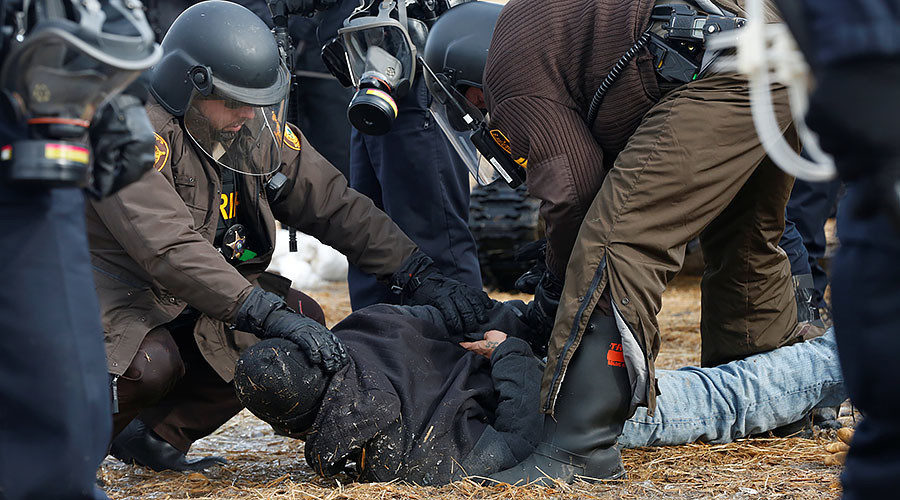
© Terray Sylvester / ReutersPolice detain a protester against the Dakota Access oil pipeline, North Dakota, U.S., February 23, 2017
The Oceti Sakowin camp was completely emptied shortly after 2:00pm local time (8:00pm GMT), the Morton County Sheriff's Department said, as cited by Reuters.
About 50 police in riot gear, aided by members of the National Guard and the Army Corps of Engineers, entered the site.
At least 47 people were arrested, department spokeswoman Maxine Herr said.

© Stephen Yang / ReutersPolice form a line to push back protesters, North Dakota, U.S., February 23, 2017
About 100 people had remained in the camp, defying the Wednesday deadline for evacuation ordered by the governor of North Dakota.

© Terray Sylvester / ReutersPolice detain a protester against the Dakota Access oil pipeline, North Dakota, U.S., February 23, 2017

© Terray Sylvester / ReutersPolice detain a protester against the Dakota Access oil pipeline, North Dakota, U.S., February 23, 2017
"It's really hard being here right now but we know we need to be here because we know that they are wrong and we are right," Raymond Kingfisher, a protester, told Reuters.

© Terray Sylvester / ReutersA building burns after it was set alight by protesters, North Dakota, U.S., February 22, 2017
Some protesters decided to leave the camp peacefully. Others set the wooden constructions on fire.

© Stephen Yang / ReutersDebris is seen in the recently closed Oceti Sakowin camp before the police raid in Cannon Ball, North Dakota, U.S., February 23, 2017
"Freedom is in our DNA, and we have no choice but to continue the struggle," she said.
"A lot of our people want to be here and pray for our future," tribal chairman Harold Frazier added.
Oceti Sakowin, or "Seven Council Fires," is the native name for the Sioux nation. The protest camp was set up north of the Standing Rock Sioux Reservation. The tribe has tried to stop the construction of the segment of the Dakota Access Pipeline under Lake Oahe, on the grounds that it could endanger their water supply.



Comment: See also: