
Even as Americans consume psychiatric medications by the fistful (about one in eight Americans are on an anti-depressant) psychiatry is in a state of disarray. Some studies claim that anti-depressants rely on a placebo effect, pseudo-science pervades addiction treatment, and critics of Big Pharma argue that depression and other mental illnesses have been marketed around the globe in order to create demand for their products.
While the number of people who identify as having a mental illness has grown, so has the proliferation of treatments: mental health professionals praise everything from opioids to psychedelics, to exercise (the New York Times is on it, having re-discovered the therapeutic benefits of exercise year after year: 2000, 2011, 2014, 2016). In Raison's treatment we've apparently got the benefits of hot yoga—without the yoga.
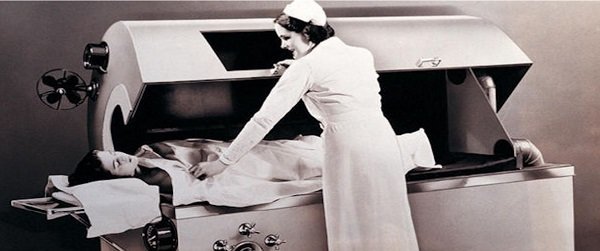
After hearing about monks who practice "tummo," a meditation that uses breathing and visualization, to raise their body temperatures so high that they could "steam dry sheets dipped in an icy Himalayan lake," Raison created a "fever machine."
"This was the craziest thing I ever did," Raison told Stat News. "I had no funding. I had no research career. I just wanted to do this."
He connected with European physical therapists who had found an old machine in the basement of a Swiss hospital. Hidden among "a century's worth of bedpans and other medical castoffs," was a machine that the oncology department had used in the past with the idea that a high fever might get rid of tumors. (Doctors in the 1920s and 1930s also used malaria-induced fever, and then fever machines, to try to cure psychosis).
Raison's general hypothesis is that heating up the body sends an electrical impulse to brain regions that release serotonin. The heat treatment, Raison believes, can target the serotonin release more specifically in the brain than pills like Prozac and other SSRIs (Selective Serotonin Reuptake Inhibitors).
When Raison experimented with real patients, he got incredible results. Some participants liked it so much, they asked to climb into the fever machine a second or third time, even paying $800 to cover the costs, he said.
But some in the field view Raison's study, published in JAMA Psychiatry, with skepticism.
In addition to concerns about the legitimacy of his data, there are concerns about the placebo effect: only 71 percent of the group who got a "sham" treatment believed it was real, compared to 93 percent of those who got the real thing.
Whether it's a placebo effect, or euphoric effects of heat, the takeaway is ... we appear to know very little about what works in the treatment of depression.



Comment: At least the doc is thinking outside the box and using a bit of creativity. Perhaps the treatment helps detoxify the patients which leads to an improvement in mood?