
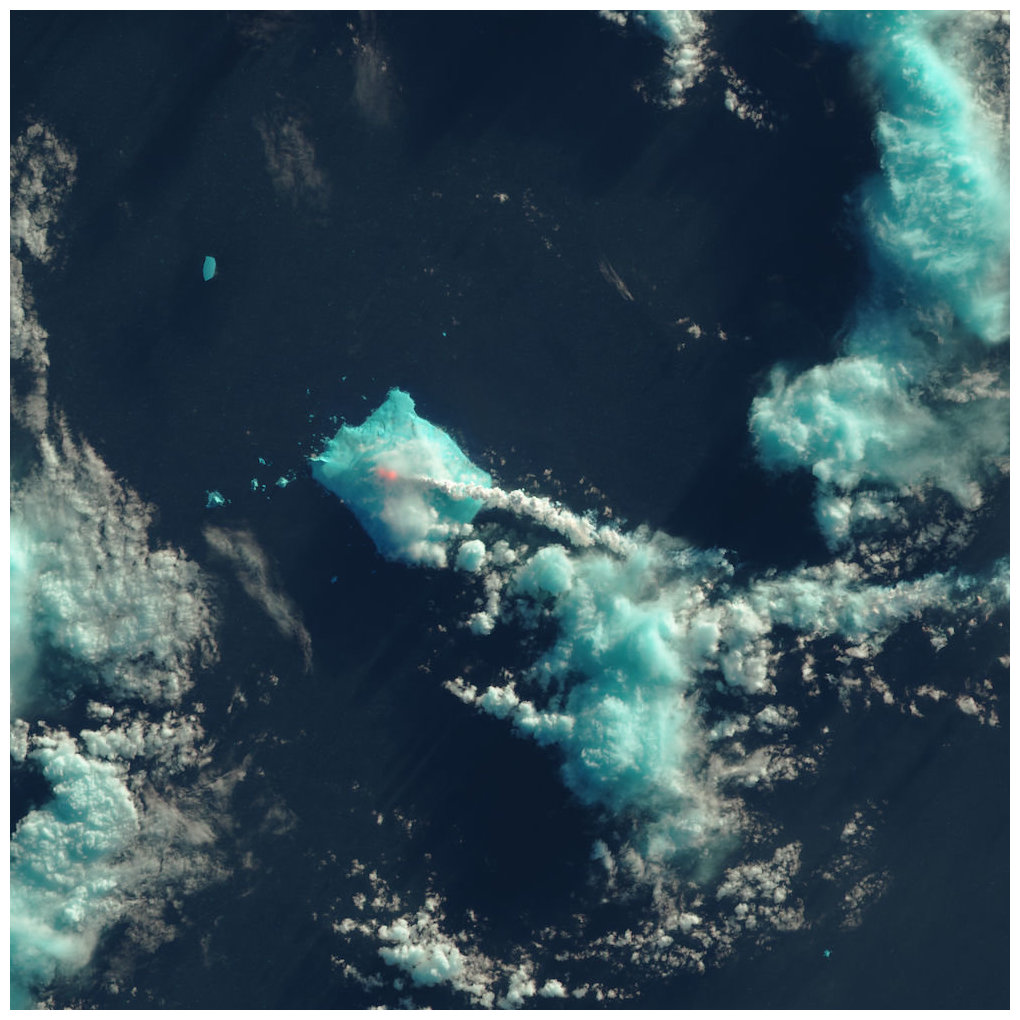
© NASA Earth Observatory image by Jesse Allen, using Landsat data from the U.S. Geological Survey
Nobody lives near Mount Sourabaya, but a NASA satellite captured its eruption in the South Atlantic in this false-color image.
Nobody lives near Mount Sourabaya, but a NASA satellite captured its eruption in the South Atlantic in this false-color image.
Instead, satellites captured images of the eruptions, which happened on April 24 and May 1, 2016, NASA reported.
Volcanic eruptions in far-flung places, such as the South Atlantic, used to go unnoticed. But the advent of satellites and seismic monitoring has given scientists new insight into volcanic events worldwide, NASA officials said.
"Today, scientists can pick up signatures of events occurring far from any human observers," NASA's Earth Observatory said in a statement.
That's exactly what happened when Mount Sourabaya erupted. The volcano sits on Bristol Island, one of the largest islands in the South Sandwich Islands chain. The archipelago is located about 1,725 miles (2,776 kilometers) southeast of Buenos Aires, Argentina, which is about the distance from Los Angeles to Chicago.
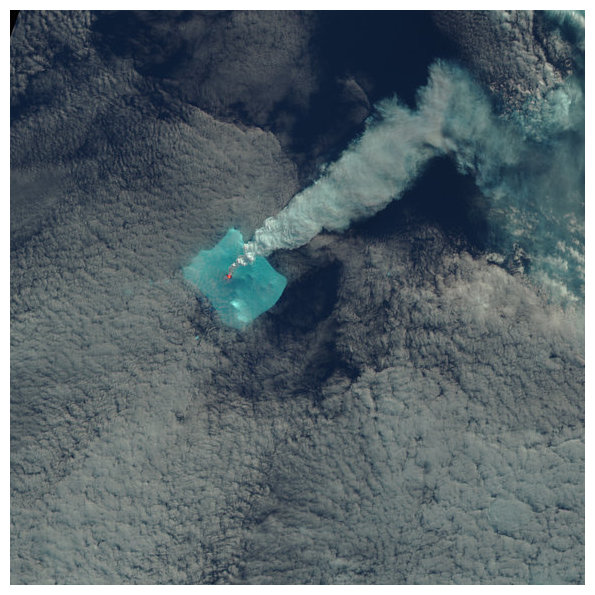
© NASA Earth Observatory image by Jesse Allen, using Landsat data from the U.S. Geological Survey The false-color red splotch suggests that the eruption had lava.
The Operational Land Imager on the Landsat 8 satellite acquired two false-color images during Mount Sourabaya's eruptions. Both images were compiled from a combination of shortwave-infrared, near-infrared and red light, all of which detect heat gradients.
Each image shows the hottest part of the volcano with a bright red and orange splotch, indicating what is likely hot lava, NASA said. The tall, white plumes show the ash, and the bright blue-green color shows the ice cover on the volcano.
Before now, Mount Sourabaya last erupted in 1956, and it's one of the least-studied volcanoes in the world, NASA said.

Reader Comments
to our Newsletter