
© www.science.tamu.eduReady, aim, fire...cross fingers and hope for the best!
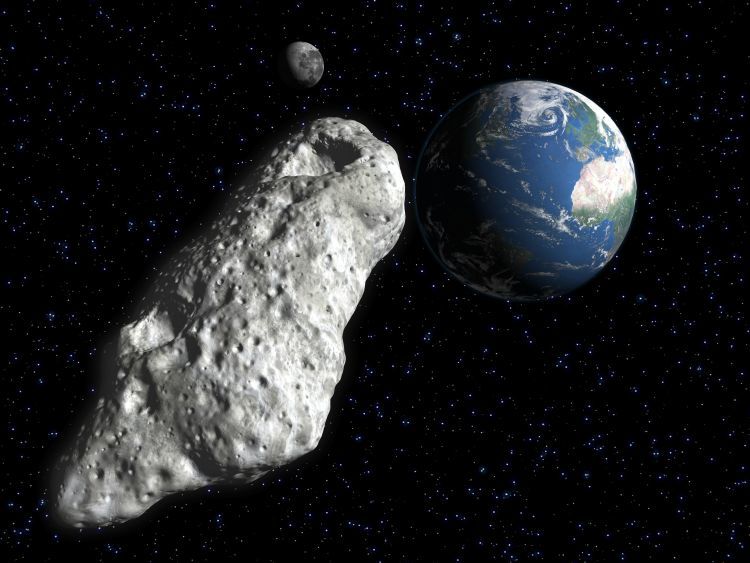
The idea behind it is not to blow up an asteroid, as this could potentially make things worse sending hundreds of smaller meteorites crashing into the planet. It would, instead be to hit one with enough force to steer it away so it passed as a safe distance. Currently, there is next to nothing that could be done to prevent a significant asteroid on a collision course with us from crash to earth. If it was a rock of a size significant enough to threaten life on earth (500 metres and upwards), the change of direction would probably have to take place about 100 years before it got here.
The shotgun could also be used to get samples from asteroids and test the strength of them as they are in orbit. Kris Zacny, vice president at Honeybee Robotics, said the concept will also be "key" to sending sending humans to Mars in the future. If the gun is developed, chunks of asteroids will be dislodged out of orbit and sent closer to the moon, where they would be more accessible to experts.
Comment: Just like target practice...any military interest here? Must be all kinds of things they could sample or dislodge. And, as far as being the "key" to sending humans to Mars...huh?
A Honeybee Robotics spokesman said one risk with collecting samples from asteroids is "the unknown geotechnical properties and strength of the asteroid regolith." The space shotgun helps lower this risk because the balls it fires at the asteroid can help scientists estimate its surface strength.
He said: "If a ball is fired at an asteroid and it cracks open on the surface, then we'll know the asteroid is likely sturdy enough to land on with a probe. Or if the balls bounce back off the asteroid's surface, they should bounce back at a velocity that correlates with the rock's overall strength. The gun could even fire balls designed to make craters in the asteroid to give researchers an estimate of how hard the surface of the asteroid might be."
Many will be hoping the technology s finished sooner, rather than later, as online doom mongers continue to claim an asteroid will strike in Puerto Rico, any time between now and September 28, when the Blood Moon rare lunar eclipse takes place.
Comment: Guess that didn't happen...or maybe there are just teensy things they don't tell us.



Comment: Well...now there's a dangerous bright idea... Until you hit it, you won't know what the risk is in fragmenting the asteroid. An astronomical conundrum at least!