
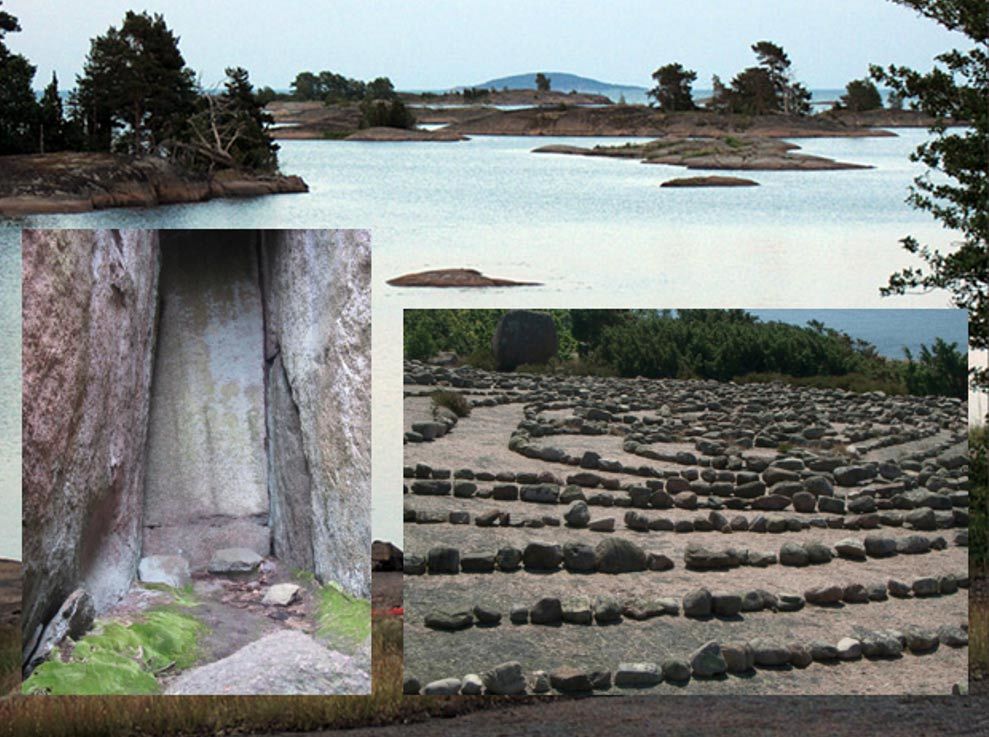
© Ludvig Papmehl-DufayThe Island of Blå Jungfrun (Flickr). Inset: stone labyrinth (CC BY 3.0) and Stone Age fireplace
The uninhabited island, now a national park situated in the Kalmar Straight along the east coast of Sweden, is mostly bare rock and dense forests, and sports an ancient labyrinth, but it is the caves which interest the team of researchers from Kalmar County Museum and Linnaeus University of Sweden.
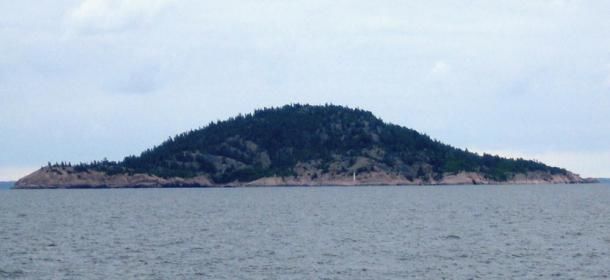
© CC BY-SA 3.0The Island of Blå Jungfrun has a mysterious past filled with tales of supernatural powers.
In a summary the researchers wrote, "The results are astonishing and reveal extensive human activities on the island in the Mesolithic Stone Age."
There are two caves in which various rituals may have been practiced, archaeologists say; one containing an altar, and the other having what is speculated to be a stage or "theater". Each of the caves contain "distinct ritual features," and according to a report on the fieldwork, cultural deposits date the prehistoric activity at the site to 7000 BC.
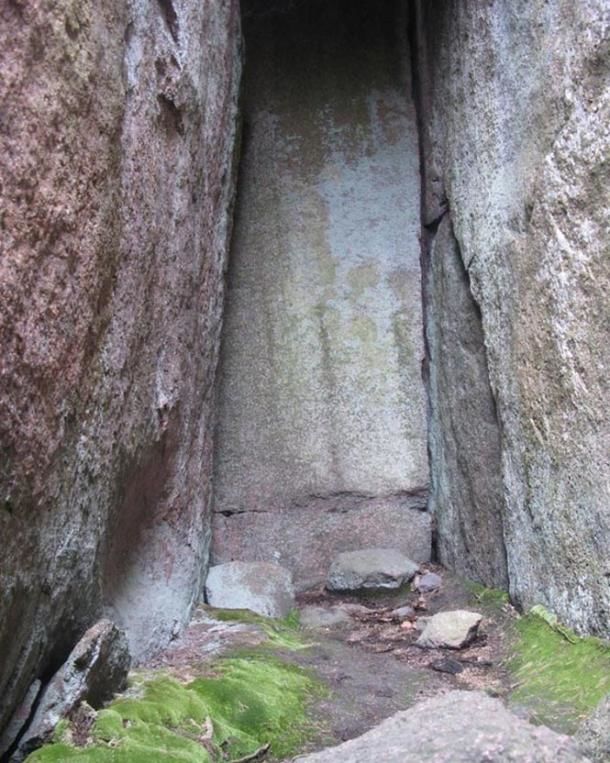
© Ludvig Papmehl-DufayFireplace below a massive hole that had been hammered into the wall.
In the vertical wall of one cave a massive hollow was hollowed out at one point in the ancient past. The recess is 2.3 feet (0.7 meters) in diameter, and a fire pit lies beneath it.
Ludvig Papmehl-Dufay, archaeologist with Kalmar County Museum said, "We believe the hollow is man-made and that the fireplace has been used in connection to hammering out the hollow, probably [on] several occasions."
Papmehl-Dufay noted, "The entrance to the cave is very narrow, and you have to squeeze your way in. [However,] once you're inside, only half of the cave is covered and you can actually stand above the cave and look down into it, almost like a theater or a stage below.
Further, the "act of producing the hollow could have been the important part [of the ritual], perhaps even the sound created while doing so."
Researchers theorize that the sights and sounds of the hammering combined with the sight of the flames, as viewed from the gallery above, might have been a powerful experience for Stone Age audiences.
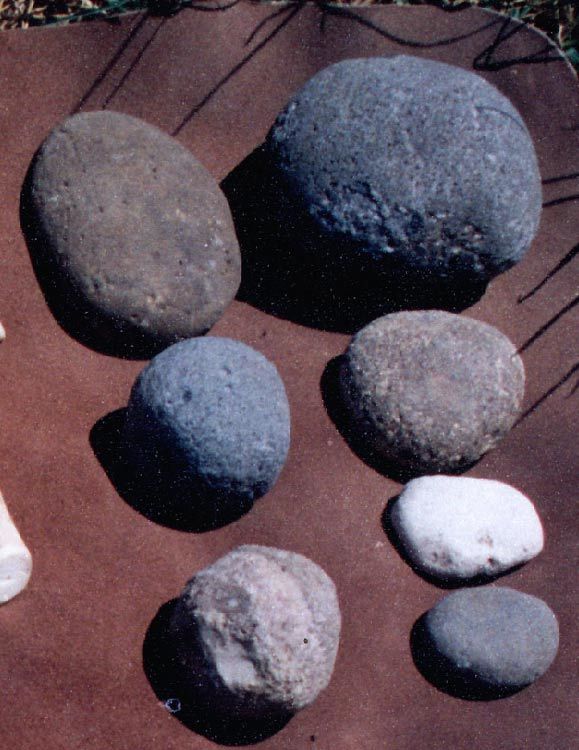
© CC BY-SA 3.0Hammerstones were used to hit and flake bits off other rocks, creating tools for prehistoric cultures. Various representative hammerstones.
A hammerstone, used for grinding material, was found in the second cave. Papmehl-Dufay speculated this could have been an offering site, serving as an altar.
A small rock shelter connected the two large caves. Measuring only 20 by 26 feet (6 by 8 meters), researchers believe that it may have been used by Stone Age travelers to the island as temporary shelter. "However, more-specific activities with ritual elements to [them] cannot be ruled out, such as feasting in connection to the rituals performed in the nearby caves," Papmehl-Dufay said.
Excavations in the small rock shelter revealed stone tools and the remains of seals. The seals were consumed 9,000 year ago, according to radiocarbon dating. Deposits of quartz pieces were also uncovered, perhaps used in toolmaking.
It is wondered if the possible rituals performed on Blå Jungfrun, combined with its isolation and dramatic landscape, may have been the genesis of the beliefs and legends that followed.
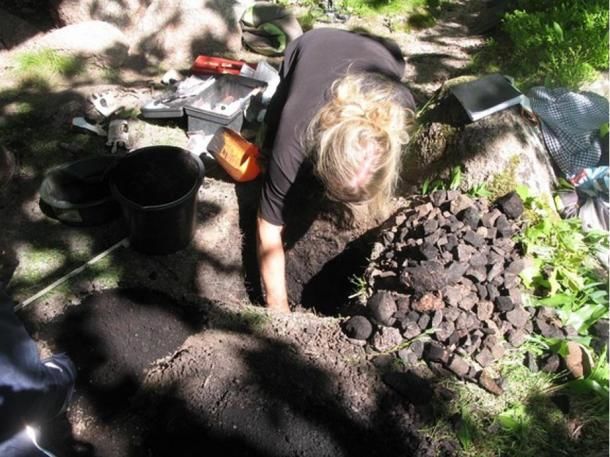
© Ludvig Papmehl-DufayResearchers excavated the rock shelter, uncovering animal bones.
In Swedish folklore Blå Jungfrun, or "The Blue Virgin" Island was seen as a magical or supernatural place where evil spirits dwelled, and it was best avoided by sailors. It was thought that witches met on the island, especially at Easter, to cavort and worship the devil. Large cavities in the rock along the shore, called "jättegrytor" were attributed to giants.
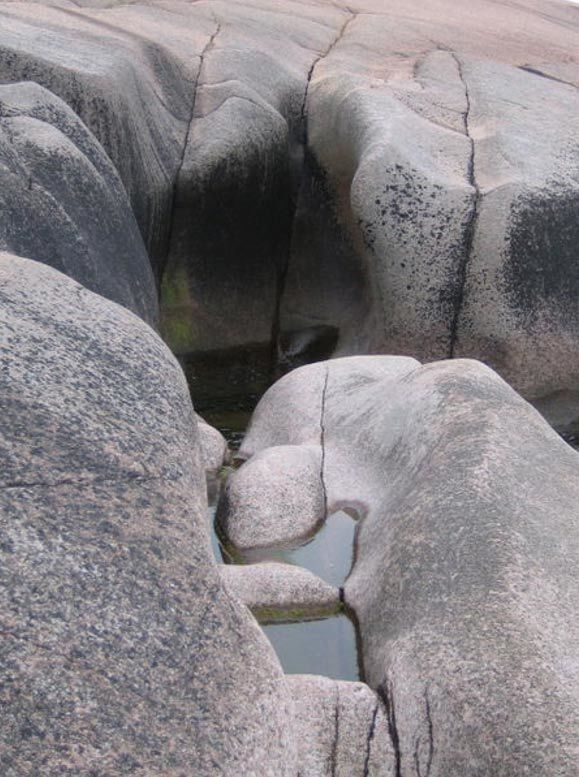
© CC BY-SA 3.0“Jättegrytor” were “Giant’s Kettles” created by giants in myth.
As the island is now designated as a national park, there are restrictions for visitors: keep to the paths, no staying overnight, no lighting fires, and no removing the sacred stones from the labyrinth. Even now it's said that doing so will bring very bad luck to the thief.
Archaeological work is set to continue on Blå Jungfrun, and the team's findings were given at a recent presentation at the annual meeting of the European Association of Archaeologists in Glasgow, Scotland.
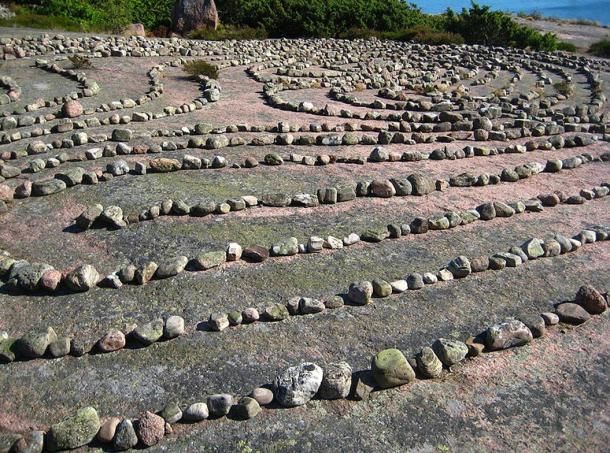
© CC BY 3.0The labyrinth at the island of Blå Jungfrun, Sweden.


Reader Comments
to our Newsletter