
© Pixabay
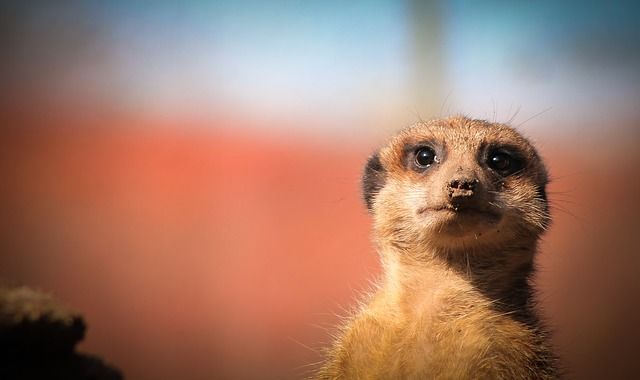
That's at least according to a study recently published in the journal Behavioral Ecology, which details how the dominant matriarchs of meerkat society are practically martyrs for their clan.
Specifically, it appears that meerkat matriarchs are subject to more stress and host more parasites than any other member of their mob. Of course, this wasn't just assumed after looking at one matron.
In a two-year-long study at the Kuruman River Reserve in South Africa's Kalahari Desert, Kendra Smyth, a researcher with Duke University, tested 97 freshly deposited feces samples, surveying the parasite diversity of 83 sexually mature meerkats living in 18 social groups.

© Unknown
This parasitic 'burden' occurs for two reasons. For one, female meerkats are mating... a lot. In most clans, the dominant meerkat matron will reserve all breeding rights and will wind up mothering almost all of the mob's next generation. What's more, these animals mate year, round. It's then understandable how the sole breeder winds up with everyone's parasitic baggage.
However, a matron's life isn't just all about sex. Aside from overseeing the raising of her pups, a matron meerkat also sets the social standard, often evicting subordinate females before they pose a threat and establishing favorites among the males. She also leads the mob out for foraging, and decides when and where to bed down.
It can be a stressful life for a matron, and according to Smyth, the boss' immune system may suffer for it.
"Parasites are a proxy for measuring the immune system," she explained in a statement, going on to complain that often a researcher's understanding of how mammalian immune systems work is too black-and-white.
"Most of what we know about the immune system comes from laboratory mice living in unrealistic conditions," she added. They're housed singly in clean cages and they're parasite-free. I'm not convinced that that's how the immune system works when you put them in the natural world."
That's why, in future work, Smyth plans to take an even closer look at these burdened meerkat matrons, sampling blood and looking at hormone levels and other variables in a bid to better understand how everyday stress can affect even the bossiest of mothers.



I just found this (the famous) "Robert Sapolsky Interview: Toxoplasmosis" on new insights (published YT 2012) parasites that change mammalian behaviour. Nothing new to the forum but interesting how fascinated he seems by the new discoveries, and back then too.
It begins with RS saying that he doesn't necessarily believe in free will because of his understanding of how parasites control the host. He uses the example of how Toxoplasm in cats "knows" how to find the fear circuitry in the brain of the cat (the amigdala) and undoes that neuro-circuitry, and hijacks/rewires the sexual arousal pathways.
9:14 - looking at the toxo genome - it has 2 versions of the genes that is the enzyme that makes dopamine. This parasite doesn't need to make the neurons change, it takes over the brain chemistry of the host.
11:40 - What does it do to humans? The symptoms come first, then is seems to settle down and be a-symptomatic (dormant). But, in actual fact this is the time that the parasite makes the tyrosine enzyme, and the behavioural changes in the host begin (in rats and humans), in particular, risk-taking behaviour.
17:00 - Mentions that the US military is very interested in this information.
18:30 - Some links between toxo and schizophrenia (where dopamine is too high).
Anyhow... Knowledge protect.