
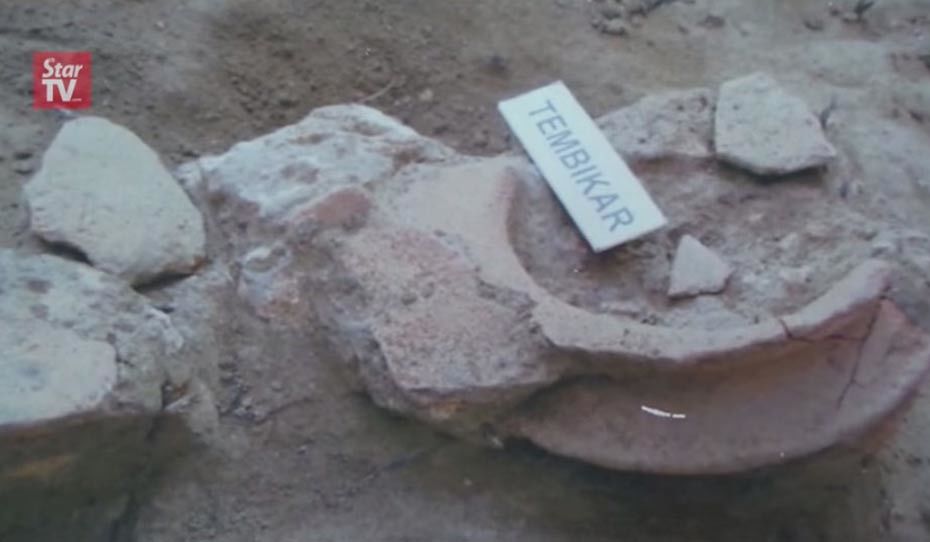
© YouTube, The Star OnlineAn ancient mast unearthed by archaeologistsat the Sungai Batu Archaeological Site, near Semeling, Malaysia.
The wrecks were detected by ground penetrating radar, enabling the archaeologists to reveal the outlines of more than five ships buried between five and 10 meters (16 and 33 feet) underground at the Sungai Batu Archaelogical Site, near Semeling. The site appears to have been one of the oldest civilizations in the region, reports New Strait Times Online.
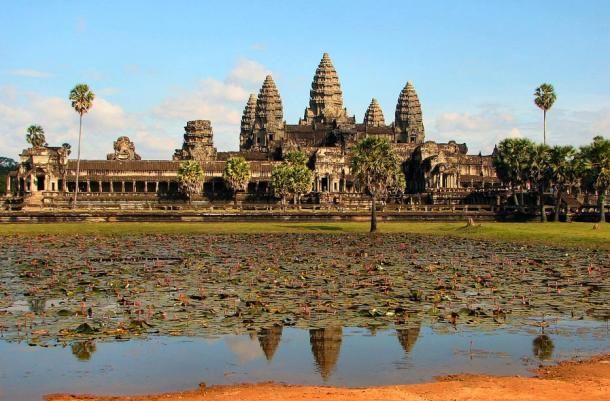
© Creative CommonsThe shipwrecks may predate the famous Angkor Wat complex in Cambodia by 2,000 years.
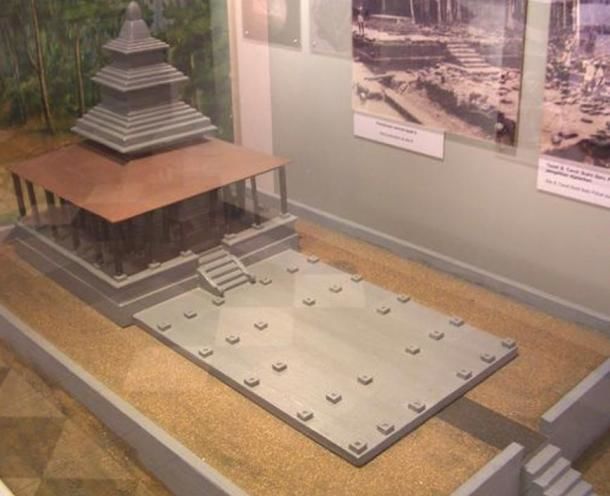
Model of early Kedah architecture, a religious sanctuary called a candi
The first ship was identified in 2011 when wooden remains of its mast were uncovered near the ruins of a jetty. The mast was two meters (6.5 feet) long, lying horizontally, but still in a good state of preservation. However, the pit dug by the team collapsed in 2012, and is now completely filled with water, although the archaeologists still dive down to the bottom to check the condition of the mast.
Lumps of black-brown rock are iron slags dating to between 487 BC and 110 AD, indicating that the civilization in the area was extensively involved in refining iron before the existence of the Kedah Sultanate in 1136.
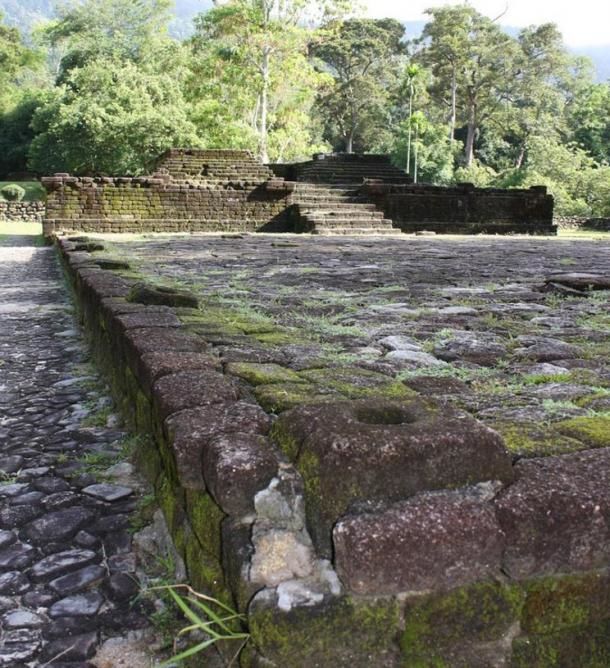
© CC BY-SA 2.0Built in 6th century AD, Candi Bukit Batu Pahat is the most well-known ancient Hindu temple found in Bujang Valley, Kedah, Malaysia.
"From our estimates, the civil works needed to excavate the first ship will be at least RM1 million" said Professor Datuk Dr Mokhtar Saidin, director of the Universiti Sains Malaysia (USM) Global Archaeological Research Centre, who is leading the Sungai Batu team. "For archaeology, this is a difficult amount to raise."
Professor Mokhtar added that raising the ship would allow the archaeologists to investigate its origins. He said that the jetties on the ancient river prove that there was extensive demand for iron. This was being produced by smelters in the town, which Optically Stimulated Luminescence (OSL) dating readings indicate is about 2,500 years old. This means it was a thriving population center long before the appearance of Hinduism, Buddhism, Christianity and Islam in the region.
The city-states of Southeast Asia were known to the Ancient Greeks as Ptolemy had written about the "Golden Chersonese" (the Greek name for the Malay Peninsular) in his Geography of the second century AD. This in turn indicates that the Greeks had maintained trade links with the area since at least the first century, if not earlier.
The focal point of civilization in the region at that time was the Khmer Funan kingdom in what is now Vietnam. The region is known to also have traded with China and India.
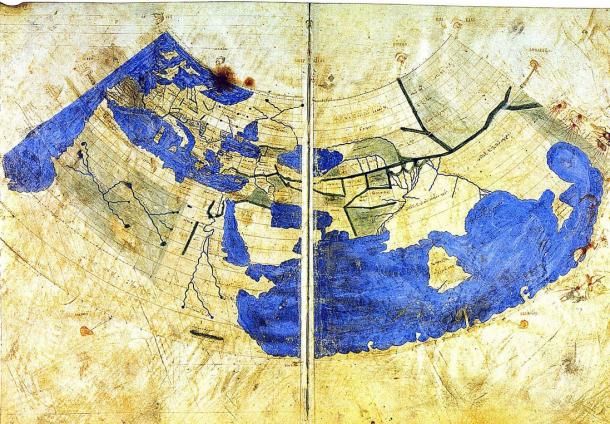
A Byzantine Greek world map according to Ptolemy's first (conic) projection, circa 1300. The Golden Chersonese is the peninsula to the far east, just prior to the Great Gulf.



Reader Comments
to our Newsletter