
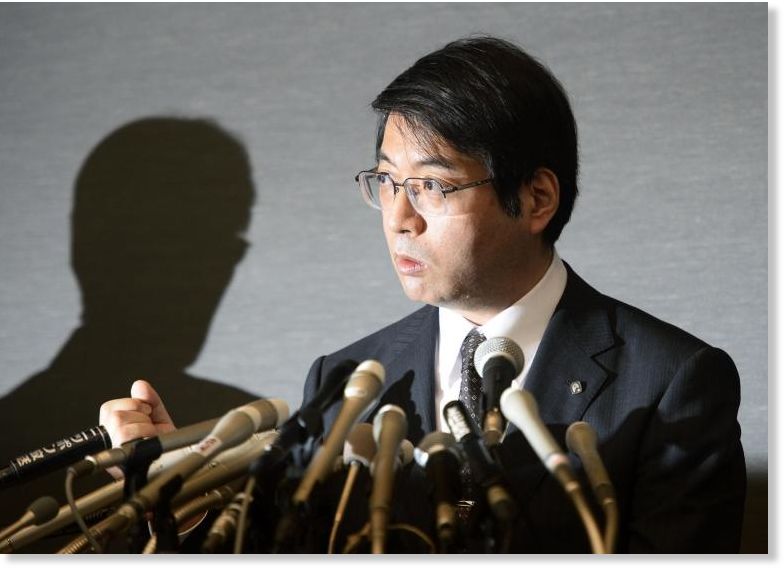
© ReutersYoshiki Sasai, deputy director of the Riken's Center for Developmental Biology in Japan, attends a news conference in Tokyo April 16, 2014. Sasai, a Japanese researcher at the center of discredited research that was initially hailed as a potential breakthrough for stem cell treatment, killed himself after months of stress and exhaustion, officials said on Tuesday.
Sasai, 52, was considered an expert in embryonic stem cell research and co-authored two research papers published in January in the journal Nature that detailed a seemingly groundbreaking method of harvesting stem cells to grow new human tissue. Sasai and lead author Haruko Obokata reported having successfully altered ordinary mouse cells into versatile stem cells by immersing them in a mildly acidic solution. The resulting cells were named stimulus-triggered acquisition of pluripotency (STAP) cells.
The studies were initially praised as being on the cutting edge of stem cell treatment, but were quickly disputed when other scientists could not replicate the experimental procedure. The papers were retracted six months later after the journal found they contained erroneous data, among other flaws.
"Scientists at RIKEN Center for Developmental Biology in Kobe are deeply concerned about the allegations regarding the recently reported STAP cells," the center said in a statement released in March. "We wish to express our strong commitment to maintaining the highest level of scientific integrity to the public and the scientific community. We are fully aware that trust from the society is crucial for research activities carried out in RIKEN."
The scandal apparently affected Sasai's health. Following the initial revelation that the research he was involved in may have been flubbed, he was hospitalized in March for stress, according to Riken spokesman Satoru Kagaya, who told reporters during a televised news conference on Tuesday that Sasai "seemed completely exhausted" when they talked over the phone in May.
Several suicide notes were found on Sasai's secretary's desk, according to the Wall Street Journal. The content of the notes has not been made public, but officials said two of the notes were addressed to Riken officials, one of whom was Obokata.



[Link]