
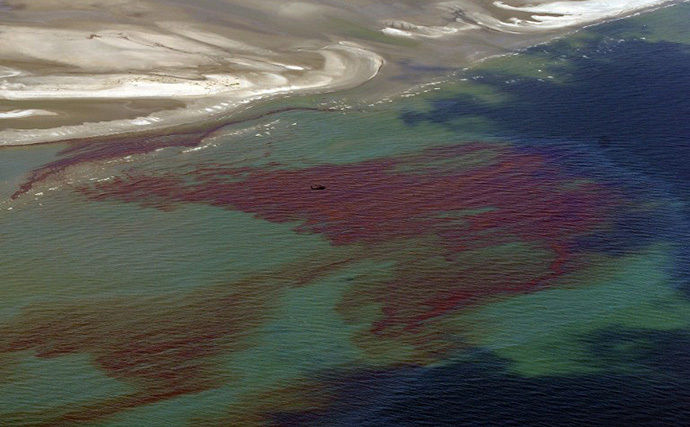
© Agence France-Presse / Mark RalstonA National Guard Blackhawk helicopter flies over the oil slick as it passes through the protective barrier formed by the Chandeleur Islands, as cleanup operations continue for the BP Deepwater Horizon platform disaster off Louisiana, on May 7, 2010.
The Deepwater Horizon blowout caused the value of London-based BP shares to immediately plunge by over a half, and even today the shares have not recovered to their restored to their 2010 level.
"The fact that UK pension funds who bought stock on the London Stock Exchange can now participate in bringing claims in the US raises the prospect of recoveries where significant losses have been incurred," Pomerantz lawyer Jennifer Pafiti told the London Evening Standard.
So far only those investors who bought their BP shares on the US market, for example at the New York Stock Exchange, were allowed to file lawsuits in US courts. A number of rulings in Texas courts now appear to have opened the way for British investors to have their cases heard in the US under English law, however.
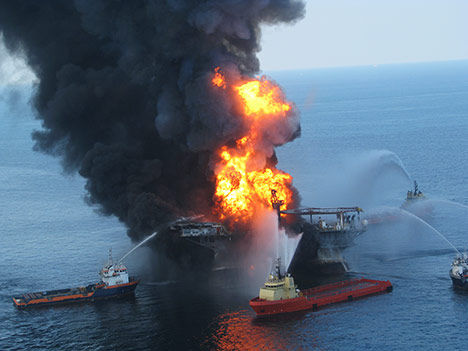
© USCGThe BP/Transocean Deepwater Horizon oil rig ablaze.
"All of the plaintiffs' securities claims relating to the Deepwater Horizon accident are meritless and we will continue to vigorously dispute them," a BP spokesman in London said Friday night, as quoted by The Guardian.
Among the new litigants preparing lawsuits against BP are over a dozen British and European pension funds, including a pension fund of BP's principal rival, Royal Dutch Shell.
The London Evening Standard recently reported that other litigants include pension funds for the City of Westminster Council, Cumbria County Council, the London Borough of Redbridge, the Royal Borough of Kensington and Chelsea, Lincolnshire County Council, as well as a number of individual claimants.
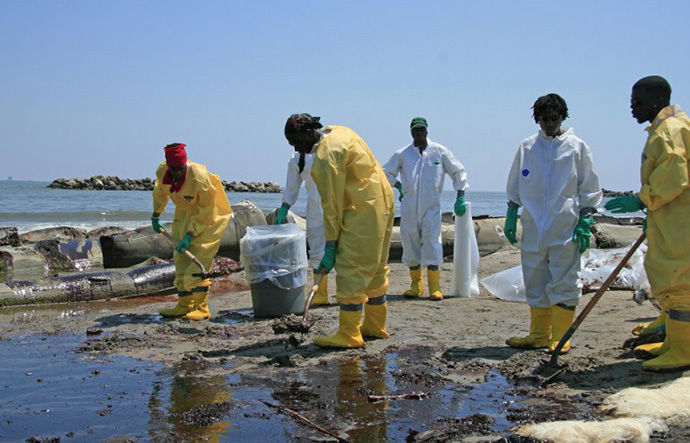
© Agence France-Presse/ Stephane JourdainA BP cleanup crew shovels oil from a beach on May 24, 2010 at Port Fourchon, Louisiana.
BP has already paid over $30 billion in compensation, and it looks like more payouts are on the way, with the US Department of Justice claiming that the company acted irresponsibly, which under the Clean Water Act could potentially cost BP another $20 billion worth of fines.
The blast and fire at BP's Deepwater Horizon oil rig in the Gulf of Mexico in April 2010 led to 11 deaths, the total destruction of the rig and an unprecedented spill of approximately 5 million barrels of oil as BP spent five months trying to plug the well. As a result, many kilometers of beaches in the US were polluted. The tourism and fishery industries suffered the most, while there was massive damage to the environment.
Ever since proceedings over the 2010 oil spill began, BP has been looking to minimize its liability.
The management of the oil giant was steamrolled by heavy criticism from US politicians and the public.
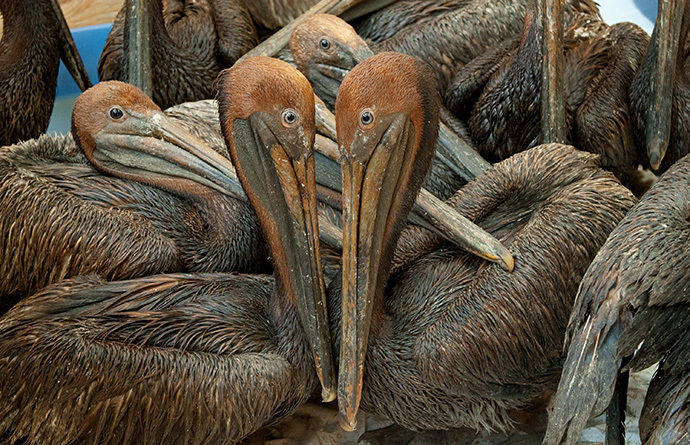
© Agence France-Presse/Saul LoebOil covered brown pelicans found off the Louisiana coast and affected by the BP Deepwater Horizon oil spill in the Gulf of Mexico wait in a holding pen for cleaning at the Fort Jackson Oiled Wildlife Rehabilitation Center in Buras, Louisiana, June 9, 2010.
One outcome linked by many to the Deepwater Horizon disaster was a historic deal between BP and Russia's Rosneft oil giant, after BP sought to raise funds to pay out billions in compensation. After coming under pressure over the disaster and from its commercial partners in Russia, BP decided to break up its hugely profitable private-sector joint venture TNK-BP and sell it to state-owned Rosneft, which consequently became the world's largest publicly-traded oil company.

Reader Comments
to our Newsletter