
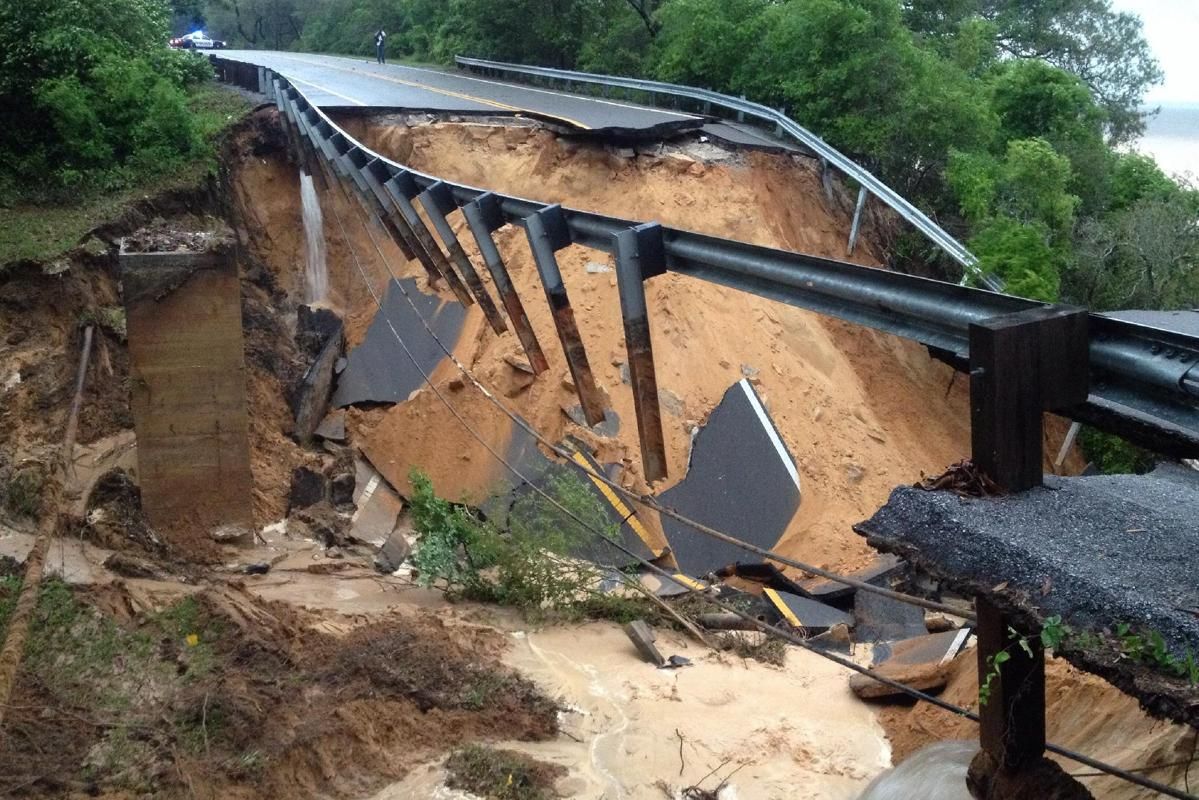
© AP Photo/Pensacola News Journal, Katie E. King A portion of the Scenic Highway collapsed near Pensacola, Fla., Wednesday April 30, 2014. Heavy rains and flooding have left people stranded in houses and cars in the Florida Panhandle and along the Alabama coast. According to the National Weather Service, an estimated 15-20 inches of rain has fallen in Pensacola in the past 24 hours.
On Wednesday, roads were chewed up into pieces or wiped out entirely and neighborhoods were inundated, making rescues difficult for hundreds of people who called for help when they were caught off guard by the single rainiest day ever recorded in Pensacola.
Boats and Humvees zigzagged through the flooded streets to help stranded residents. A car and truck plummeted 25 feet when portions of a scenic highway collapsed, and one Florida woman died when she drove her car into high water, officials said.
Near the Alabama-Florida line, water started creeping into Brandi McCoon's mobile home, so her fiance, Jonathan Brown, wrapped up her nearly 2-year-old son Noah in a blanket and they swam in neck-deep water to their car about 50 feet away.
Then, the car was flooded.
"Every which way we turned, there was a big ol' pile of water," she said.
Brown called 911 and eventually a military vehicle picked them up and took them to a shelter.
Kyle Schmitz was at his Pensacola home with his 18-month-old son Oliver on Tuesday night when heavy rain dropped during a 45-minute span. He gathered up his son, his computer and important papers and left.
"I opened the garage and the water immediately flowed in like a wave," he said. "The water was coming up to just below the hood of my truck and I just gassed it."
Schmitz and his son also made it out safely.
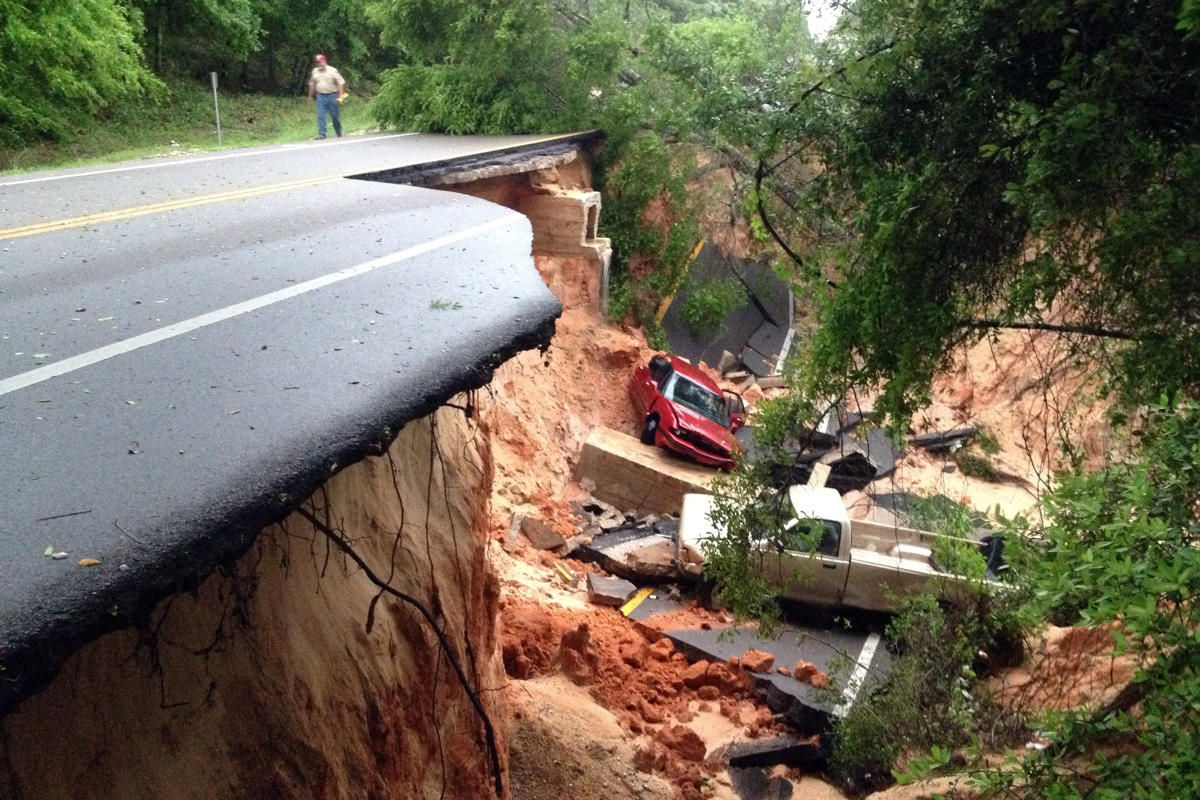
© AP Photo/Pensacola News Journal, Katie E. King Vehicles rest at the bottom of a ravine after the Scenic Highway collapsed near Pensacola, Fla., Wednesday April 30, 2014.
Spies said they received the first call of help before midnight Tuesday but they couldn't find the group until about 8 a.m. Wednesday. By then, the water was 2 feet below the roof. A firefighter used an axe to punch a hole through the roof and free them.
"They were very scared, they were very upset. I would've been, too," Spies said.
There were at least 30 rescues in the Mobile area of Alabama. Florida appeared to be the hardest hit. Gov. Rick Scott said officials there received about 300 calls from stranded residents.
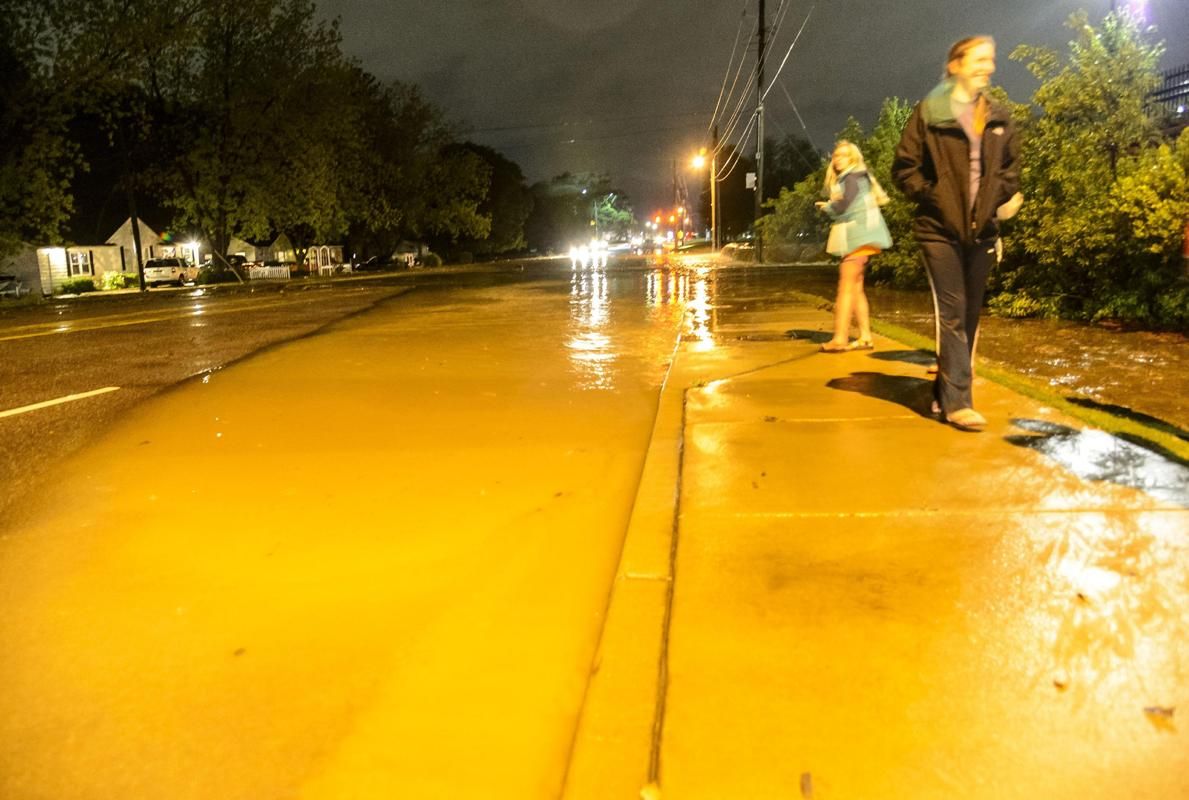
© AP Photo/Alabama Media Group, Vasha Hunt Bystanders look at the flooding as creek and sewer waters spill into the road, causing traffic issues, Monday, April 28, 2014, on Hargrove Road East near the Woodlands of Tuscaloosa apartment complex in Tuscaloosa, Ala.
Pensacola and nearby Mobile are two of the rainiest cities in the U.S., averaging more than five feet of rain in a year, according to the National Climatic Data Center.
The National Weather Service said forecasters issued flash flood warnings as early as Friday, yet many people were still caught unaware.
Elizabeth Peaden was at her weekly Bunco game Tuesday night and it wasn't raining on her way there. On her way home, she drove her van through a flooded intersection and got stuck.
"I was scared out of my wits. Water started coming in and I wasn't sure what to do," she said.
Peaden waded her way to a nearby American Legion post where she and about 20 other stranded travelers spent the night sleeping on tables or the floor.
The widespread flooding was the latest wallop from a violent storm system that began in Arkansas and Oklahoma and worked its way South, killing 37 people along the way, including a 67-year-old driver in Florida.
Pensacola Police Chief Chip Simmons said two vehicles fell 25 feet when portions of a scenic highway collapsed. The truck driver was fine, but a woman in a car needed help getting out. Neither had serious injuries, Simmons said.
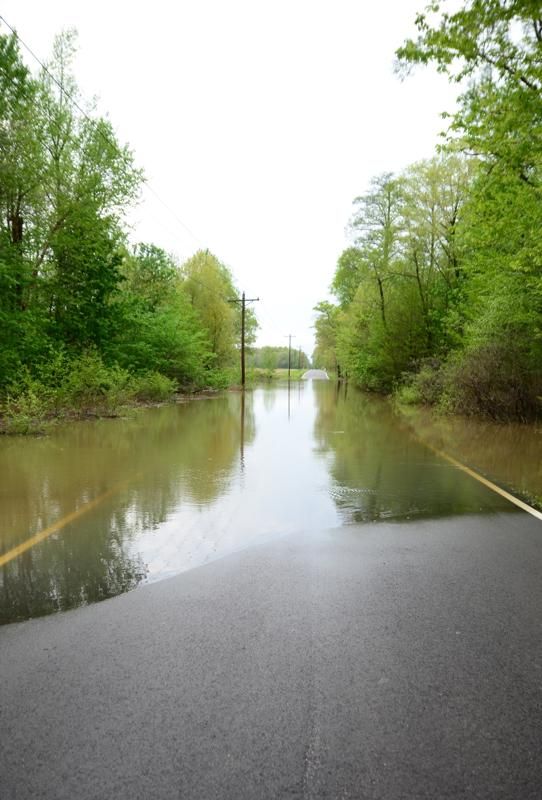
© AP Photo/The Paducah SunWaters stands across Bonds Road in McCracken County, which is closed at the intersection of Oaks Road due to flooding, Monday, April 28, 2014, in Paducah, Ky.
"We've got water up in our parking lots," she said. "Our docks are under water. It's worse than during Hurricane Ivan, is what they're saying. It's crazy."
The 2004 hurricane dumped 3 to 7 inches of rain along the Florida Panhandle.
By Wednesday afternoon, water had started to recede while the storm marched its way up the East Coast, bringing warnings of more tornadoes and flash flooding. Emergency officials in Maryland said crews rescued motorists stranded in high water and a block-long section of street collapsed, sending cars sliding down a steep embankment onto railroad tracks.
Over the past four days, the system created 65 tornadoes and slammed Arkansas' northern Little Rock suburbs and the Mississippi cities of Louisville and Tupelo. Arkansas had 15 deaths; Mississippi had 12.
Authorities in Louisville searched for a missing 8-year-old boy after a large tornado killed his parents and destroyed their home.
On Wednesday, Louisville officials said they were shifting priorities from response to cleanup.
"Today is the day we start putting Louisville back together," said Buddy King, county emergency management director.
Source: AP



The C's did say we would get "sheets of rain"!