
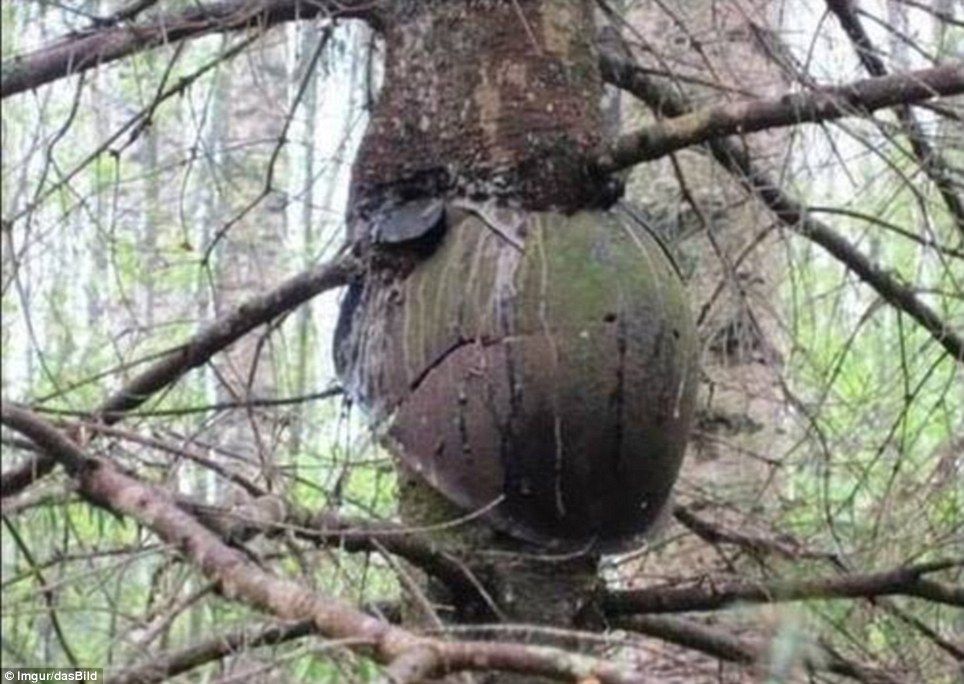
Remember the fallen: According to some estimates, more than 14million Soviet solders and officers perished in the Great Patriotic War.
A remarkable series of photos taken in a Russian forest have been making the rounds on social media sites, showing what happens over time to instruments of carnage discarded in the woods.
The striking images depict rifles, artillery shells, grenades and sapper shovels embedded in tree trunks - essentially swallowed up by the natural surroundings in a silent act of protest against human folly.
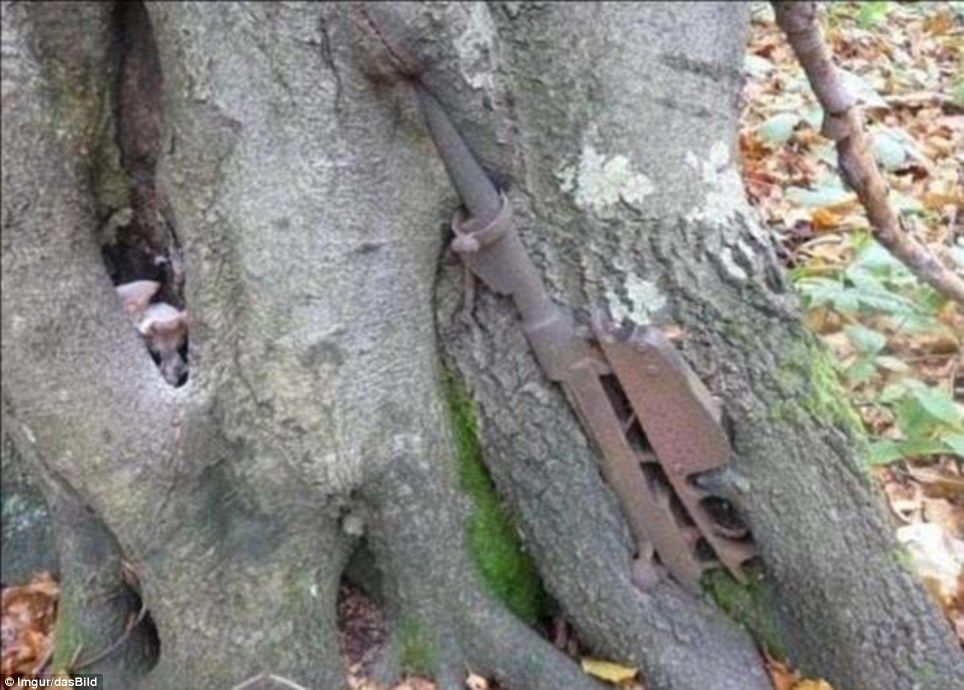
Echo of war: Described by a web user as a Mannlicher Carcano rifle circa 1891, this rusted out weapon has embedded itself in the trunk of a tree growing in a Russian forest.
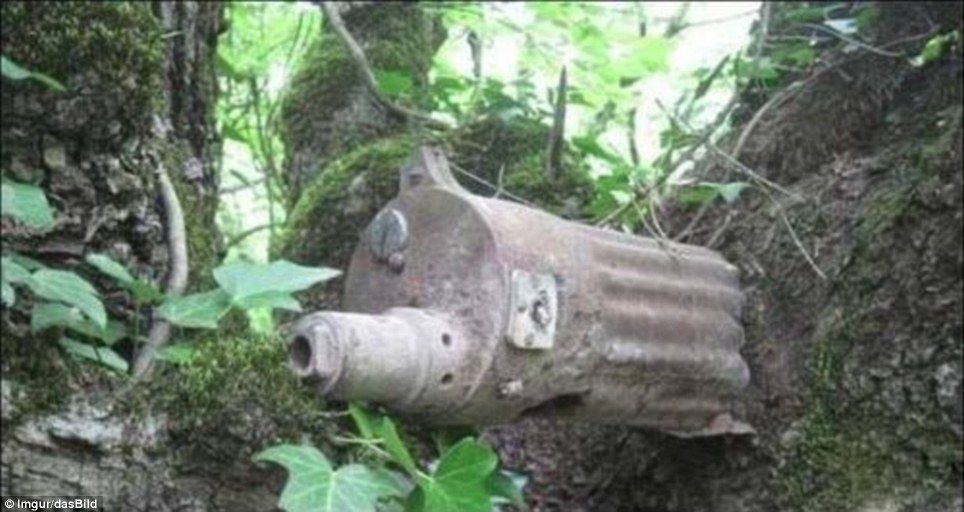
Deadly machine: This Maxim gun from the 1930s was likely used during World War II that raged in Europe between 1939 and 1945.
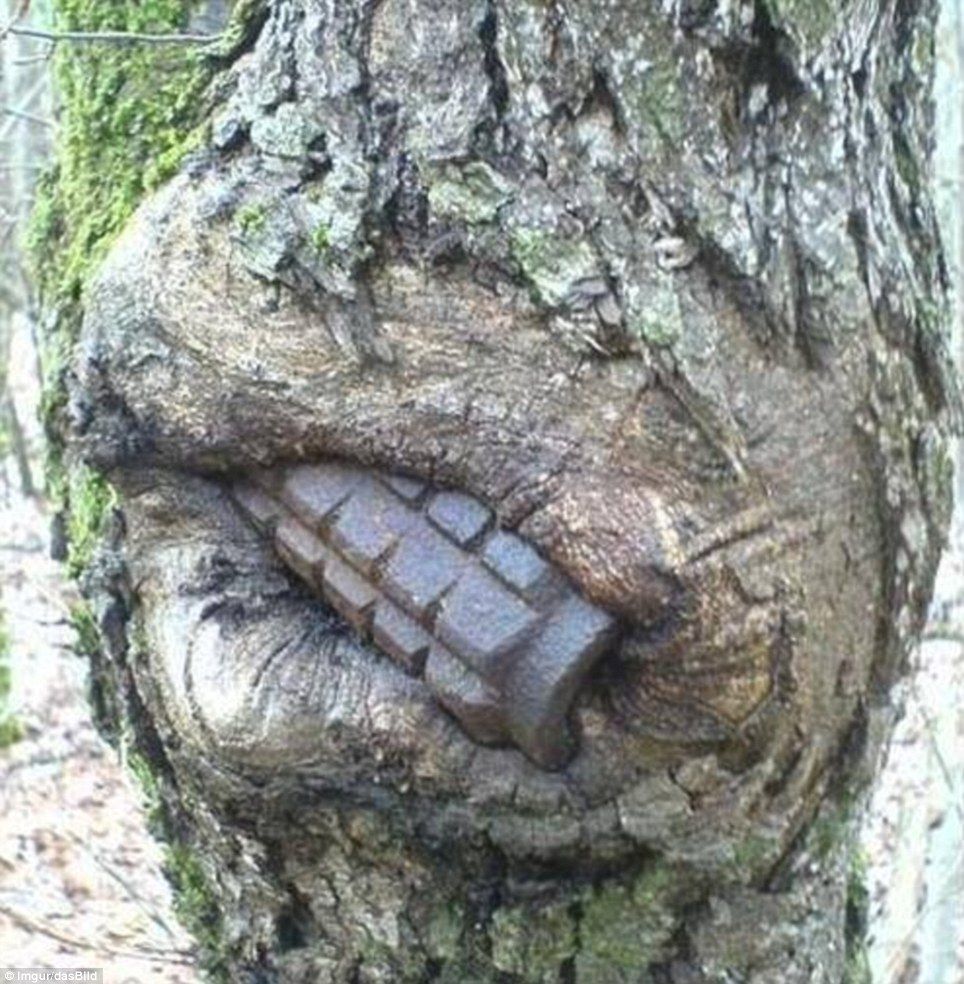
Dangerous exhibit: Even today, nearly seven decades after Victory Day, it is still possible to come across an old unexploded bomb or a granade, like this one that somehow became lodged inside a tree.
The shape and condition of the protective gear suggest that the helmets belonged to Red Army servicemen during World War II.
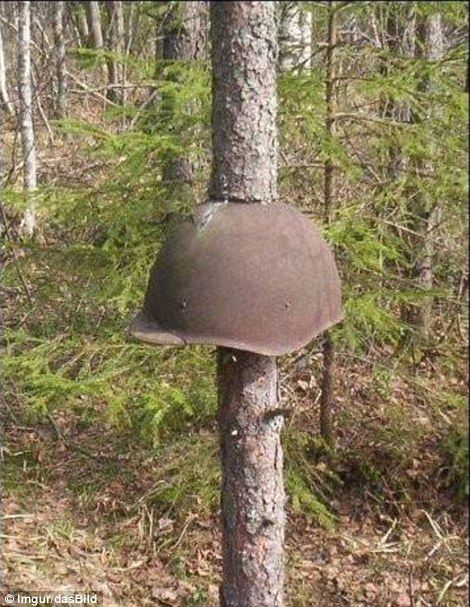
It is likely that the helmets came to rest on young saplings during a battle. Over time, the maturing trees widened the bullet holes, and the helmets essentially became impaled.
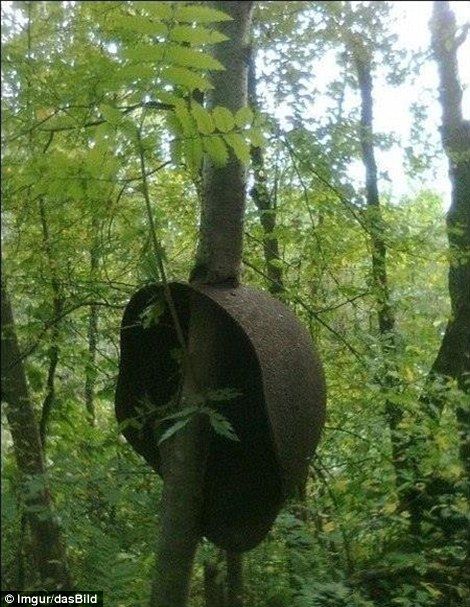
In a message to MailOnline Thursday night, Mr Ostapenko revealed that most of the photos have been taken in the area of the Neva Bridgehead, known as Nevsky Pyatachok, which was the site of one of the most crucial campaigns during the devastating Siege of Leningrad that lasted from September 1941 to May 1943.
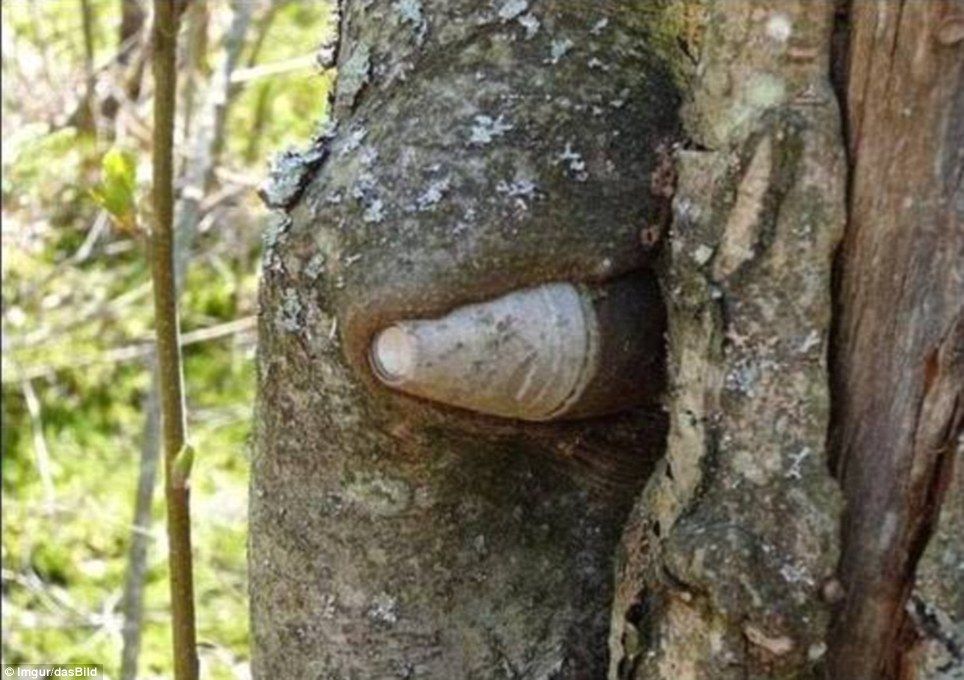
Resting place: A 75milimeter shell from a light field gun burrowed into a tree somewhere in Russia.
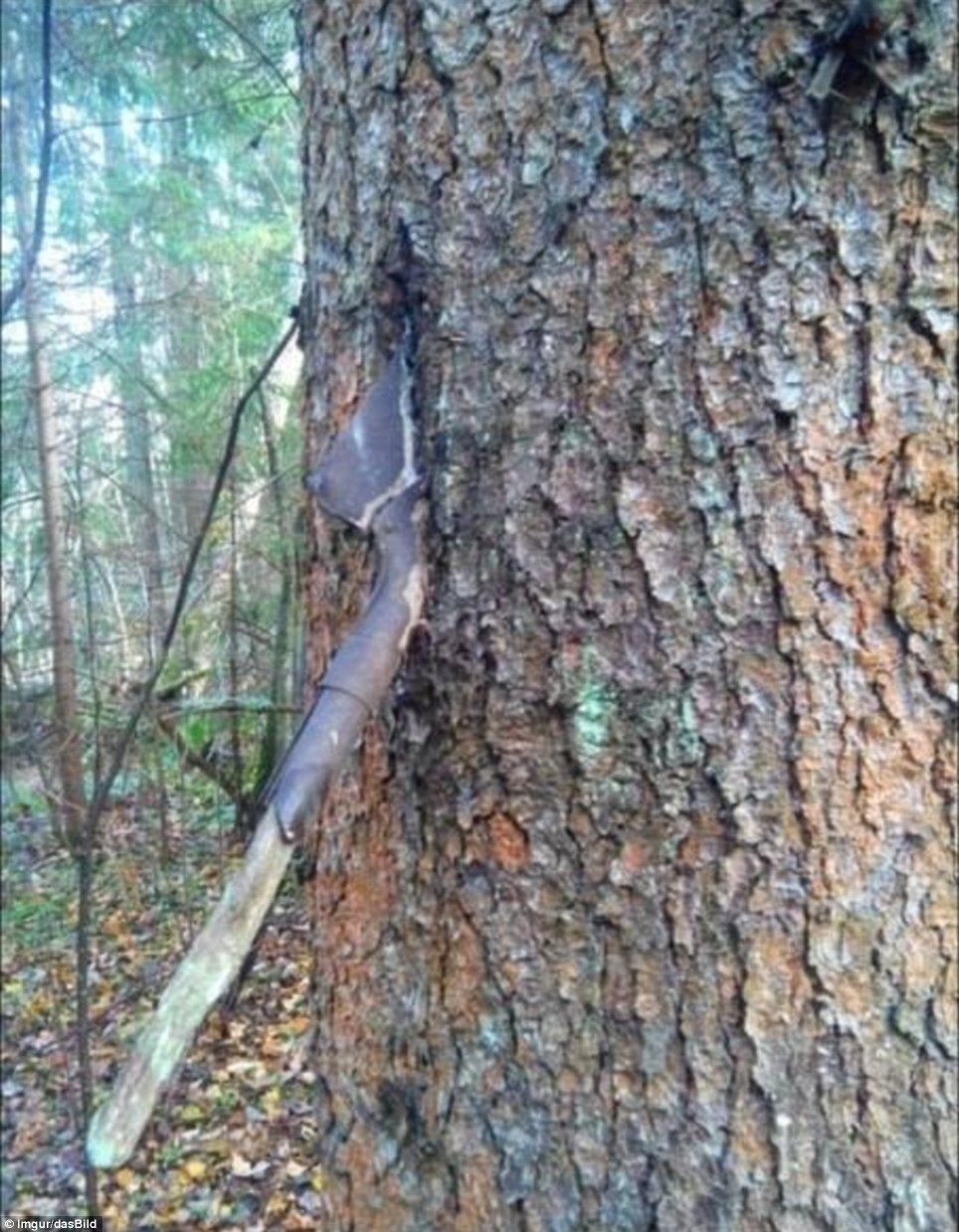
Marker: A sapper shovel with its corroded metal blade wedged firmly in a tree and its rotting wooden handle sticking out.
Some of the so-called exhibits in this outdoor military museum include a Maxim gun circa 1891; a Mannlicher Carcano rifle circa 1891, and a 75 milimeter shell from a light field gun.
According to some estimates, the Soviet Union lost about 20 million people, both military and civilians, over the course of four years between 1941 and 1945. At least 14 million of the casualties were soldiers and officers.
The poignant photos capturing the rusted out vestiges of World War II overwhelmed by trees drive home the message that in the end, after all the medals were handed out to heroes and all the peace treaties were signed, the only true victor is nature.



Even if we succeed in totally destroying ourselves, Life and Geology will clean and scrub the surface.
Life will eat the metals, Tectonics will pop whole sections of plate up and down while mountain ranges rise and fall, and Ice Ages will scour the surface with miles thick Ice Sheets for 90-100,000 years at a time. Rocks will be sucked under sliding plates and recycled, emerging as new Volcanic Flows.
Eventually, there will be not a single trace left of what once was.